Sourcing a private-label treatment or toner pad looks easy until you want something that isn’t another salicylic-acid pad. Search for a “chitosan acne pad manufacturer” and the results thin out fast — most suppliers only offer the commodity actives. This guide is the practical way to find a real pad factory: the three kinds of supplier you’ll meet, the actives that actually differentiate a range, why chitosan and hypochlorous pads are genuinely hard to source, and a scorecard you can run on any vendor before you spend on samples.
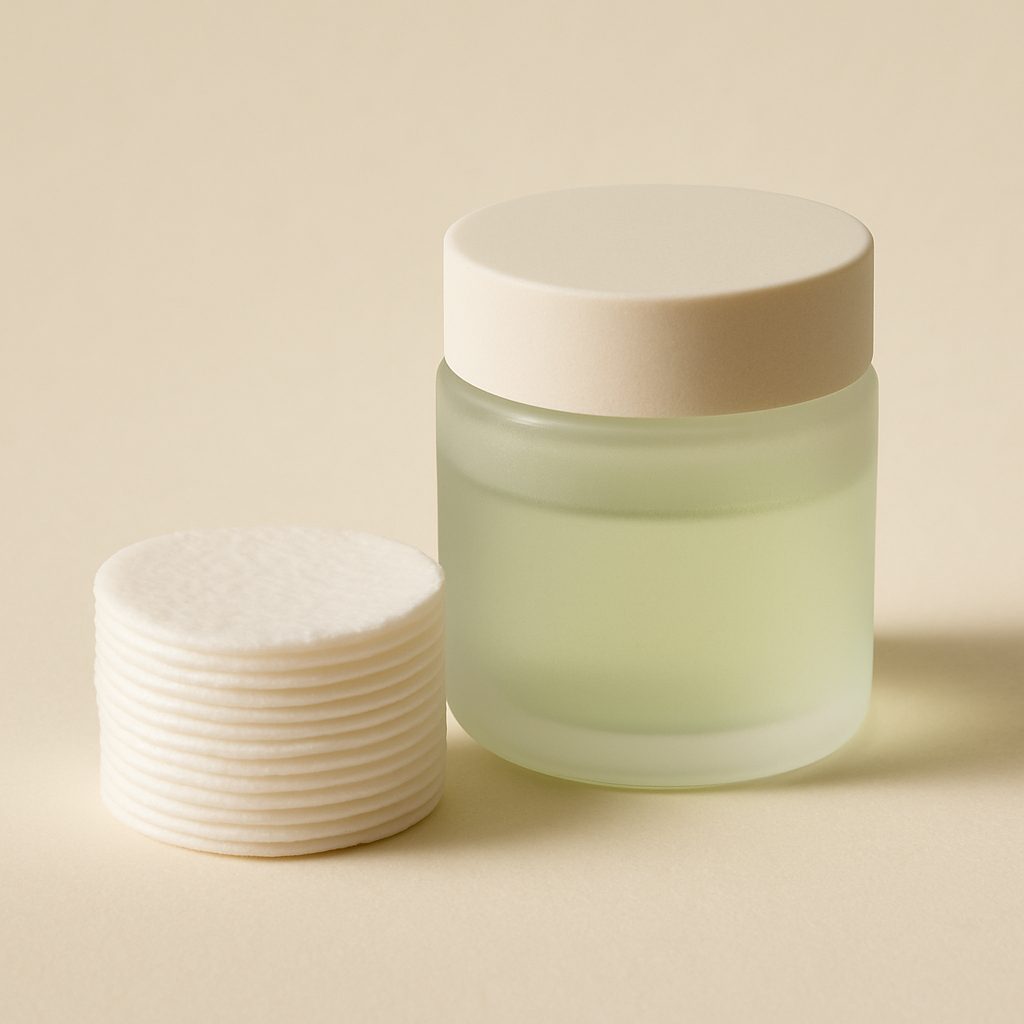 Sample image
The three kinds of pad supplier
A treatment pad is two products in one — a base material (the wipe) and a soak formula (the actives) — so the supplier you choose has to control both. Almost every “manufacturer” you find is one of three things:
| Supplier type | What they actually are | What it means for you |
|---|---|---|
| Own-factory pad specialist | Owns the cleanroom, the soak/fill line and the converting line; formulates and fills in-house | Real formula control, custom actives, direct accountability — the only type that can do non-commodity actives well |
| Multi-category contract house | A larger skincare manufacturer that fills pads as one of many formats | Capable for standard salicylic/glycolic pads, but rarely set up for novel actives or fine soak control |
| Trading company / agent | A middleman that sub-contracts your pad to a factory you never see | Low MOQ on paper, but a markup, a quality black box, and no way to brief a custom formula properly |
For a me-too salicylic pad, any of the three can work. For anything differentiated — a custom strength tier, a sensitive-skin base, or a novel active like chitosan — you need the own-factory specialist, because the formula and the fill have to be controlled in the same building.
The actives — and the two that actually differentiate
Most pad ranges are built from a short list of actives. Knowing which are crowded and which are scarce tells you where a brand can stand out.
| Active | What it does | Sourcing reality |
|---|---|---|
| Salicylic acid (BHA) | Clears oil inside the pore, smooths texture | Everywhere — the commodity; hard to differentiate on |
| Glycolic / AHA | Surface resurfacing, glow | Common; widely offered |
| Azelaic acid | Marks, redness, uneven tone | Available but less crowded; a gentler story |
| PHA / enzymes | Gentle resurfacing for sensitive skin | Moderately available |
| Chitosan | Film-forming, barrier-friendly, clean feel | Scarce as a pad — few factories offer it |
| Hypochlorous acid | Gentle, supports a calmer skin surface | Scarce as a pad — needs the right licence & line |
Salicylic and glycolic pads are a race to the bottom on price because everyone makes them. The differentiation — and the margin — sits in azelaic, PHA, and especially chitosan and hypochlorous, which very few makers offer in pad form. A range that anchors volume with a familiar salicylic pad but leads its story with a chitosan pad stands apart from a shelf of identical BHA SKUs.
Why chitosan pads are hard to source
There’s a concrete reason “chitosan acne pad manufacturer” returns so little: it is harder to make than a salicylic pad. Chitosan and hypochlorous acid are sensitive actives — they need a controlled cleanroom, careful soak chemistry so the active stays stable in the pad, and, depending on how the product is positioned and claimed, the right manufacturing licence (in China, a disinfection “消字号” licence alongside the cosmetic “妆字号” one). Multi-category houses and traders rarely have all three, so they default to the commodity actives. The upshot for a brand: if you secure a factory that genuinely makes chitosan or hypochlorous pads, you hold a formula your competitors can’t easily copy.
Ask two questions a middleman can’t answer fast: “Can you control the soak ratio and run a chitosan or hypochlorous formula in-house?” and “What licence and cleanroom class do you fill pads under?” A real pad factory answers with a number and a licence type. A trader hedges or promises to ask the supplier.
Ten criteria for a treatment-pad factory
Run every shortlisted supplier against these. A genuine own-factory specialist answers all ten quickly and concretely.
- Own factory, named and visitable — a registered manufacturer with an address and an open door, not a marketplace storefront.
- Cleanroom class & licences — a stated standard (e.g. Class-100,000) and the right licences (cosmetic, plus disinfection where the positioning needs it).
- In-house soak & fill — they formulate the soak and fill the pads themselves, so the active is theirs to control.
- Active range — beyond salicylic and glycolic: azelaic, PHA, and crucially chitosan and hypochlorous for differentiation.
- Substrate options — cotton, microfibre, spunlace, embossed/dual-texture; weight and thickness to taste.
- Soak-ratio control — how wet each pad is, tuned for feel, cost and performance.
- Pack formats — resealable jar, travel tin, single-use sachets for sampling and subscription boxes.
- MOQ that matches your stage — a low entry MOQ to test, with a path to mass volume on the same line.
- Audits, certs & an NNN — ISO 22716, GMPC, Sedex, plus an NNN before you share a brief or formula.
- Response discipline — a named contact answering technical questions within about a day.
A scorecard you can run on any supplier
Score each vendor 0–2 (0 = no/vague, 1 = partial, 2 = clear evidence). Under ~14 of 20 is usually a reseller or a commodity-only filler.
| Criterion | 0 — weak | 2 — strong |
|---|---|---|
| Own factory | “We work with factories” | Named entity, address, tour offered |
| Cleanroom & licence | No standard stated | Class-100,000 + cosmetic/disinfection licence |
| In-house soak & fill | Outsourced | Formulates & fills in-house |
| Active range | Salicylic/glycolic only | + azelaic, PHA, chitosan, hypochlorous |
| Substrate options | One stock pad | Material, weight, embossing choices |
| Soak control | Fixed | Tunable soak ratio |
| Pack formats | Jar only | Jar, tin, single-use sachet |
| MOQ & scale | Fixed, no path up | Low entry MOQ → mass on one line |
| Audits / NNN | None | ISO 22716, GMPC, Sedex + NNN |
| Responsiveness | Generic inbox | Named contact, ~24h replies |
How Yanse fits these criteria
For transparency about where this guide comes from: Yanse Cosmetics is an own-factory specialist in oily and acne-prone skincare. The group runs an 8,000㎡ base in Fujian with a Class-100,000 cleanroom and a dual workshop — cosmetic (妆字号) and disinfection (消字号) licences — which is exactly what sensitive actives like hypochlorous need. We formulate and fill pads in-house, offer the commodity actives (salicylic, glycolic, azelaic, PHA) and the scarce ones — chitosan and hypochlorous, which few makers offer in pad form — across cotton, microfibre and embossed substrates, with tunable soak ratios and jar, tin or sachet packs. MOQ starts from 3,000 units and scales to 1,000,000 a month on the same line; we’re audited by leading international beauty groups and certified to ISO 22716, GMPC, Sedex 4P, FSC and Halal, with an NNN before any brief. We list this not as a ranking but as a worked example of what the ten criteria look like when they’re all met.
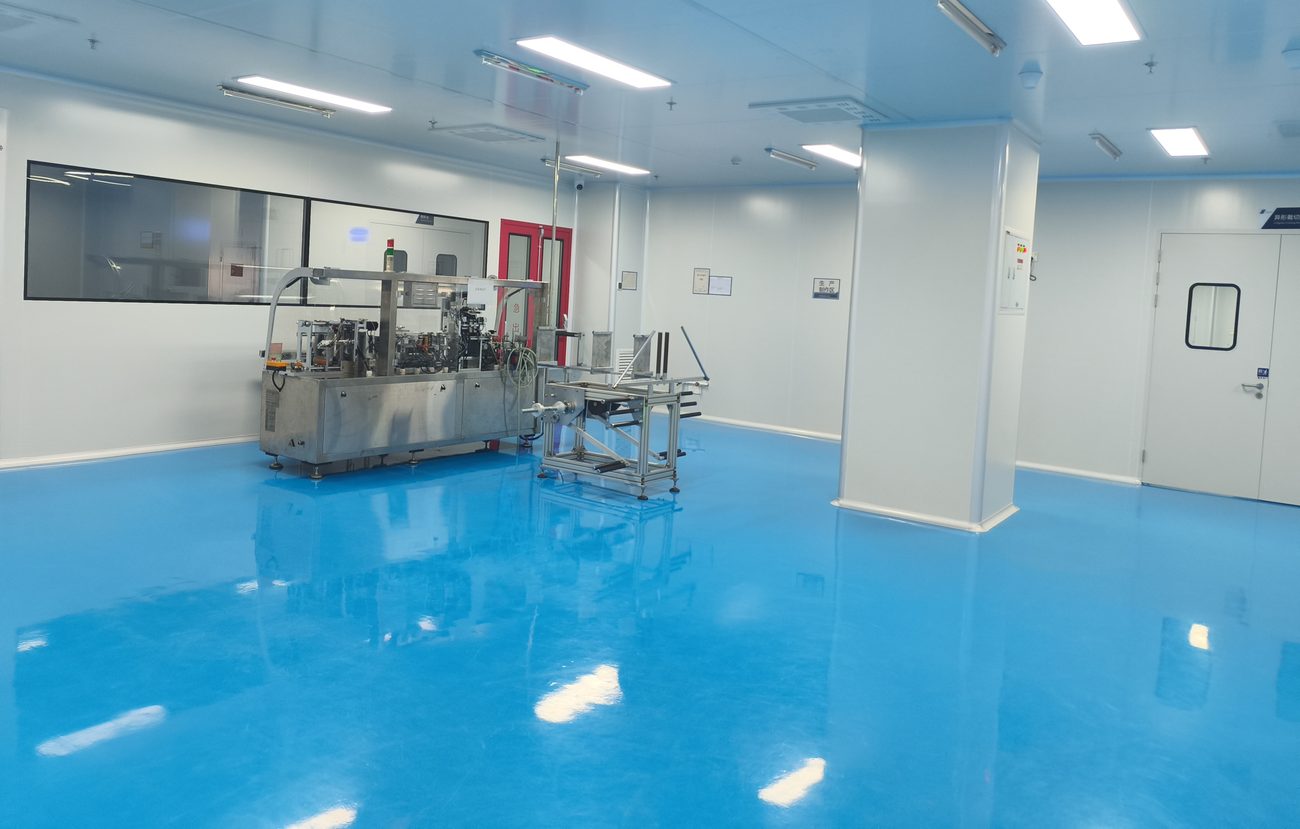 Inside our factory
How to run a pad sourcing shortlist
Turn it into an afternoon of work, not a month of guesswork:
- Write a one-paragraph brief: skin story, strength tier, hero active, base preference, pack format, target MOQ and landed cost.
- Send it to 3–5 suppliers and score the replies on the card above — the scores sort specialists from traders within a day.
- Ask your top two to sample your hero active and a differentiated option (chitosan or hypochlorous) so you can feel the range.
- Compare in hand for feel, sting and substrate quality; confirm cleanroom, licences, audits and NNN before a trial order.
- Place a low-MOQ trial with the winner, then scale on the same line once quality is proven.
You can see our pad range and the actives we offer on the treatment pads page, read the deep-dive on chitosan & hypochlorous actives, or send a brief straight to our OEM team for a sample set and a 24-hour quote.
Sourcing a treatment or toner pad — including chitosan?
We are a 20-year oil-and-acne specialist that formulates and fills pads in-house, including chitosan and hypochlorous formulas few makers offer, under dual cosmetic and disinfection licences. Send a brief and we’ll sample your hero active plus a differentiated option.
Request free pad samples →Free sample set · 24-hour quote · MOQ from 3,000 · NNN before any brief
Educational content for brand and product teams. Ingredient and claim information is general and varies by market regulation; finished-product claims should be confirmed against the rules of your target market. Yanse Cosmetics is a contract manufacturer (OEM/ODM) and does not sell finished consumer goods under its own brand.