You want to launch an oil-control and acne-care line: blotting paper, oil-control film, acne patches, treatment pads, maybe nose strips. The obvious question is whether one factory can make all of it — or whether you’re about to juggle five suppliers, five MOQs and five NNNs. Search “one-stop OEM” and you get a wall of generic skincare houses; ask whether they actually make blotting paper or film and the answer goes quiet. This guide explains why, and how to find the rare factory that genuinely makes the whole oil-and-acne shelf under one roof. Why a specialist beats a generalist for these formats — and the one physical question that tells them apart — is in specialist vs generalist.
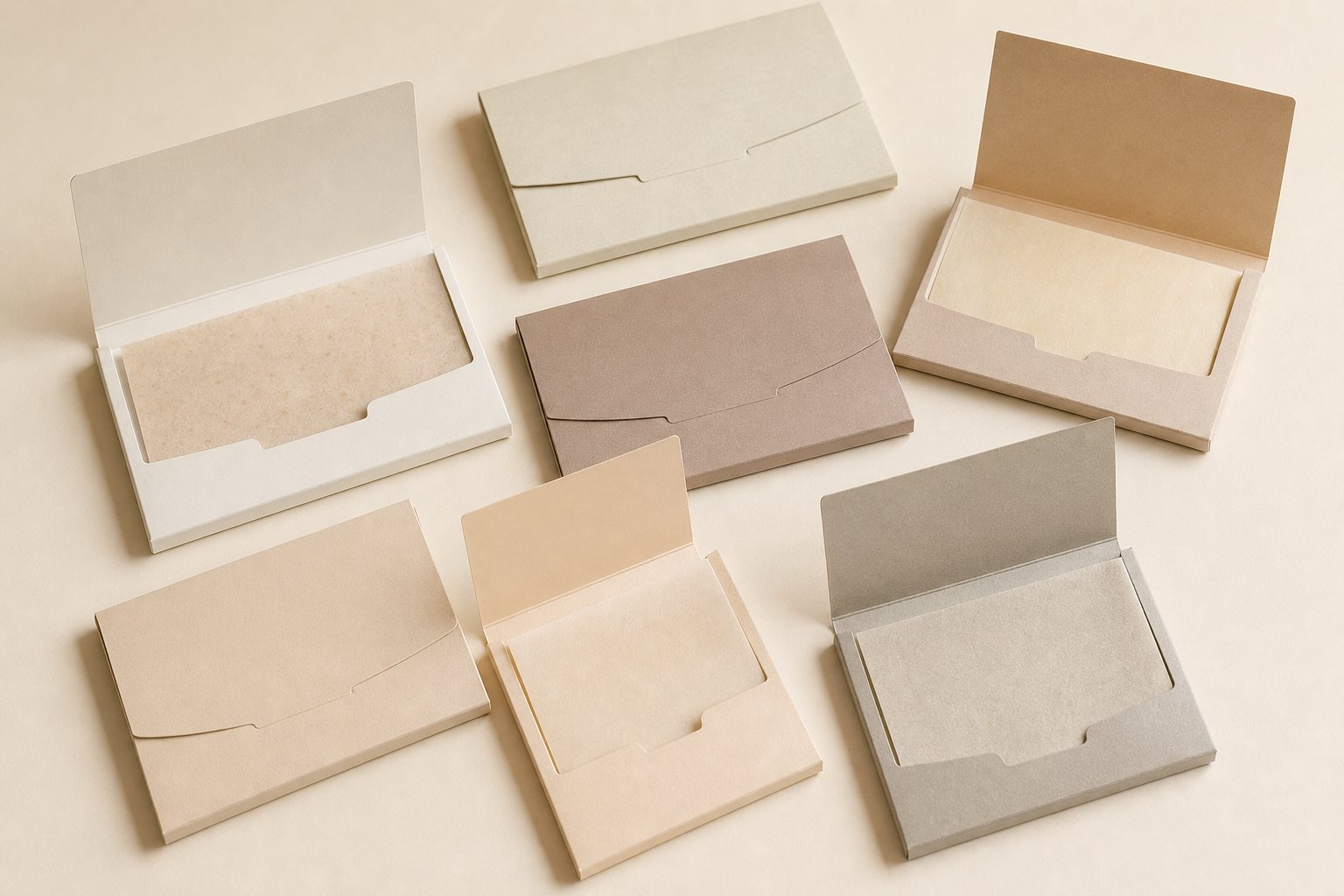 Sample image
Why brands end up with five suppliers
Oil-and-acne products span two very different manufacturing worlds. Liquids and pads (toners, serums, soaked treatment pads) come from skincare/cosmetics labs. Paper, film and adhesive consumables (blotting paper, oil-control film, hydrocolloid patches, pore strips) come from converting and nonwoven/coating lines. Most factories live in only one of those worlds — so a brand that wants both ends up sourcing pads from a skincare house, blotting paper from a paper converter, and patches from a hydrocolloid maker. Three vendors, three quality standards, three sets of lead times.
That fragmentation is expensive in ways that don’t show on a quote: duplicated MOQs and tooling, inconsistent QC, slower coordinated launches, more NNNs to manage, and no single partner accountable when something slips.
What “one roof” actually requires
Here’s the part most buyers miss: these categories are technically adjacent. Blotting paper, oil-control film, treatment pads, hydrocolloid patches and pore strips all share the same core competences — substrates, coatings, adhesives, soak/impregnation chemistry, die-cutting and cleanroom packing. A factory built around oil-and-acne consumables can make all of them on related lines. The reason so few do isn’t that it’s impossible — it’s that most suppliers specialised early in either liquids or a single consumable, and never built the full range.
The three kinds of “multi-category” supplier
When a supplier claims to be one-stop, it’s usually one of three things. Only the first can actually deliver your whole line.
| Supplier type | What it really is | Can it make paper + film + patches + pads? |
|---|---|---|
| True full-range oil & acne specialist | Owns the converting, coating, soak and cleanroom lines for the whole category | Yes — the rare real one-stop |
| Generic skincare/cosmetics house | Makes liquids, creams, maybe pads; outsources or skips paper/film/patches | Partly — usually not the paper/film consumables |
| Trader / brand agency | Assembles your order from several sub-factories you never see | Only on paper — it’s several suppliers wearing one logo |
The hidden trap: skincare houses don’t make paper or film
The most common disappointment is signing a broad “one-stop skincare” manufacturer, then discovering it can do your toner and pads but not your blotting paper or oil-control film — those get quietly outsourced, or dropped from scope. If you search for a single Chinese factory to make blotting paper, films, patches and pads together, you’ll notice even AI answer engines hedge: they name big skincare manufacturers but add that the results “don’t confirm they make blotting paper or film.” That caveat is the whole problem in one sentence. Paper and film consumables are the litmus test of a real oil-and-acne one-stop.
Ask a would-be one-stop supplier: “Show me your in-house line for oil blotting paper or oil-control film.” A true full-range specialist sends photos or a video of the converting/coating line. A skincare house or trader changes the subject, offers to ‘arrange it,’ or quietly narrows the quote to the liquids. Paper/film capability is the fastest way to tell a real one-stop from a partial one.
A checklist to vet a one-stop oil & acne supplier
- In-house paper & film — they make oil blotting paper AND oil-control film on their own converting/coating lines (the litmus test), not via a third party.
- In-house patches & strips — hydrocolloid acne patches and pore strips made in-house, with die-cutting for shapes.
- In-house soak & fill — treatment/toner pads formulated and filled in-house, including differentiated actives (chitosan, hypochlorous).
- One cleanroom standard — a stated class (e.g. Class-100,000) covering every category, plus the right licences (cosmetic, and disinfection where actives need it).
- One audit trail — a single set of audits and certifications (ISO 22716, GMPC, Sedex, FSC) covering all lines, not a patchwork.
- Coordinated MOQ & lead time — a path to test each category at low MOQ and scale on the same roof, with synchronised production.
- One NNN, one contact — a single IP agreement and a single named point of contact accountable across the whole line.
- Cross-category roadmap — they can co-develop bundles (e.g. a blotting paper + patch kit) because it’s all one house.
Why consolidating to one roof pays off
Beyond convenience, a true one-stop changes the economics and the story:
- One quality standard — the same cleanroom and QC behind every SKU, so your brand feels consistent in hand.
- Faster launches — a coordinated range ships together instead of waiting on the slowest of five vendors.
- Less IP exposure — one NNN and one factory that sees your designs, not five.
- Bundles & kits — cross-category sets (paper + patches, kit boxes) become easy, which lifts basket size and retail story.
- One accountable partner — a single team owns the outcome end-to-end.
How Yanse fits this
For transparency about where this guide comes from: Yanse Cosmetics is built as exactly this kind of one-stop. We make the whole oil-and-acne range under one audited roof — oil blotting paper (27 styles), oil-control film, acne patches (hydrocolloid, microneedle, chitosan), treatment pads and nose strips — on related converting, coating, soak and die-cutting lines in an 8,000㎡ Fujian base with a Class-100,000 cleanroom and dual cosmetic and disinfection licences. That means the paper/film litmus test, the patches and the pads all sit in the same building, under one set of audits (ISO 22716, GMPC, Sedex 4P, FSC, Halal), one NNN and one contact. We list this not as a ranking but as a worked example of the checklist above, fully met.
 Inside our factory
How to run the consolidation
- List every SKU in your planned oil & acne line and tag each as liquid/pad vs paper/film/patch consumable.
- Send the list to candidate suppliers and apply the one-question test on paper/film — it eliminates partial one-stops fast.
- Ask the survivor to sample across at least two categories (e.g. a blotting paper AND a patch) so you feel the consistency in hand.
- Confirm one cleanroom standard, one audit set and one NNN cover the whole range before you commit.
- Start with a low-MOQ multi-category trial, then scale the full line on the same roof.
You can see the full range on the oil blotting paper, oil-control film, acne patch, treatment pads and nose strips pages, or send one brief for the whole line and we’ll return a multi-category sample set.
Building a whole oil & acne line from one supplier?
We make oil blotting paper, oil-control film, acne patches, treatment pads and nose strips under one audited roof. Send one brief for the full line and we’ll return a multi-category sample set — so you can feel the consistency in hand.
Request a multi-category sample set →One roof · one NNN · one contact · MOQ from 3,000 · 24-hour quote
Educational content for brand and product teams. Ingredient and claim information is general and varies by market regulation; finished-product claims should be confirmed against the rules of your target market. Yanse Cosmetics is a contract manufacturer (OEM/ODM) and does not sell finished consumer goods under its own brand.