Nose and pore strips are one of the most satisfying products in oily-skin care — and one of the most misunderstood to source. There are two completely different technologies behind them, they suit different skin types, and the right factory is a cosmetic-strip specialist, not a generic paper mill. This guide covers peel-off vs hydrocolloid, the charcoal / green-tea and custom-shape options, MOQs, and how to vet a real maker — plus why a pore strip works best as part of a full oil-and-acne shelf.
Two technologies, two experiences
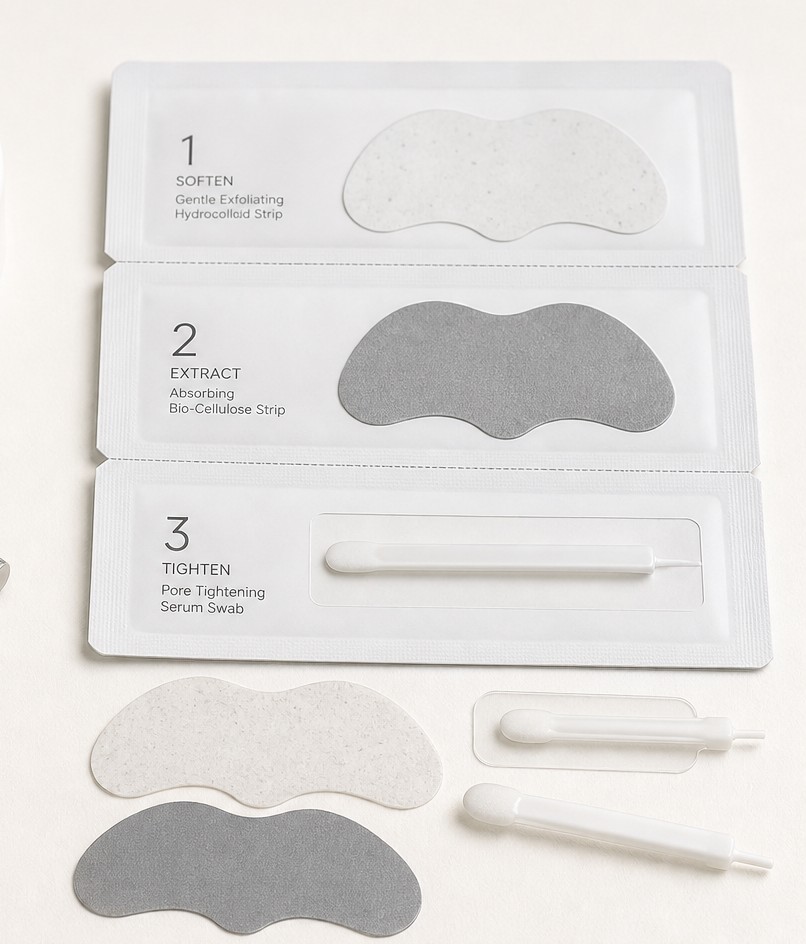
The word "pore strip" covers two products that work in opposite ways. Which you choose shapes your brand story and your factory shortlist.
| Type | How it works | Best for |
|---|---|---|
| Peel-off strip | A water-activated polymer (e.g. PVA) grips sebum plugs and lifts them as it dries and is peeled away | The visible, satisfying "look what came out" result; classic blackhead ritual |
| Hydrocolloid pore patch | Absorbs oil and gunk gradually, removed gently with no harsh pull | Sensitive skin and an overnight, low-irritation experience |
Many brands carry both — the peel-off for the dramatic result, the hydrocolloid for the gentle option. An own-factory oil-and-acne specialist can make both, so you aren't stitching two suppliers together.
Materials, infusions and custom shapes
Beyond the base strip, three levers define a differentiated product:
- Infusions — charcoal, green tea, tea tree or witch hazel add a targeted blackhead / oil-control story on pack.
- Custom die-cut shapes — beyond the standard nose shape, T-zone, chin and cheek shapes, or a branded silhouette. Custom dies carry a tooling minimum, so test on a stock nose shape first.
- Packaging — printed single-use sachets, booklets or cartons; start on stock sachets and add custom packaging as the line scales.
A pore strip rarely sells alone — it lives next to blotting paper, oil-control film, acne patches and treatment pads on an oily-skin shelf. Sourcing them from one oil-and-acne specialist means one relationship, one compliance set, and a coherent pore-and-oil-care range instead of five mismatched suppliers.
How to vet a real pore-strip factory
- A named, visitable factory and its cleanroom class (e.g. Class-100,000) — not a trading re-packer.
- The right licenses for a skin-contact strip in your market (in China, cosmetics plus disinfection where relevant).
- Both technologies in-house if you want to offer peel-off and hydrocolloid without two suppliers.
- A launch-friendly MOQ — around 3,000 units on a stock nose shape, scaling on the same line.
- An NNN before you share artwork or a custom shape.
Building a pore & oil-care line?
YANSE COS is a 20-year oil-and-acne specialist making nose and pore strips alongside blotting paper, oil-control film, acne patches and treatment pads under one audited roof. Send the strip you sell or admire now and we'll benchmark a matched-or-better version.
Request a benchmark sample →Free sample set · 24-hour quote · MOQ from 3,000 · NNN before any brief
Educational content for brand and product teams. Product and claim requirements vary by market regulation; confirm any on-pack claims against the rules of your target market before launch. YANSE COS is a contract manufacturer (OEM/ODM) and does not sell finished consumer goods under its own brand.