
In May 2026 a premium US makeup brand turned blotting paper into a spray, and the idea travelled fast. Since then twenty other suppliers have put a liquid blotting mist on Amazon. We have been tracking all of them week by week, alongside the search demand for both formats. The numbers tell a clearer story than the hype does — and it is not the story most sourcing decks are telling.
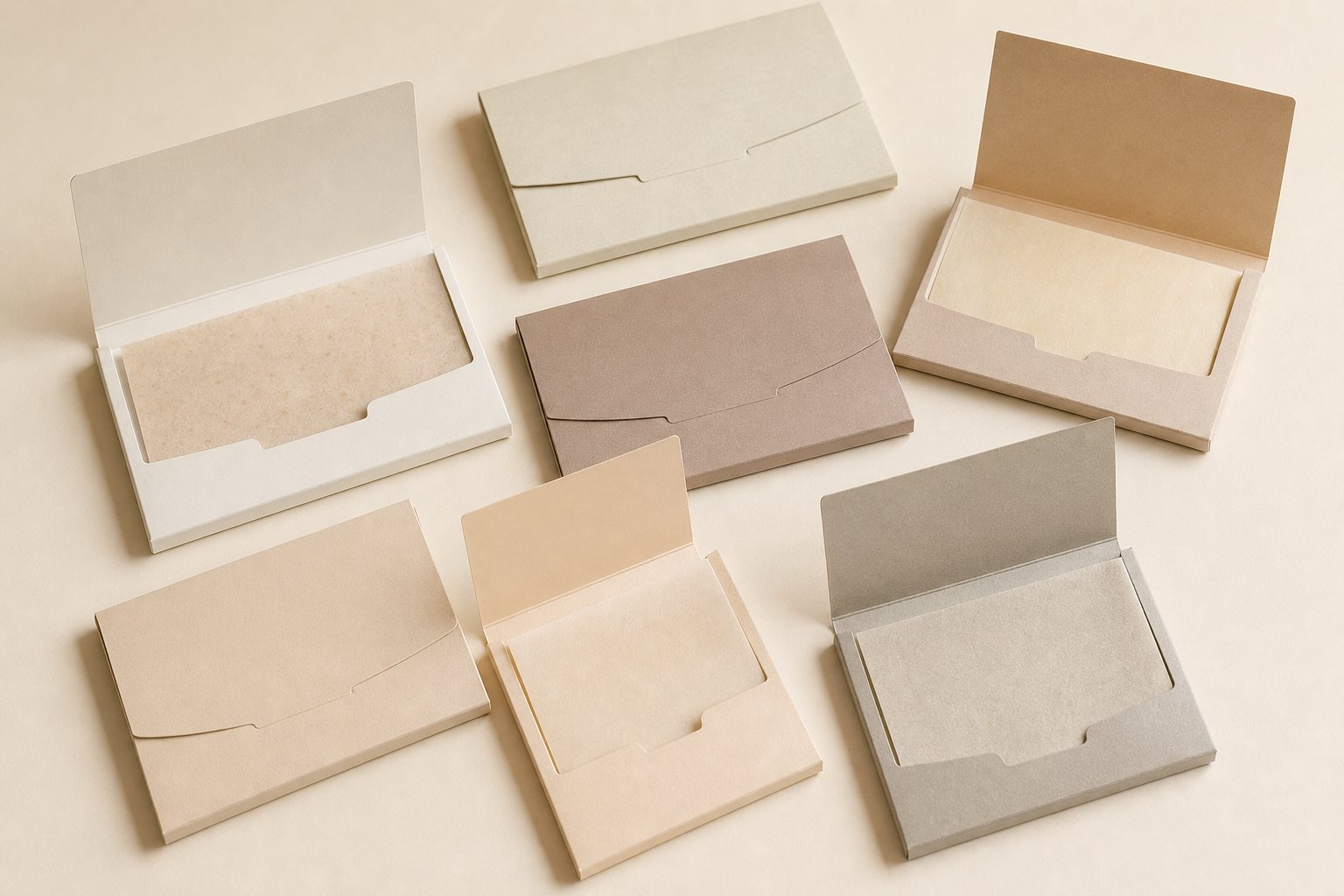 Sample image
The short answer
A liquid blotting spray is a mist that deposits absorbent solids on the skin; blotting paper is a fibre sheet that lifts oil on contact. The liquid idea is genuinely interesting and the brand that launched it is well reviewed. The copies are not. Of the twenty non-originator liquid sprays now listed on Amazon US, half have no ratings at all, and the ten that do average 2.8 stars. A control group of established paper sheets averages 4.6 stars across more than 31,000 ratings.
Meanwhile the category search data points the other way from the buzz: the two liquid search terms together run at roughly 100 searches a month in the US, while the two paper terms run at about 22,900 — and paper has just hit its highest level of the trailing twelve months.
The practical read for a brand: the liquid trend is real as marketing and thin as a category. It is lifting attention for oil control as a whole, and almost all of that attention still lands on paper.
Amazon US listing data and search volumes retrieved 15 September 2026; supply counts tracked at four points between 13 July and 15 September 2026. Search figures are Google Ads exact-match monthly volumes for the United States. Every ASIN cited is public and can be checked.
What each format actually is
Oil blotting paper
A small absorbent sheet — abaca, linen, rice, hemp, wood pulp or charcoal-loaded pulp — pressed against oily areas to lift sebum without disturbing makeup. Absorption is mechanical: capillary action draws oil into the fibre the instant the sheet touches skin. Performance is set mainly by fibre type and basis weight in grams per square metre, which is why two sheets that look identical can behave very differently. There is nothing to stabilise, nothing to dry and nothing to go wrong in the bottle.
Oil-control film
A thin micro-porous polymer film that holds oil inside its pore structure and turns clear where it contacts sebum — a visible cue that it is working. It absorbs more per sheet than standard paper and carries a more premium feel. We compare the two in detail in oil-control film vs oil blotting paper.
Liquid blotting spray
A pump mist carrying absorbent solids — typically a clay or silicate, sometimes with plant cellulose — suspended in a water-based carrier. You spray, the carrier flashes off, and the solids are left on the skin as a matte layer. The appeal is obvious: no sheet to carry, no touching the face, a fine even layer instead of a pressed spot.
The difficulty is equally real, and it is worth naming precisely, because it explains the ratings. A blotting mist has to do four things at once: hold the solids in stable suspension for the life of the bottle rather than settling into a plug at the bottom; atomise them evenly through a pump that will not clog; dry down to a uniform matte without leaving a chalky cast on deeper skin tones or pilling on top of foundation; and stay out of the eyes while being sprayed at the face. Miss any one of those and the product still ships — it simply gets one-star reviews. Paper solves the same brief mechanically and therefore has far fewer ways to fail.
The supply side: twenty entrants, nine weeks
We first logged this format in July 2026, when exactly one non-originator listing existed. Here is what happened next.
| Checked | Copycat listings | Best-reviewed copy | Read |
|---|---|---|---|
| 13 Jul 2026 | 1 | under 10 ratings | First copy appears, two months after launch |
| 4 Aug 2026 | 12 | under 10 ratings | Supply rushes in; no listing has taken hold |
| 9 Sep 2026 | 16 | 16 ratings · 2.4★ | First ratings arrive — and they are poor |
| 15 Sep 2026 | 20 | 17 ratings · 2.5★ | Supply still climbing, demand flat |
That last line is the one worth sitting with. Over nine weeks supply multiplied roughly twentyfold while the best-selling copy gained a single additional rating. This is what a category looks like when factories can see a trend but consumers have not arrived — and when the product that does arrive is not good enough to bring them back.
The verdict the ratings deliver
Twenty listings, judged against nine established paper sheets with 400 or more ratings each:
10 of 20 have none at all
46 ratings in total across all twenty
every one over 400 ratings
31,162 ratings in total
Set side by side: twenty liquid listings have accumulated 46 ratings between them; nine paper listings have 31,162 — roughly 677 times as many. Only one liquid copy sits at four stars or above, and it carries three ratings, which is not yet evidence of anything.
| ASIN | Rating | Ratings | Listed price |
|---|---|---|---|
| B0H758L4MN | 2.5★ | 17 | $11.99 |
| B0HB43YC9V | 3.4★ | 6 | $13.99 |
| B0H7P6TW3R | 3.4★ | 4 | $27.99 |
| B0H72FH4XT | 3.4★ | 4 | $15.69 |
| B0H7P2B4C3 | 3.4★ | 4 | $28.99 |
| B0HBB61BVH | 5.0★ | 3 | $13.99 |
| B0H95CW4BR | 2.1★ | 3 | $11.99 |
| B0H757TNY2 | 2.9★ | 3 | $23.99 |
| B0H949235H | 1.0★ | 1 | $9.99 |
| B0HBR84WM6 | 1.0★ | 1 | — |
One more signal sits in that price column. The twenty liquid listings span $7.97 to $46.66 — a spread of almost six times for what is nominally the same product. The paper control group spans $5.99 to $13.99. A category with no pricing consensus is a category that has not settled, and that is a difficult place to put a private-label launch.
Where the demand actually is
The clearest argument against chasing this format is not the ratings. It is the search data — and specifically what happened to paper while the liquid product was getting all the attention.
| Search term | Per month | 12-month peak | Sep 2025 | Direction |
|---|---|---|---|---|
| blotting paper | 14,800 | 18,100 (Jul–Aug 26) | 14,800 | Highest in the 12-month window |
| oil blotting sheets | 8,100 | 12,100 (Aug 26) | 8,100 | +49% year on year at peak |
| blotting spray | 70 | 260 (Jul 26) | 10 | Rising fast, from almost nothing |
| liquid blotting paper | 30 | 70 | no data | Still statistically tiny |
Both liquid terms are growing quickly in percentage terms — blotting spray ran at ten searches a month in September 2025, and from a base of ten almost anything looks like growth. In absolute terms they remain rounding errors. The paper terms, by contrast, are at their highest point in the twelve-month window the data covers, and oil blotting sheets is up 49% year on year at its peak month.
The marketing budget behind the liquid launch appears to have raised consumer interest in oil control generally — and that interest is converting on the format people already understand. If you sell blotting paper, this trend has been working for you, not against you. The opportunity is to meet the demand it created, not to copy the product that created it.
Head to head
| Factor | Oil blotting paper | Liquid blotting spray |
|---|---|---|
| How it absorbs | Capillary action into fibre, on contact | Absorbent solids deposited as carrier evaporates |
| Proven at retail | Yes — decades, 4.6★ average in our control group | Originator yes; copies 2.8★ average |
| Search demand (US) | ~22,900/month across two core terms | ~100/month across two core terms |
| Formulation risk | Low — material selection, not chemistry | High — suspension stability, atomisation, dry-down |
| Pricing consensus | Settled ($5.99–$13.99 in control group) | None ($7.97–$46.66 across 20 listings) |
| Sustainability story | Strong — natural fibre, FSC options, compostable formats | Weaker — plastic pump pack, water-based carrier shipped worldwide |
| Travel & retail fit | Slim booklet, compact, pop-up card; no liquid limits | Subject to liquid carry-on rules; heavier to ship |
| Best use | The volume line that converts the category's demand | A statement product, if you can fund the formulation work |
So should you launch one?
A straight answer, in three cases.
- You want volume and margin from the oil-control trend → build the paper range. The demand is already there, roughly two hundred times larger, from buyers who know what they are purchasing. This is the case for almost every brand that asks us.
- You want a statement product and can fund real formulation work → the liquid format is achievable, but treat it as a development programme, not a catalogue pick. Twenty suppliers took the fast route and the ratings show the result. Ask for stability data and dry-down testing on deeper skin tones before any tooling spend.
- You want the trend's attention without the trend's risk → lead with paper or film and use the conversation the liquid launch started. A well-made sheet answers the same consumer problem and reviews far better.
 Inside our factory
What to ask any supplier in this category
Whichever format you choose, these five questions separate a specialist from a trader:
- What fibre, and what basis weight in g/m²? A supplier who cannot answer in numbers is reselling someone else's sheet.
- Can I see the same product in three weights? Absorption is tunable; a real maker will show you the range rather than one option.
- Who converts it? Ask whether slitting and packing happen in-house or are subcontracted — it decides your lead time and your consistency.
- What audits has the factory passed, and for what scope? Quality, social responsibility, environment and ethics are separate scopes.
- For a liquid format specifically: ask for accelerated stability data and photographs of dry-down on more than one skin tone. If those do not exist, the product has not been developed.
Building an oil-control range on evidence, not on hype
We have made oil blotting paper since 2006 — 27 styles across abaca, linen, rice, hemp, pulp and charcoal, plus micro-pore and iridescent oil-control film, under one audited roof. Tell us the shine problem you are solving and we will send sheets in the weights worth comparing.
Request blotting paper samples →27 paper styles · film & paper from one supplier · MOQ from 3,000 · 24-hour quote · NNN on request
Educational content for brand and product teams. Marketplace figures were retrieved on the dates stated and change over time; readers should verify current listings before relying on them. Ratings and review counts describe public marketplace listings and are not a judgement on any company. All trademarks belong to their respective owners; Yanse makes no "same as" or "dupe" claims in relation to any brand. Ingredient and claim information is general and varies by market regulation; finished-product claims should be confirmed against the rules of your target market. Yanse Cosmetics is a contract manufacturer (OEM/ODM) and does not sell finished consumer goods under its own brand.