Almost every "best blotting paper" list ranks brands. But a blotting sheet is one of the simplest products in beauty — a fibre, a weight and a finish — and those three things decide nearly everything about how it performs. Here is what we look at on the factory floor, so you can read a pack the way we read a spec sheet.
We make oil blotting paper — we do not sell it under our own brand, and we do not run retail comparison tests. So this page does not rank shop products. What it does instead is explain the five variables a factory actually controls, and which of them you can check yourself on the back of any pack.
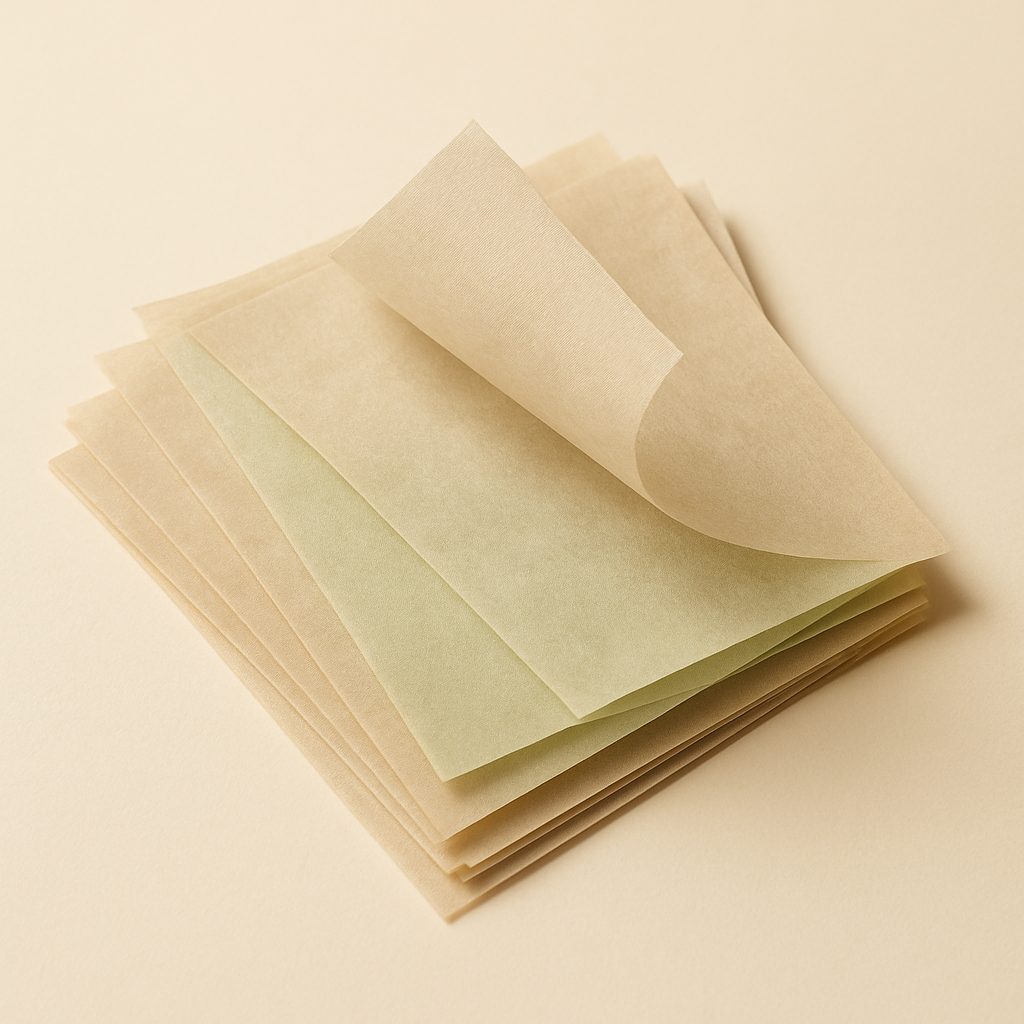 Sample image
The five things that decide a sheet
01 The base fibre
This is the single biggest variable, and the one most packs do tell you. Natural fibres — abaca (the Japanese aburatorigami tradition), linen, rice, hemp, cotton and bamboo — absorb sebum into the fibre itself and feel soft and dry on skin. A micro-porous film works differently: it holds oil in a pore structure rather than a weave, so it picks up more per touch and famously turns translucent where it has lifted oil.
Fibre is also where most of the price difference sits. Abaca and 100% pure linen sit at the premium end; blended pulp sheets sit at the budget end. Both can be perfectly good — they are aimed at different shelves.
02 The weight of the sheet
Weight (grammage) decides whether one sheet does one face. Too light and it saturates after a single press and starts to tear when it meets a damp forehead; too heavy and it feels stiff and papery and wastes material. There is no number printed on a consumer pack, but you can feel it: a good sheet stays intact and dry-edged after blotting the whole T-zone once.
03 Sheet size
Under-sized sheets are the most common quiet compromise in cheap packs, because a smaller sheet means more sheets per reel. If a "100 sheet" pack needs three sheets per sitting, it is a 33-sheet pack. Compare the stated sheet dimensions, not just the count.
04 Plain, powder-coated or film
This is the choice people most often get wrong for themselves. A plain sheet removes oil and adds nothing — ideal on bare skin, but on a full face it can lift some makeup with the oil and leave the finish looking flat. A powder-coated (setting-powder) sheet blots and deposits a fine veil of powder in the same press, so makeup is re-set rather than stripped; this is the answer to "blotting paper that doesn't ruin makeup". A film absorbs the most per touch and reads as premium, which is why it is the usual upgrade for a gift-ready or higher-priced line.
05 The pack
A booklet is cheap, slim and fine in a pocket. A plastic case or mirror compact protects the sheets and lets you actually use them one-handed in public, which is where blotting paper gets used. Packs that force you to dig a stuck sheet out with oily fingers fail at the only moment that matters.
Reading the material: what each fibre is actually good at
These are the substrates we run, described the way we would describe them to a brand choosing one. Nothing here is a ranking — each row is the right answer to a different brief.
| Material | How it behaves | Suits | Trade-off |
|---|---|---|---|
| Abaca | The classic Japanese blotting fibre; thin, crisp, very fast pick-up | Premium and makeup-artist positioning | Highest raw-material cost |
| 100% pure linen (FSC-sourced) | Soft, no additives, clean sheet with a natural tone | Clean-beauty and vegan ranges | Plainer look unless packaging carries the story |
| Linen (colour range) | The volume workhorse; available across seven mix-and-match colours | Retail private label at scale | Less of a "material story" on its own |
| Rice & rice-powder | Notably soft hand-feel; the powder version leaves a light matte finish | Sensitive skin, gentle positioning | Softness can read as less "technical" |
| Hemp | Durable with a tactile, slightly textured surface | Sustainability-led brands | Texture is divisive — sample it |
| Bamboo charcoal | Activated charcoal plus natural fibre; lifts oil and grime together | Deep-clean and men's ranges | Dark sheet shows less visible "proof" of oil |
| Green tea | Infused sheet with a sturdy, premium feel | Antioxidant and soothing stories | Scent is a preference, not a universal plus |
| Powder-coated (setting powder) | Blots and re-mattifies in one press; three powder loads available | Anyone wearing full makeup | Shade and load must match the target market |
| Micro-porous film | Around 30% higher absorption per touch; turns clear where it lifts oil | Premium upgrade from sheet to film | Not a natural-fibre story |
| Iridescent film | Dual-colour finish, gift-ready shelf presence | Giftable and limited editions | Bought as much for looks as performance |
| Ultra-soft / suede | The gentlest textures we make | Reactive and sensitive skin | Lower durability per sheet |
Press a sheet once across your whole T-zone, then look at the sheet, not your face. A good sheet shows an even, translucent oil pattern and is still intact at the edges. A poor one is soaked through in one spot, dry everywhere else, and starting to pill — that is a weight-and-size problem, and no brand story fixes it.
Why "best" depends on your face, not the brand
Sort yourself into one of four groups and the answer falls out on its own:
- Bare or minimal makeup — a plain natural-fibre sheet. Nothing to protect, so pick the softest fibre you like.
- Full makeup — powder-coated, almost always. It is the only format designed not to disturb what you have on.
- Very oily / end-of-day shine — micro-porous film, for the extra pick-up per sheet.
- Sensitive or acne-prone — an ultra-soft or rice sheet, pressed not rubbed, and unscented.
If you want that mapping in more detail, we wrote it up separately for oily skin in best blotting paper for oily skin.
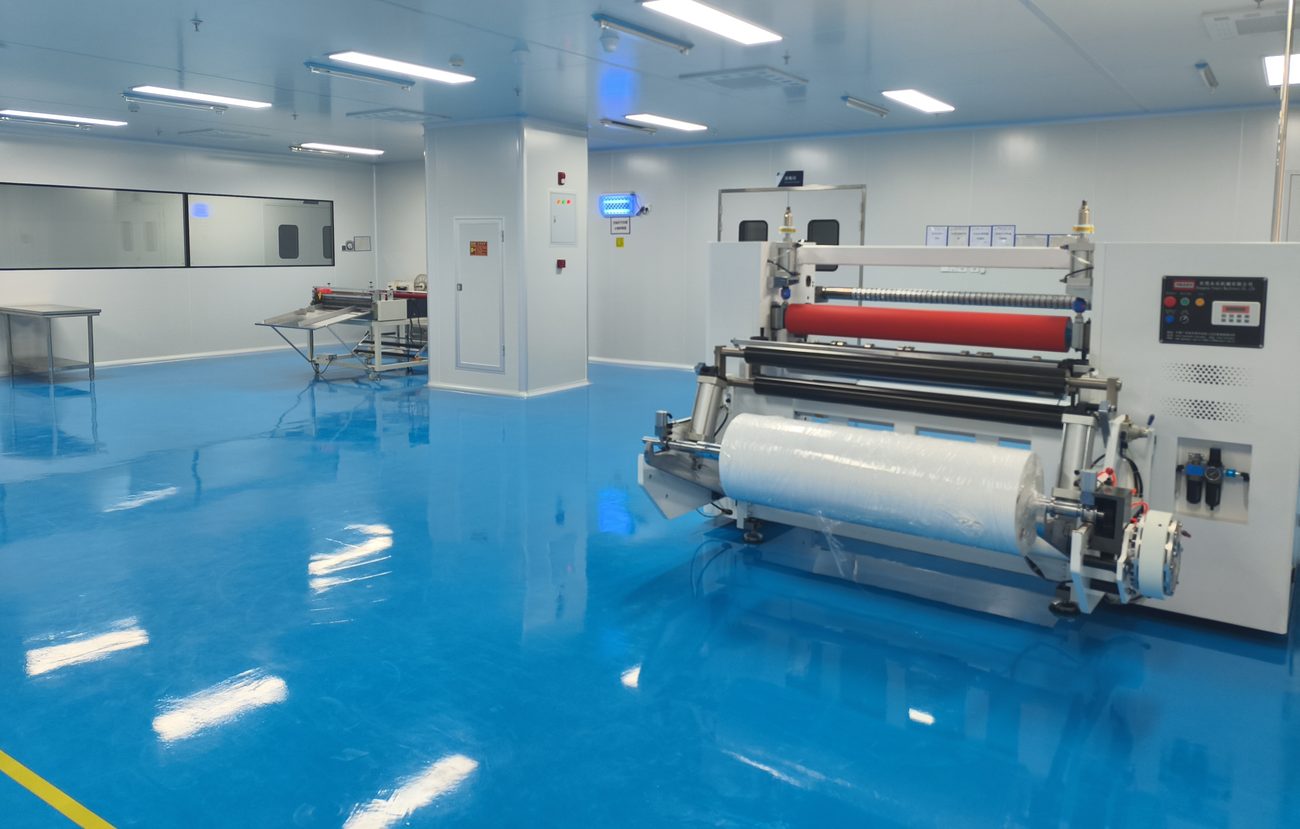 Inside our factory
A note on where blotting paper comes from
Most of the world's blotting paper is made by a small number of specialist converters and then branded, which is why two packs from very different shelves can feel oddly similar — and why the brand name on the front is a weaker signal than the fibre on the back. It also means the meaningful question changes depending on who is asking. A shopper should read the material and the sheet size. A brand should ask whether the factory makes its own substrate or buys paper in and only cuts it, because that decides whether batches stay consistent and who is accountable when they do not.
If you are specifying a blotting paper rather than buying one, the five variables above are your brief: fibre, weight, sheet size, finish and pack. Lock those and the product is most of the way designed. Our own range runs the full set — abaca, linen, pure linen, rice, hemp, bamboo charcoal, green tea, powder-coated and film — with the substrate made in-house rather than bought in.
Specifying a blotting paper?
We have made oil blotting paper since 2006, on our own substrate, across every format on this page. Tell us the shelf and the skin type you are aiming at and we will send sheets to press-test yourself.
Request free samples →Free sample set · 24-hour quote · MOQ from 3,000 · 72-hour sampling
Educational content for brand and product teams. Third-party brands named in the wider market are referenced for context only; we have no commercial relationship with them and do not conduct comparative retail testing. Ingredient and claim information is general and varies by market regulation; finished-product claims should be confirmed against the rules of your target market. Yanse Cosmetics is a contract manufacturer (OEM/ODM) and does not sell finished consumer goods under its own brand.