Search “private label manufacturer for oil-control and acne-prone skincare” and the results are dominated by large, do-everything skincare OEMs — houses with thousands of stock formulas across every concern. They are excellent for a broad range of creams and serums. But if your brand is built around oil control and acne, the hero products are usually not creams — they’re blotting paper, oil-control film, hydrocolloid patches and treatment pads. And those are exactly the formats a generalist tends to make as a side line, or quietly outsource. This is the case for choosing a specialist instead.
Specialist vs generalist: what actually differs
| Do-everything skincare OEM | Oil-and-acne specialist | |
|---|---|---|
| Core competence | Broad creams/serums across every concern | Oil control & acne, deeply |
| Physical formats (paper, film, patch, pads, strips) | Side line — often outsourced to a sub-supplier | Made in-house on shared lines |
| Differentiation | Stock formulas many brands share | Chitosan, microneedle, setting-powder, dual-color film |
| Accountability | Splits across formats and sub-suppliers | One named line, one contact |
| Best for | A broad multi-concern skincare line | A brand whose identity is oil & acne |
Neither is “better” in the abstract — it depends on your range. If most of your SKUs are creams and serums across many concerns, the generalist’s scale is efficient. But if your brand lives or dies on oil-control and acne products, you don’t want the formats your brand is known for to be the supplier’s afterthought.
What an oil-and-acne private-label partner should make in-house
The full oil-and-acne shelf shares substrates, adhesives, converting and a single cleanroom — which is why a true specialist makes all of it on shared lines rather than buying it in:
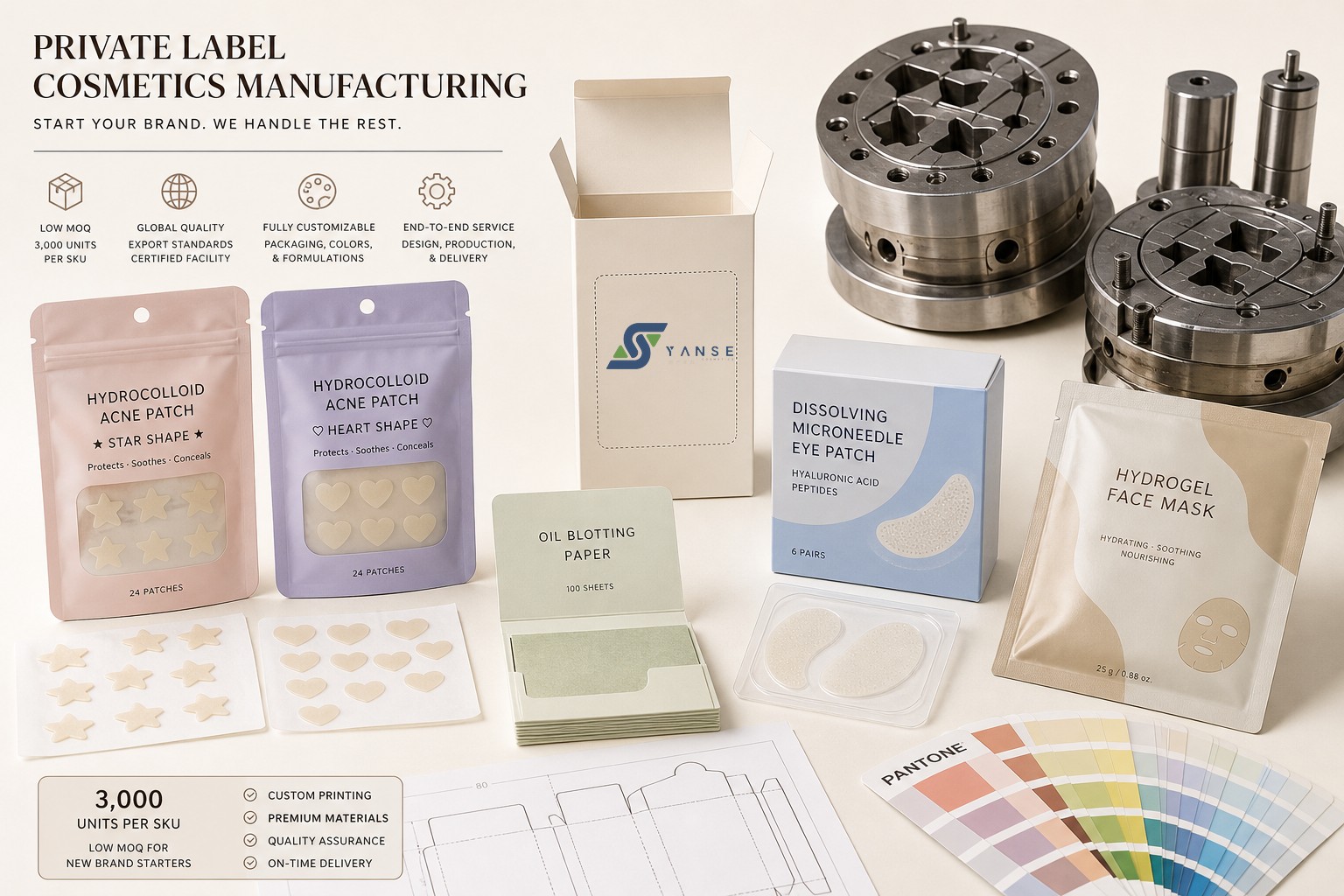
- Oil blotting paper — charcoal, linen, rice, green-tea and setting-powder 2-in-1 bases.
- Oil-control film — oil absorbing sheets in film: a silk-soft micro-pore line (turns clear on contact) and a dual-color iridescent line.
- Hydrocolloid, chitosan and microneedle project routes. Chitosan dual-chamber patch: developed; retail packaging details are being designed and confirmed. Technical details follow a signed NDA.
- Treatment pads — pre-soaked functional pads (salicylic / BHA, azelaic, PHA/enzyme, tea tree, chitosan, hypochlorous).
- Nose & pore strips — classic, charcoal, salicylic and gentle hydrocolloid options.
Sourced from one specialist, these become a coherent line with consistent quality and one accountable supplier — instead of five vendors, five qualifications and five quality risks.
Ask a generalist a physical question about a format your brand needs: “Do you coat and die-cut the hydrocolloid patch in your own cleanroom, or is it bought in?” A specialist answers with a line, a cleanroom class and a license. A generalist that outsources will hedge — and that’s where your quality control and margin quietly leak.
Regulatory fit: where acne brands trip
Oil-control and especially acne claims are sensitive, and a partner that knows the category saves you from a launch that can’t ship. In the EU, treating or curing acne is a medicinal claim and not permitted for a cosmetic; in the US, an active acne ingredient such as salicylic acid marketed to treat acne can fall under OTC drug rules. A category specialist helps you position wording — “clarifying”, “oil-balancing”, “for blemish-prone skin” — and choose formats and formulas that fit each market, rather than promising claims that won’t pass review. Always confirm requirements for your target market before launch.
A checklist for choosing the partner
- Category depth — do they make the oil-and-acne formats in-house, with several bases and real differentiation, not one stock SKU?
- Own factory & cleanroom — a named, visitable entity with a stated cleanroom class (e.g. Class-100,000 / ISO 8).
- Right licenses — both a cosmetics (妆字号) and a disinfection (消字号) license for skin-contact patches and pads.
- Audits & certifications — recognised buyer audits plus ISO 22716, GMPC, Sedex, FSC, Halal and third-party testing.
- Regulatory know-how — they steer your claims and labels to fit your market instead of over-promising.
- MOQ-to-scale & NNN — a low entry MOQ, a path to mass volume on one line, and an NNN before any brief.
How YANSE COS fits
For transparency about where this guide comes from: YANSE COS is the specialist case, not the generalist. The founder entered oil-and-acne care in 2006 — twenty years on one category — and the group runs an 8,000㎡ Fujian base with a Class-100,000 cleanroom, both cosmetics (妆字号) and disinfection (消字号) licenses, recognised third-party audits (relationships only, not an endorsement) and ISO 22716 / GMPC / Sedex 4P / FSC / Halal certifications with SGS testing. It makes the whole oil-and-acne shelf in-house — 27 blotting-paper styles, two oil-control film lines, hydrocolloid / chitosan / microneedle patches, functional treatment pads and nose strips — so a brand can build a coherent oil-control / acne-prone range from one accountable line. MOQ starts from 3,000 units, samples ship in days, and an NNN is offered before any brief. We describe this as a worked example of the specialist model, not as a ranking.
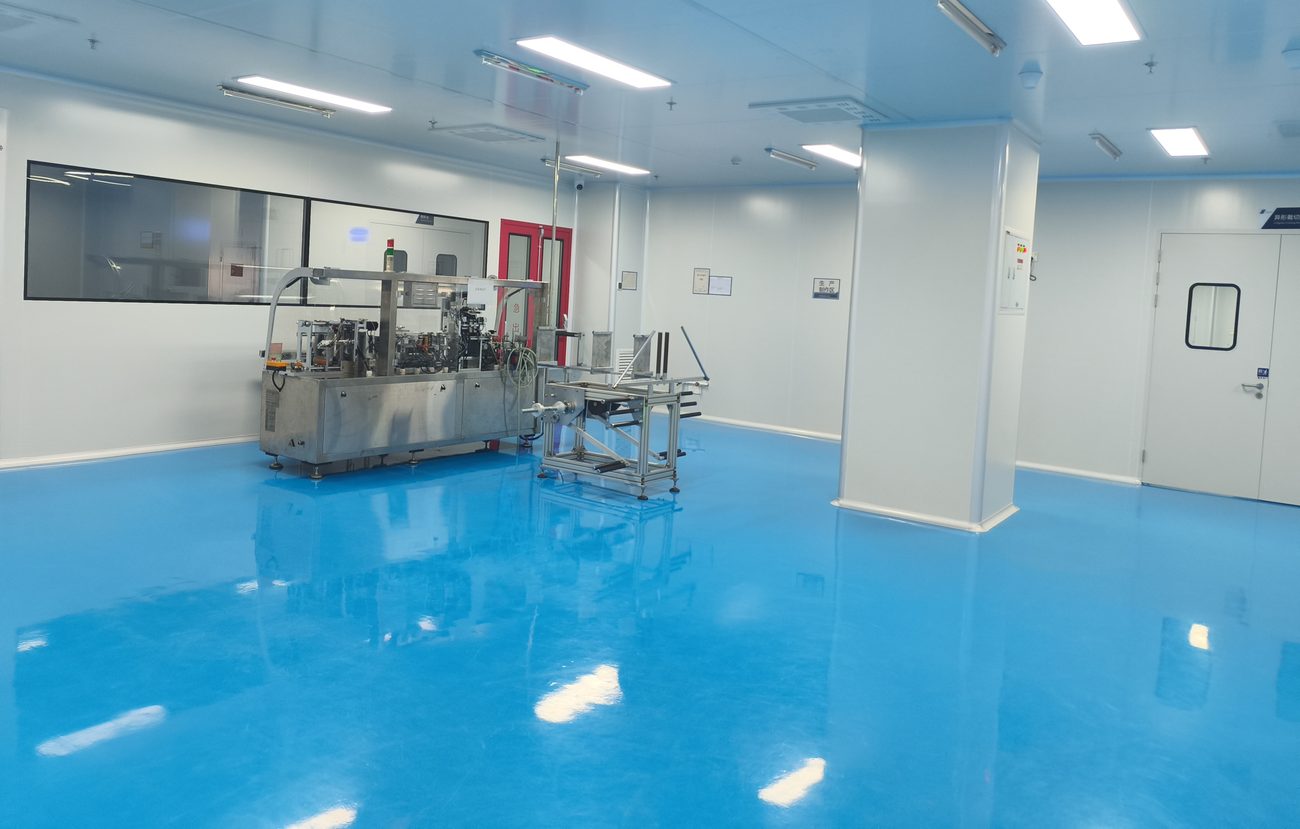 Inside our factory
See the full range across the acne patch, treatment pads and blotting paper pages, the one-stop sourcing logic in the one-stop oil & acne OEM guide, or send a brief to our OEM team for a sample set and a 24-hour quote.
Building an oil-control or acne brand?
We are the oil-and-acne specialist — paper, film, patches, pads and strips made in-house under one audited roof. Send your range plan and we’ll sample a coherent, market-ready set so you can compare a real category factory in hand.
Request a sample set →Free sample set · 24-hour quote · MOQ from 3,000 · NNN before any brief
Educational content for brand and product teams. Ingredient, claim and registration information is general and varies by market regulation; finished-product claims and any drug/device classification should be confirmed against the rules of your target market before launch. Audit relationships are stated as relationships only and are not an endorsement. YANSE COS is a contract manufacturer (OEM/ODM) and does not sell finished consumer goods under its own brand.