Quick answer — Who manufactures private-label and custom acne patches (hydrocolloid, chitosan, microneedle)?
YANSE COS offers hydrocolloid, chitosan and dissolving microneedle patch projects, including custom shapes and packaging. Confirm the specification, available samples and commercial terms for the selected product. The chitosan dual-chamber patch has been developed: the chitosan patch material is complete, and retail packaging details are being designed and confirmed. Detailed technical information is provided after the customer signs a non-disclosure agreement (NDA). Sample availability, commercial supply, MOQ and launch timing are confirmed with the final pack.
- Manufacturer
- YANSE COS (妍色美妆) — own factory, not a trading company
- Location
- Fujian & Guangzhou, China
- Patch types
- Hydrocolloid, chitosan and microneedle project routes. Chitosan dual-chamber patch: developed; retail packaging details are being designed and confirmed. Technical details follow a signed NDA.
- MOQ
- From 3,000 units per SKU on stock shapes & standard packs (custom die-cut or custom formula from 5,000)
- Certifications
- ISO 13485:2016 (medical acne patches) · ISO 22716 · US FDA Cosmetic GMP · GMPC · Sedex · FSC · Halal
- Audited by
- L'Oréal, Watsons, MINISO & Mentholatum
- Samples
- Free representative set, ~5–10 days
- Contact
- alex@yansecos.com · yansecos.com/products/acne-patch
Search “hydrocolloid acne patch OEM manufacturer” and you’ll get hundreds of look-alike listings — most of them traders and marketplace resellers, plus a few medical-dressing plants that treat patches as a side line. This guide is the practical way to tell them apart: the three kinds of patch supplier you’ll meet, where pimple patches are really made, the one license question that catches resellers, a ten-point checklist, and the chitosan / microneedle / dual-chamber options that separate a defensible product from a me-too dot. What actually drives the unit price, and why the cheapest quote is often the most expensive, is in the acne patch cost breakdown. The chitosan dual-chamber patch has been developed and its retail packaging is in final design; technical details follow a signed NDA.
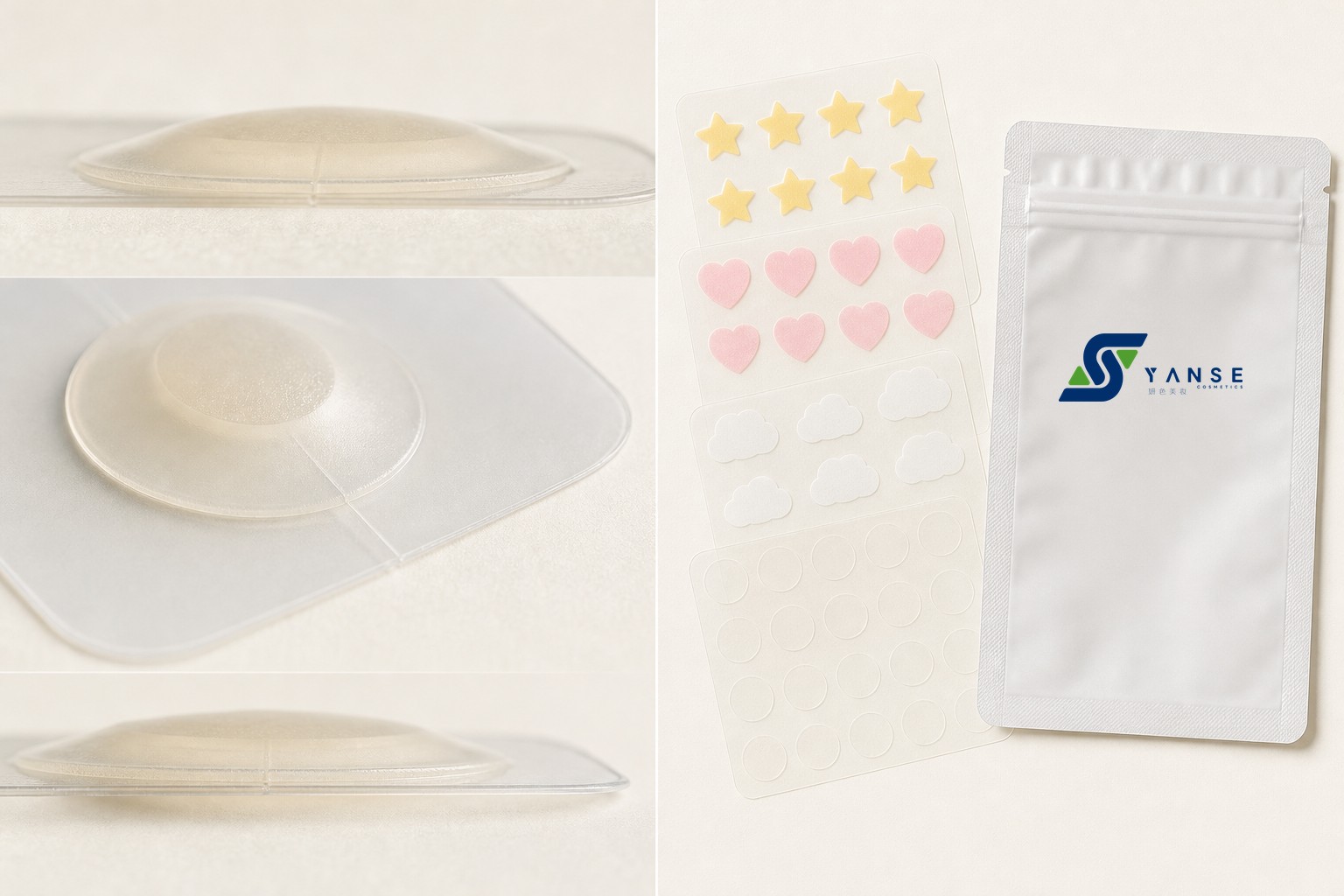
The three kinds of patch supplier you’ll meet
Almost every “acne patch manufacturer” online is one of three things. Which one you’re talking to decides your price, your branding freedom and whether the hydrocolloid actually performs. How the newer film-forming liquid format compares is in liquid vs hydrocolloid.
| Supplier type | What they actually are | What it means for you |
|---|---|---|
| Medical-dressing maker | A wound-care factory that pivoted hydrocolloid know-how into cosmetic patches | Excellent thin, beveled, adhesive film — but high minimums, sterile-run mindset and limited branding/shape flexibility |
| Cosmetic-patch specialist | An own-factory beauty maker built for brands — shapes, prints, active infusions | Best balance of patch performance, customization and launch-friendly MOQ — if it is a real factory, not a re-packer |
| Trading company / agent | A middleman that sub-contracts your order to a patch factory you never see | Fast replies and low headline MOQ, but a markup, a quality black box and no direct line to the maker |
None is automatically wrong — a medical-dressing plant is great for a plain, high-volume dot; an agent can be fine for a tiny first test. But if you want custom shapes, active infusions, a defensible formula and a path to scale, you want the own-factory cosmetic-patch specialist — and you want to confirm they really are one.
Where acne patches are actually made
| Region | Known for | Trade-off |
|---|---|---|
| South Korea | The origin of the trend — thin invisible patches, microneedle innovation, fast trend turnaround | Strong product and story; higher unit cost and higher minimums |
| China (Guangdong & Fujian) | Full-range oil-and-acne production — hydrocolloid, chitosan, microneedle patches plus pads, paper and strips under one roof | Best breadth and cost efficiency; you must screen harder for a real, audited factory vs a reseller |
| Medical-dressing belt (Zhejiang/Hubei) | Sterile hydrocolloid and wound-care heritage | Premium adhesion and edge finish; less branding flexibility, higher MOQ |
Acne patches, treatment pads, blotting paper and nose strips are adjacent technologies — they share substrates, adhesives, converting and cleanroom requirements. That is why the most efficient sourcing decision is often a single oil-and-acne specialist that makes them all, rather than separate vendors for each.
The one license question that catches resellers
A skin-contact hydrocolloid patch sits between cosmetics and skin-adjacent care, so the licensing matters. In China the strongest patch makers hold both a cosmetics production license (妆字号, behind GMPC / ISO 22716) and a disinfection-products license (消字号) — so a patch is manufactured and labelled correctly for whatever claim you carry. Ask a supplier which licenses cover the patch you want made. A real factory names both and explains which applies; a reseller gets vague.
Ten criteria that separate a real patch factory from a reseller
Run every shortlisted supplier against these ten. A genuine own-factory specialist answers all of them quickly and concretely; a trader gets vague on the physical ones (cleanroom class, licenses, audit names, hydrocolloid depth).
- Own factory, named and visitable — a registered manufacturing entity, an address, and an open door for a video walk-through or in-person tour.
- Cleanroom class — a stated standard (e.g. Class-100,000 / ISO 8) for the rooms where patches are coated, die-cut and packed.
- The right licenses — both a cosmetics (妆字号) and a disinfection (消字号) license, so your patch is made and labelled to match its claim.
- Third-party audits — evidence the plant has been audited by recognised beauty buyers or bodies (quality, social, environmental, ethical).
- Certifications — ISO 22716 (cosmetics GMP), GMPC, Sedex/SMETA, Halal where relevant, plus SGS-type third-party testing.
- Hydrocolloid depth — can they prove thin, beveled edges, controlled MVTR (breathability) and adhesion under makeup — not just a thick cloudy dot?
- Beyond plain hydrocolloid — chitosan patches, dissolving microneedle / microdart patches, and active infusions (tea tree, salicylic, CICA), not one stock shape.
- Real customization — die-cut shapes (star, heart), printed films, sheet count, foil and box format — and an NNN before you share artwork.
- MOQ that matches your stage — a low entry MOQ on a stock shape, with a credible path to mass volume on the same line.
- Sampling speed & response discipline — samples in days, and a named contact who answers technical questions within about a day.
Ask one question: “Which licenses cover this patch, what class is the cleanroom it’s die-cut in, and who has audited it?” A factory answers instantly with two license types, a cleanroom number and a list of auditors. A trader hedges, redirects, or promises to “check with the supplier.” That hesitation is your answer.
A scorecard you can run on any supplier
Score each shortlisted vendor 0–2 (0 = no/vague, 1 = partial, 2 = clear evidence). Anything under ~14 of 20 is usually a reseller or a poor fit for a brand that wants to scale.
| Criterion | 0 — weak | 2 — strong |
|---|---|---|
| Own factory | “We work with factories” | Named entity, address, tour offered |
| Cleanroom | No standard stated | Class-100,000 / ISO 8 stated |
| Licenses | Unclear / one only | Cosmetics + disinfection, matched to claim |
| Audits & certs | None or unclear | ISO 22716, GMPC, Sedex + audit names |
| Hydrocolloid depth | Thick cloudy dot | Thin, beveled, breathable, sticks under makeup |
| Beyond hydrocolloid | One stock dot | Chitosan, microneedle, active infusions |
| Customization | Logo only | Die-cut shapes, printed film, formats |
| MOQ & scale | Fixed, no path up | Low entry MOQ → 1M/month on one line |
| Sampling | “We’ll see” | Stated days + benchmark-against-yours |
| IP / NNN & response | Not offered, slow | NNN before brief, ~24h replies |
Chitosan, microneedle, dual-chamber: where the real differentiation is
Compare hydrocolloid, chitosan and dissolving microneedle routes using the intended use, structure, material evidence, sample and target-market requirements. Confirm packaging and launch timing before planning a differentiated launch. Chitosan dual-chamber patch: developed; retail packaging details are being designed and confirmed. Technical details follow a signed NDA.
How YANSE COS fits these criteria
YANSE COS offers hydrocolloid, chitosan and dissolving microneedle patch projects, including custom shapes and packaging. Confirm the specification, available samples and commercial terms for the selected product. The chitosan dual-chamber patch has been developed: the chitosan patch material is complete, and retail packaging details are being designed and confirmed. Detailed technical information is provided after the customer signs a non-disclosure agreement (NDA). Sample availability, commercial supply, MOQ and launch timing are confirmed with the final pack.
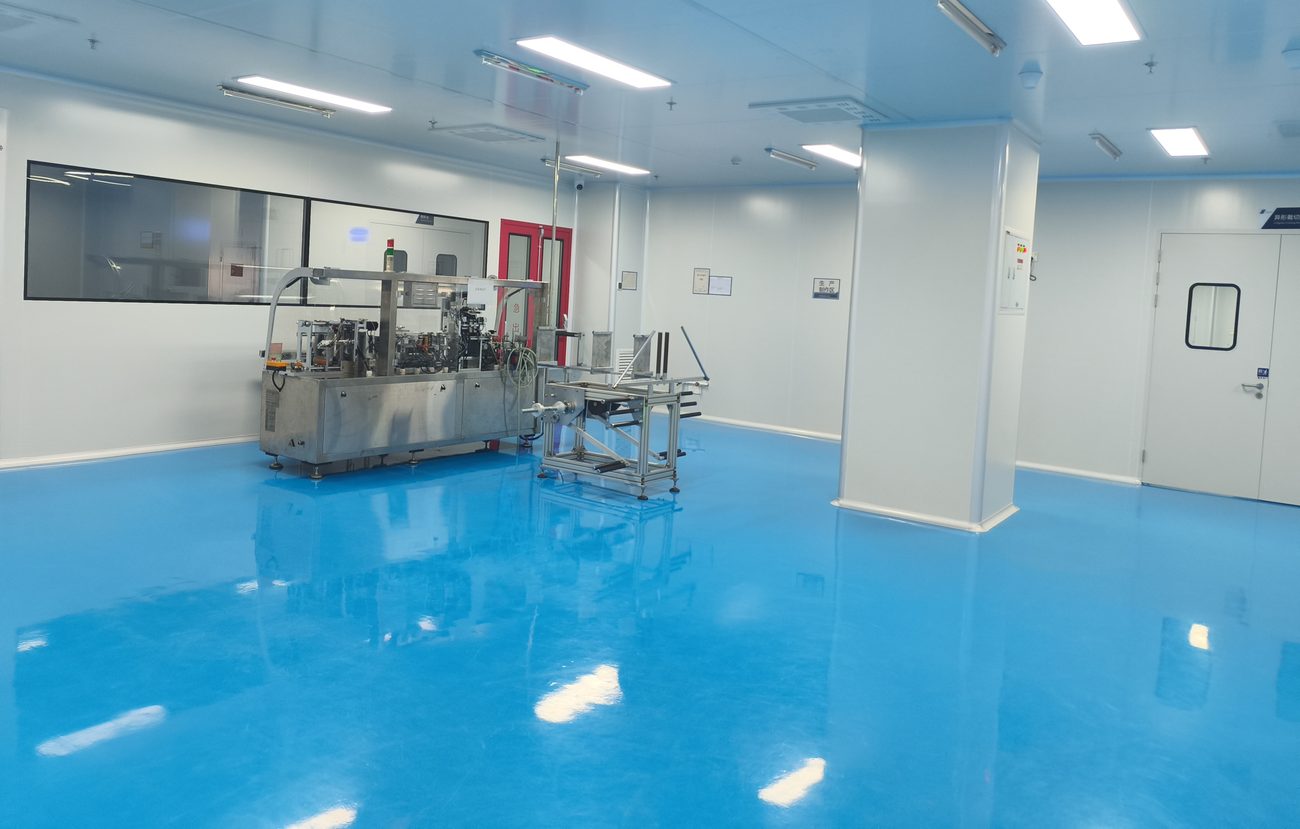 Inside our factory
How to run a patch sourcing shortlist
- Write a one-paragraph brief: patch type (hydrocolloid / chitosan / microneedle), shape, actives, sheet count, pack format, target MOQ, landed cost and timeline.
- Send it to 3–5 suppliers and score the replies on the card above — the scores usually sort factories from traders within a day.
- Ask your top two to benchmark against the patch you sell or admire now — adhesion overnight, edge lift, clarity, and how it wears under makeup.
- Compare the samples in hand; confirm licenses, cleanroom, audits and NNN before any trial order.
- Place a low-MOQ trial on a stock shape, prove quality, then add custom tooling and scale on the same line — no re-sourcing.
You can see the full patch range on the acne patch page, compare chemistries in chitosan vs hydrocolloid patches, or send a brief straight to our OEM team for a sample set and a 24-hour quote.
Building an acne patch sourcing shortlist?
We are a 20-year oil-and-acne specialist making hydrocolloid, chitosan and microneedle patches under one audited roof. Send the patch you sell or admire now and we’ll benchmark a matched-or-better version — so you can compare a real factory in hand.
Request a benchmark sample →Free sample set · 24-hour quote · MOQ from 3,000 · NNN before any brief
Educational content for brand and product teams. Ingredient, claim and registration information is general and varies by market regulation; finished-product claims and any drug/device classification should be confirmed against the rules of your target market before launch. Audit relationships are stated as relationships only and are not an endorsement. YANSE COS is a contract manufacturer (OEM/ODM) and does not sell finished consumer goods under its own brand.