
Every answer to this question tells you the same thing: they work on whiteheads, not on cystic acne. That is true, and it is only half the question. The other half — why one patch works overnight and the next one does nothing — almost nobody answers, because the answer is in how the patch was made.
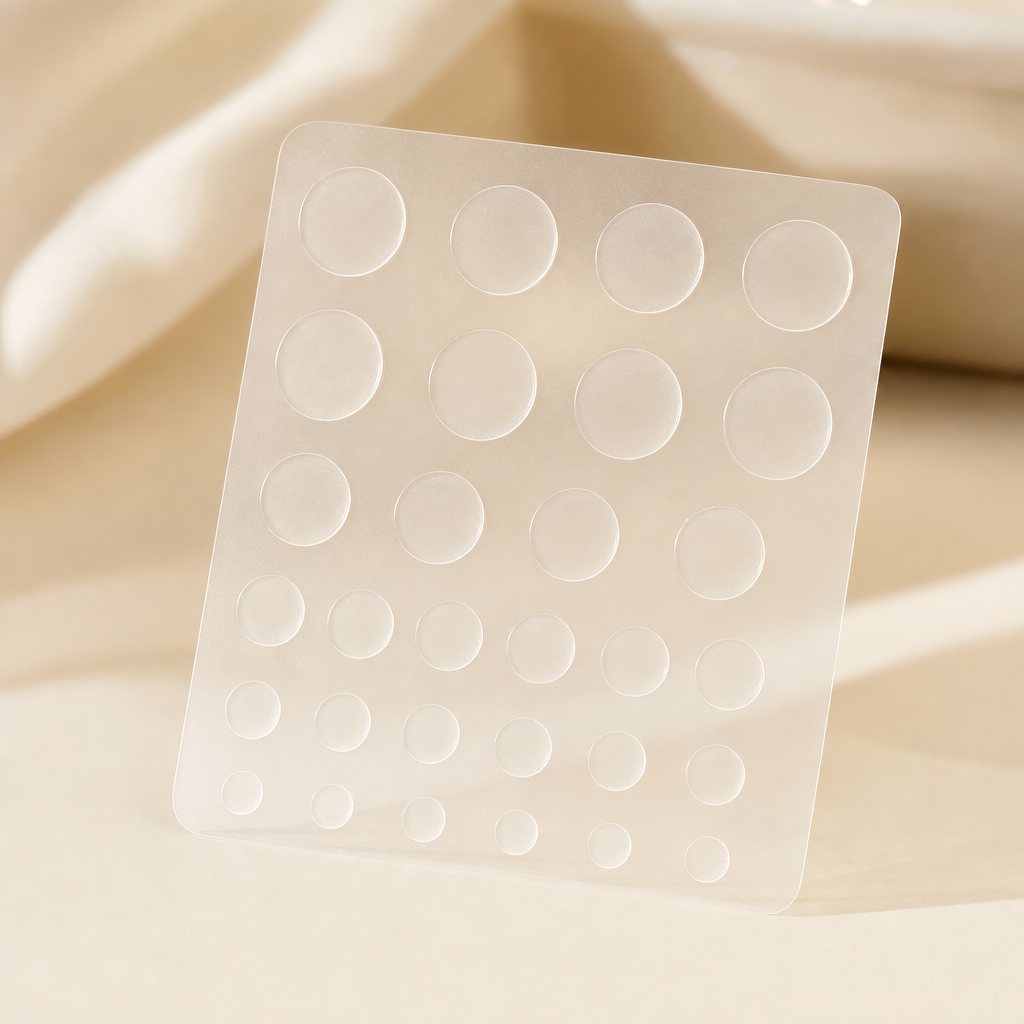 Sample image
The short answer
A hydrocolloid patch works on a spot that has come to a head or has been opened — a whitehead or pustule with fluid at the surface. It absorbs that fluid, flattens the bump, keeps the area moist and covered, and stops you picking at it.
It does not work on a deep, blind or cystic spot with nothing at the surface to draw out, and it does not treat acne — it treats one spot, once.
So far this matches what dermatology sources say, and we have no reason to argue with it. The interesting part is what comes next.
Why results vary so much — the part nobody explains
Read any thread on this and you will see the same split: some people report a spot visibly flattened by morning, others say nothing happened. The usual explanation is "it depends on the spot". That is partly true. But a large share of the variation is the patch, not the spot — and two patches that look identical in the pack can behave completely differently.
Here are the five variables that differ between products. None of them is printed on the box.
1 · How much absorbent is actually in it
A hydrocolloid patch is a water-repelling rubbery matrix with absorbent particles dispersed through it — usually carboxymethylcellulose (CMC), sometimes pectin or gelatin. Those particles do the work. The matrix just holds them in place and sticks to skin.
The loading level varies enormously between products, and a low-loaded patch simply cannot absorb much. It will still stick, still look like a patch, still be sold as one — it just does less. This is the single biggest reason cheap patches disappoint, and it is invisible until you use one.
You can see it after use: a working patch develops a distinct white opaque disc where it absorbed. A patch that stays clear after a night on a genuine whitehead did not absorb much.
2 · Thickness
A thicker patch holds more and lasts longer before it saturates. A very thin "invisible" patch is optimised for being unnoticeable under makeup, which is a legitimate goal — but it saturates sooner and needs changing sooner. If you bought an ultra-thin daytime patch and expected overnight results, that is a format mismatch rather than a bad product.
3 · The adhesive
A patch that lifts at 2 a.m. did nothing for the remaining six hours. Adhesion depends on the tack of the matrix, the finished gauge and the edge geometry — and it fails much faster on an oily face, which is exactly the face most likely to be wearing one.
4 · Bevelled edge or straight cut
A bevelled edge is skived thinner at the rim so the patch feathers into the skin. A straight die-cut leaves a blunt vertical wall that catches on pillows and fingers and lifts. It also reads more visibly on the face.
Bevelling costs more to produce, so it appears on better patches and not on cheap ones. It is one of the few quality differences you can actually feel with a fingernail before you buy again.
5 · The backing film
Most patches carry a thin outer film that keeps the hydrocolloid from drying out and stops it sticking to your pillow. Its quality decides whether the patch stays put and stays discreet. Some very cheap patches have no backing at all.
Clear or ultra-thin patches are usually the thinnest, lowest-loaded products in a range, because transparency and thinness are what they were designed for. They are not fake — they are a daytime cosmetic format being judged against an overnight absorbing one.
Diagnose it: what went wrong, and what to change
Five causes explain almost every disappointing patch. Find the symptom, and the fix follows:
| What you saw | Most likely cause | What to change |
|---|---|---|
| Patch stayed completely clear all night | The spot was closed — there was no fluid at the surface to absorb | Wrong stage, not wrong patch. Wait until it heads up, or use a microdart patch that works below the surface |
| Only a small white dot formed | Low absorbent loading, or a very thin day-format patch | Use a thicker overnight patch. Thin and invisible is a different product doing a different job |
| Patch lifted or fell off in the night | Adhesive failure — usually skin that was damp, oily, or had product on it | Cleanse, then dry properly before applying. If it still lifts, the adhesive system is the problem |
| Edges curled and caught on the pillow | Straight-cut rim rather than a bevelled one | Look for a bevelled edge — the rim is skinned down so it blends instead of standing proud |
| Spot looked flatter, then came back next day | Normal. The patch removed surface fluid; it did not treat the underlying spot | Reapply. A patch manages a spot through its cycle rather than ending it in one wear |
| Red mark left behind after removal | Removal technique, not the patch | Peel slowly from one edge, low and flat, rather than pulling straight up |
| Nothing happened on a deep painful lump | It is a cyst or nodule — closed and below the surface | Hydrocolloid has no mechanism here. Persistent cystic acne is a dermatologist conversation |
What the evidence actually supports
It is worth being precise, because this category attracts more claims than it can carry.
Well supported: covered, moist healing. The principle that a wound surface kept moist and protected closes more evenly than one left to dry into a scab is long established in wound care, and hydrocolloid dressings exist because of it. That is the mechanism a pimple patch inherits.
Reasonable and practical: the barrier effect. Picking and squeezing are strongly associated with post-inflammatory marks, and a patch physically prevents both. This is unglamorous but it is probably the single biggest contribution for most users.
Not supported: that a patch prevents breakouts, reduces sebum production, "draws out" a closed spot, or treats acne as a condition. A patch manages one spot that has already surfaced. Anything beyond that is marketing rather than mechanism.
What it does and does not do — honestly
| Situation | Does a patch help? | Why |
|---|---|---|
| Whitehead / pustule at the surface | Yes — this is the job | There is fluid to absorb, and a moist covered environment supports healing |
| A spot you have already opened | Yes | Absorbs the exudate and covers the broken surface. Clean hands first |
| Deep, blind or cystic spot | No | Nothing at the surface to draw out. Absorption cannot reach it — and cystic acne needs a clinician, not a sticker |
| Blackheads | No | A blackhead is an oxidised plug, not fluid. There is nothing to absorb |
| Redness with no head | Barely | Some cover and some anti-pick benefit; no absorption to do |
| Preventing future breakouts | No | A patch treats one spot once. It does nothing about what caused it |
| Stopping you picking | Yes, and do not underrate it | Picking is a major cause of marks and scarring. A physical barrier is a genuinely useful intervention |
Timing: the mistake that wastes most patches
Applying too early is the most common error. On a spot that has not surfaced yet there is nothing to absorb, so the patch spends the night doing almost nothing and gets written off as useless.
- Wait until it has come to a head — that is when absorption has something to work on
- Apply to clean, completely dry skin. Any residual cleanser, oil or moisturiser destroys adhesion. This alone accounts for a lot of "it fell off"
- Leave it 6–8 hours, or until the white disc appears and stops growing
- Change it rather than stretching it. A saturated patch has stopped absorbing
- Do not layer it over actives. Occlusion drives whatever is underneath deeper into skin — a patch on top of a strong acid or benzoyl peroxide is a route to irritation
How to judge a patch before you buy again
Four checks, all of which you can do in the pack or with a fingernail:
- Run a nail across the rim. A feathered edge means it was bevelled. A sharp step means it was straight-cut
- Press it and let go. Substantial and slightly yielding suggests real absorbent loading; papery and stiff suggests very little
- Check what the last one looked like after use. A clear patch after a night on a genuine whitehead is the strongest signal you have that the loading is low
- Match the format to the job. Ultra-thin invisible for daytime under makeup; thicker opaque for overnight absorption. Judging one by the other's standard is not the product's fault
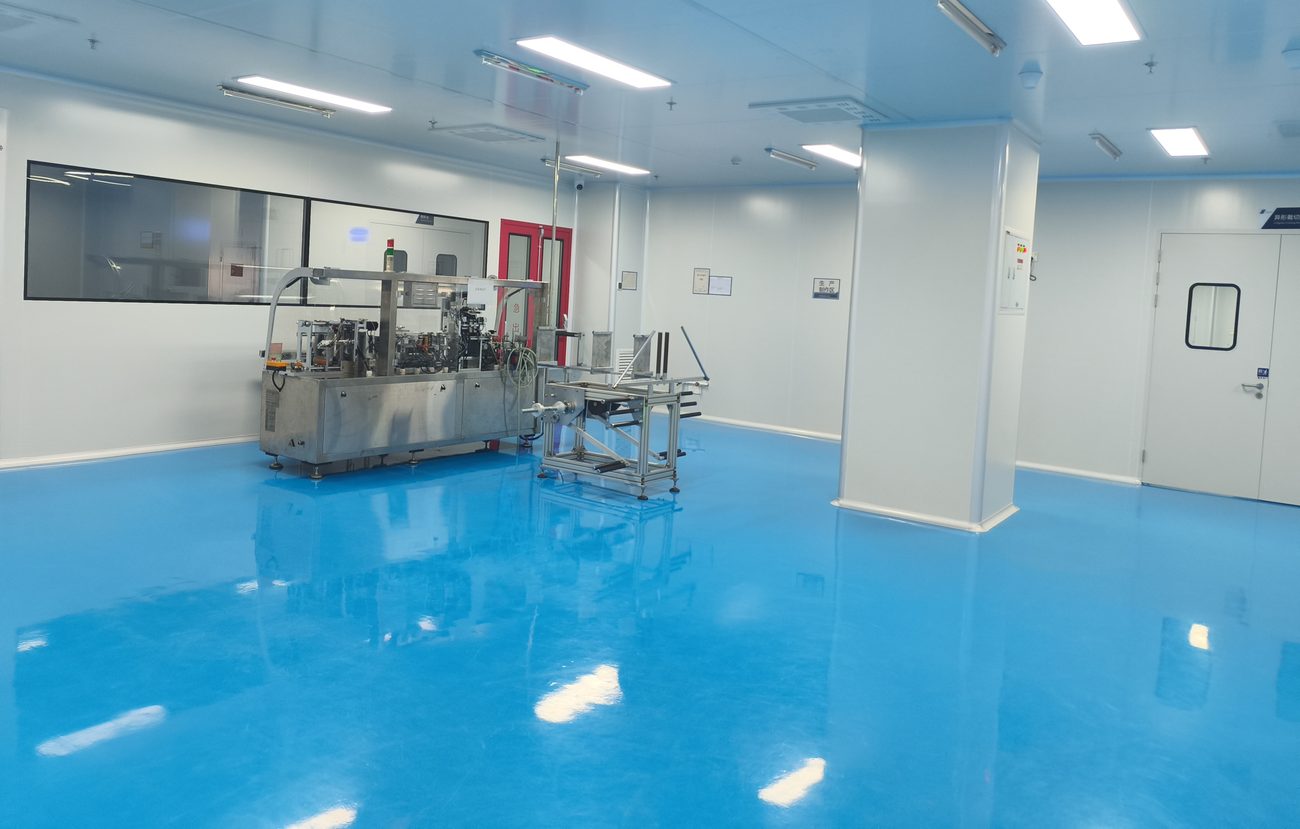 Inside our factory
Why a factory is telling you this
Because these five variables are not a mystery to us — they are the settings we run to. Absorbent loading, gauge, adhesive tack, edge geometry and backing film are numbers on a specification, and a brand that does not specify them gets whatever the coating line happened to produce.
If you are a brand rather than a consumer: put all five in your acceptance criteria, not just in the brief. That is the difference between a patch that gets repurchased and one that gets a mixed review.
The effects described are cosmetic — absorbing surface fluid, covering the area and reducing picking. Hydrocolloid patches are not intended to diagnose, treat, cure or prevent acne. Persistent, painful or cystic acne is worth seeing a clinician about; it responds to treatments a patch cannot substitute for.