These two words get swapped constantly — in product listings, in reviews, sometimes in briefs that arrive at our factory. They describe opposite behaviours. If you brief the wrong one, you get a product that does the opposite of what you intended.
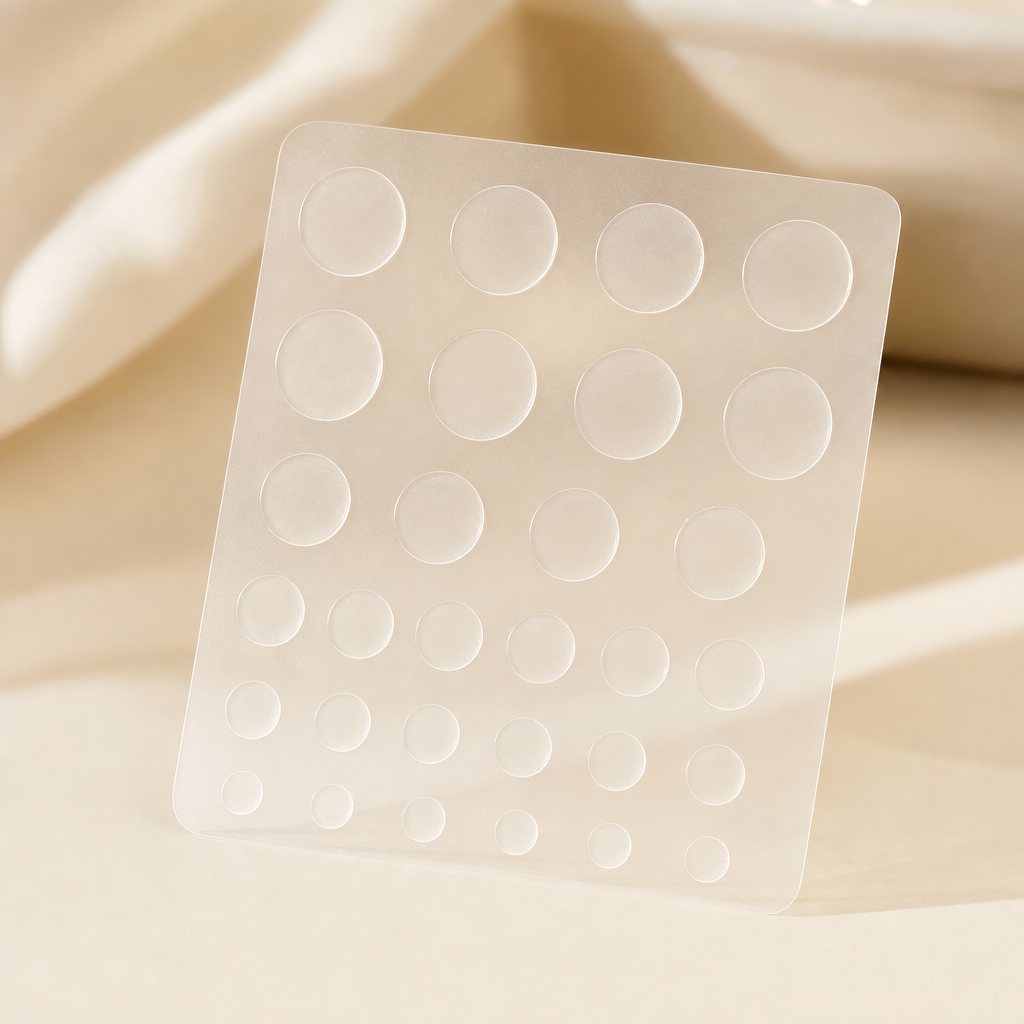 Sample image
The one-line answer
Hydrocolloid absorbs fluid out of the skin. Hydrogel delivers water and actives into it. Everything else follows from that.
Both words start with hydro, both describe soft, skin-friendly, water-related materials, and both are sold as thin adhesive sheets you stick on your face. Consumer copy rarely distinguishes them. But a hydrocolloid pimple patch and a hydrogel eye patch have almost nothing in common beyond their shape.
Hydrocolloid: a dry matrix that drinks
A hydrocolloid dressing is a water-hating (hydrophobic) elastomer matrix — typically a rubber or polyisobutylene base — with water-loving absorbent particles dispersed through it: carboxymethylcellulose (CMC), pectin, sometimes gelatin.
The matrix holds the particles in place and sticks to skin. When wound fluid or sebum contacts the patch, the particles swell, trap the fluid and turn opaque — that is the white blob everyone recognises on a used pimple patch. The material starts dry and ends wet.
It is made by hot-melt coating: the mass is melted and spread onto a liner at roughly 130–160 °C, then cooled. There is no water in the process at all.
Hydrogel: a wet network that gives
A hydrogel is the reverse. It is a hydrophilic polymer network already holding 60–90% water — built from carrageenan, agar, gelatin, or a synthetic network. The water and the dissolved actives are the payload; the polymer is just the scaffolding that keeps them in a sheet.
It is made by aqueous casting: powders dispersed in water, dissolved near 85–90 °C, de-aerated, cooled to a window where actives can be added without cooking them, then poured as a wet film and allowed to gel. The material starts wet and stays wet.
Side by side
| Hydrocolloid | Hydrogel | |
|---|---|---|
| What it does | Absorbs fluid out | Delivers water and actives in |
| Water content as made | Essentially none | 60–90% |
| Base material | Hydrophobic elastomer + CMC / pectin particles | Carrageenan, agar, gelatin or synthetic network |
| Process | Hot-melt coating, ~130–160 °C | Aqueous casting, gelled on cooling |
| Feel on skin | Dry, thin, tacky | Cool, wet, heavy |
| Visible change in use | Turns white where it absorbed | Thins and dries as it gives up water |
| Typical wear | 6–8 h, often overnight | 15–30 min |
| Typical products | Pimple patches, blister patches, wound dressings | Eye patches, face masks, lip masks |
| Can carry a low-pH acid? | Difficult — no water phase to dissolve it | Yes, within limits — the water phase is right there |
They cannot be made on the same line
This is the part that surprises brands most often. A factory that makes excellent hydrocolloid pimple patches has no part of that equipment that helps it make hydrogel masks.
Hot-melt coating and aqueous casting are different machines, different temperature regimes, different drying and gelation stages, different cleaning protocols, different failure modes. Asking a hydrocolloid line to cast a hydrogel is like asking a bread oven to make ice cream.
If a supplier offers you both, ask which line each runs on and ask to see both. A supplier who genuinely runs two lines can answer in one sentence. A trading company will change the subject.
Which one does your brief actually need?
Choose hydrocolloid when
- There is something to absorb — a spot, a blister, a weeping area
- You need long wear, including overnight
- You want the visible "it worked" signal of the white disc
- You want a flat, near-invisible profile under makeup
Choose hydrogel when
- You are delivering hydration, actives or a cooling sensation
- The wear time is a short treatment, not a day
- You want the sheet to conform closely and feel substantial
- You want a reservoir of essence held against the skin rather than evaporating off it
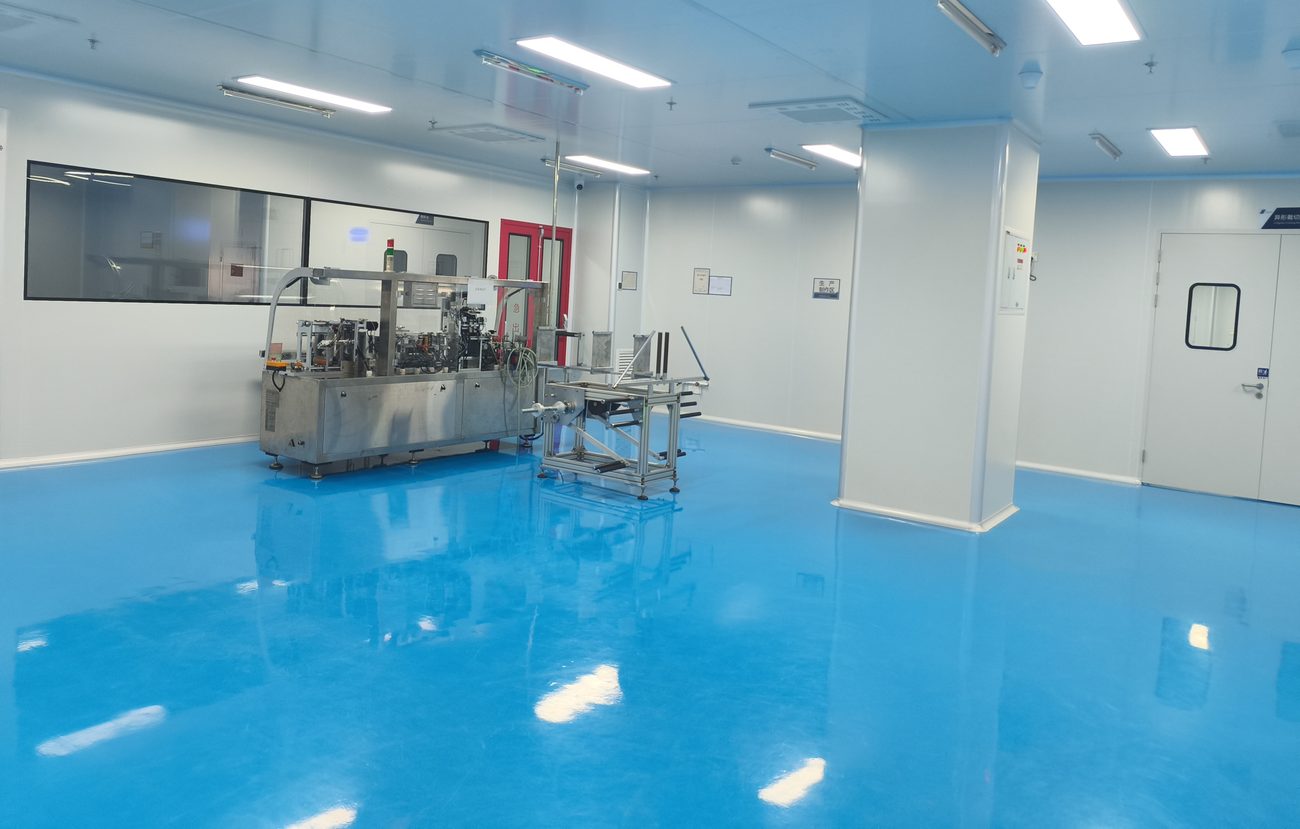 Inside our factory
Brands sometimes ask for "a patch that absorbs and hydrates". The honest answer is that these are opposing functions in one material: anything that absorbs is not simultaneously donating. What can be done is a multi-layer or multi-zone construction, or a two-step routine. Anyone who says one material does both should be asked how.
Developing a hydrogel product?
Yanse manufactures hydrogel eye patches, face masks and lip masks at our own ISO 22716 plant in Fujian — 8,000 m², Class-100,000 cleanroom, 11 QC checkpoints, audited on-site by L'Oréal, Watsons, MINISO and Mentholatum. Our hydrogel line is a three-head system, so two or three formulations can be laid down side by side in a single sheet. Plant-based gel system: halal and vegan compatible as standard.
Request samples & specifications →Three-zone capability · plant-based gel · halal & vegan compatible · 24-hour reply · NNN before any formulation work
Educational content for brand and product teams. Ingredient and claim information is general and varies by market regulation; finished-product claims should be confirmed against the rules of your target market. Yanse Cosmetics is a contract manufacturer (OEM/ODM) and does not sell finished consumer goods under its own brand. Trademarks referenced belong to their respective owners; no comparison or equivalence claim is made.