"Oily skin" covers four quite different problems: a lot of sebum, sebum under full makeup, sebum on skin that is also breaking out, and sweat being mistaken for oil. Each one is solved by a different sheet — and choosing by brand instead of by problem is why so many people conclude blotting paper "doesn't really work".
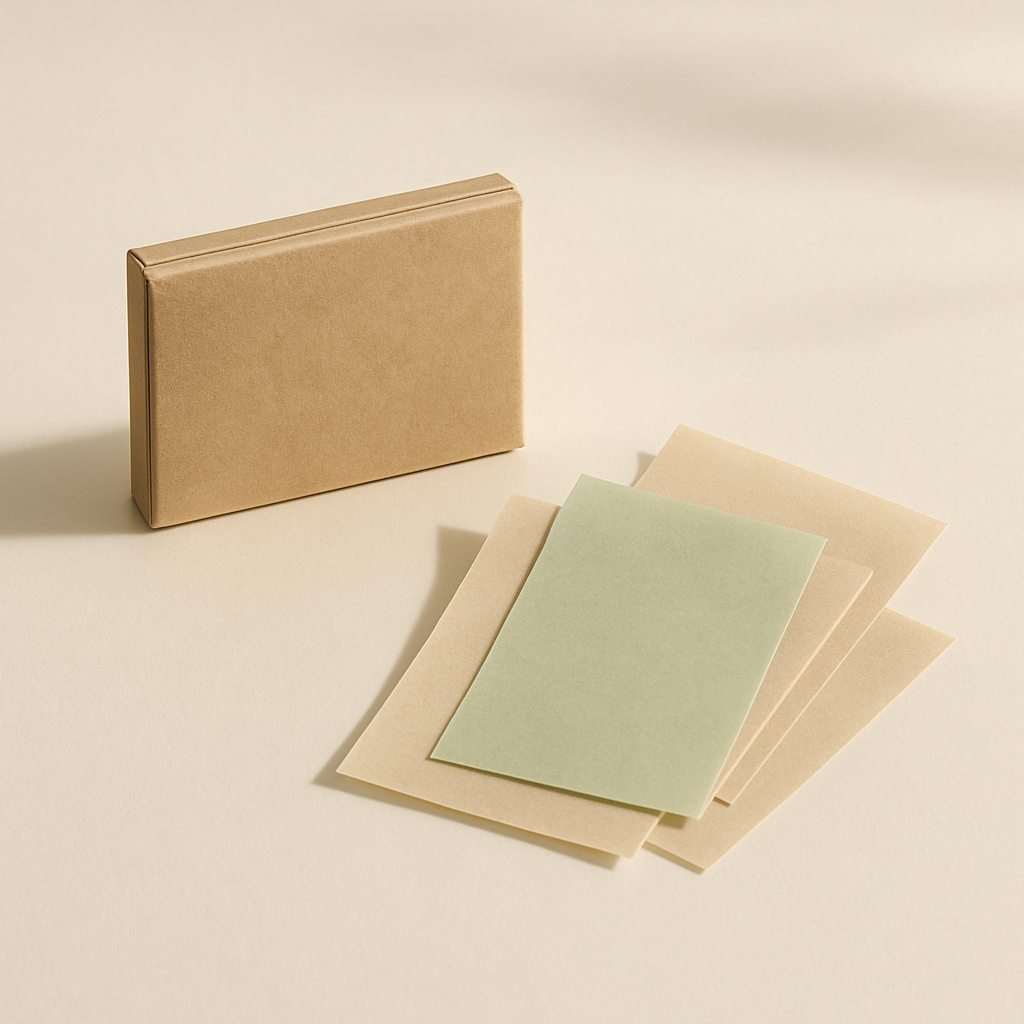 Sample image
Find yourself in one of these four
Case 01 Very oily skin, little or no makeup
Pick: micro-porous oil-control film, or a heavier abaca / linen sheet
Here the only thing that matters is how much oil a single sheet can hold, because your complaint is usually "I go through the whole pack". A micro-porous film absorbs roughly 30% more per touch than a standard sheet and turns translucent where it has lifted oil, which also tells you when the sheet is spent. If you would rather stay with a natural fibre, go heavier rather than larger — weight is what stops a sheet saturating in one press.
Case 02 Oily skin under full makeup
Pick: powder-coated (setting-powder) sheet
This is the case most people get wrong. A plain sheet is very good at removing oil and does not know the difference between sebum and your foundation, so it lifts both and leaves the finish looking flat or patchy. A powder-coated sheet blots and lays down a fine veil of setting powder in the same press, so makeup is re-set rather than stripped. If your real question is "blotting paper that doesn't ruin my makeup", this format is the whole answer — not a better brand of plain sheet.
Case 03 Oily and acne-prone or reactive
Pick: ultra-soft or rice fibre, unscented, one sheet per use
Blotting is usually gentler than washing an oily, breakout-prone face repeatedly through the day, because there are no surfactants and no scrubbing. But on inflamed skin the technique and the fibre carry all the risk. Choose the softest sheet you can get — rice and ultra-soft or suede finishes are made for exactly this — press rather than drag so you are not pulling across active spots, and treat every sheet as single-use, because a used sheet is a loaded sheet. Unscented is the safer default; a fragrance or botanical infusion is a preference, not a benefit, on reactive skin.
Case 04 A sweaty face rather than an oily one
Pick: heavier sheet or film, and larger sheet dimensions
Sweat and sebum are different problems, and almost every blotting sheet on the market is engineered for sebum. Sweat is mostly water, so it saturates a light natural-fibre sheet almost immediately, and a saturated sheet pills or tears against the skin. If heat and exertion are your issue rather than oil, go heavier and physically bigger, and blot the sweat first — let skin settle, then blot oil — otherwise the sheet is spent on water before it touches any sebum.
The same four cases, side by side
| Your situation | What to choose | Why | What to avoid |
|---|---|---|---|
| Very oily, bare skin | Micro-porous film; or heavy abaca / linen | Most oil held per sheet; film shows where it has worked | Thin, undersized sheets |
| Oily, full makeup | Powder-coated sheet | Re-sets makeup in the same press as it blots | Plain sheets — they lift foundation too |
| Oily & acne-prone | Rice or ultra-soft, unscented | Softest contact, no surfactants, no friction | Rubbing; reusing a sheet; added fragrance |
| Sweat-prone | Heavier sheet or film, larger format | Water saturates light fibre instantly | Light sheets; blotting oil before sweat |
| Combination (oily T-zone only) | Smaller plain natural-fibre sheet | You are treating a zone, not a face | Over-blotting dry cheeks |
If one sheet never seems to be enough, the usual cause is not your skin — it is sheet weight and sheet size. A "100-sheet" pack of small, light sheets that needs three per sitting is a 33-sheet pack. Before switching brands, check the stated sheet dimensions, and whether the sheet is still intact at the edges after one full T-zone press.
What blotting paper will not do for oily skin
Worth being plain about, because a lot of marketing blurs it. Blotting removes oil that is already on the surface. It does not reduce how much sebum your skin produces — that is driven by hormones, genetics, heat and humidity — and it is not a treatment for congestion or breakouts. It also does not replace cleansing. What it does is manage shine in the moment without stripping the skin barrier, which is precisely why it is often preferred to washing your face at lunchtime.
The good news in that honesty: because blotting adds nothing to the skin, there is no active to over-apply and nothing accumulates. Very oily skin often blots two to four times a day and that is entirely normal.
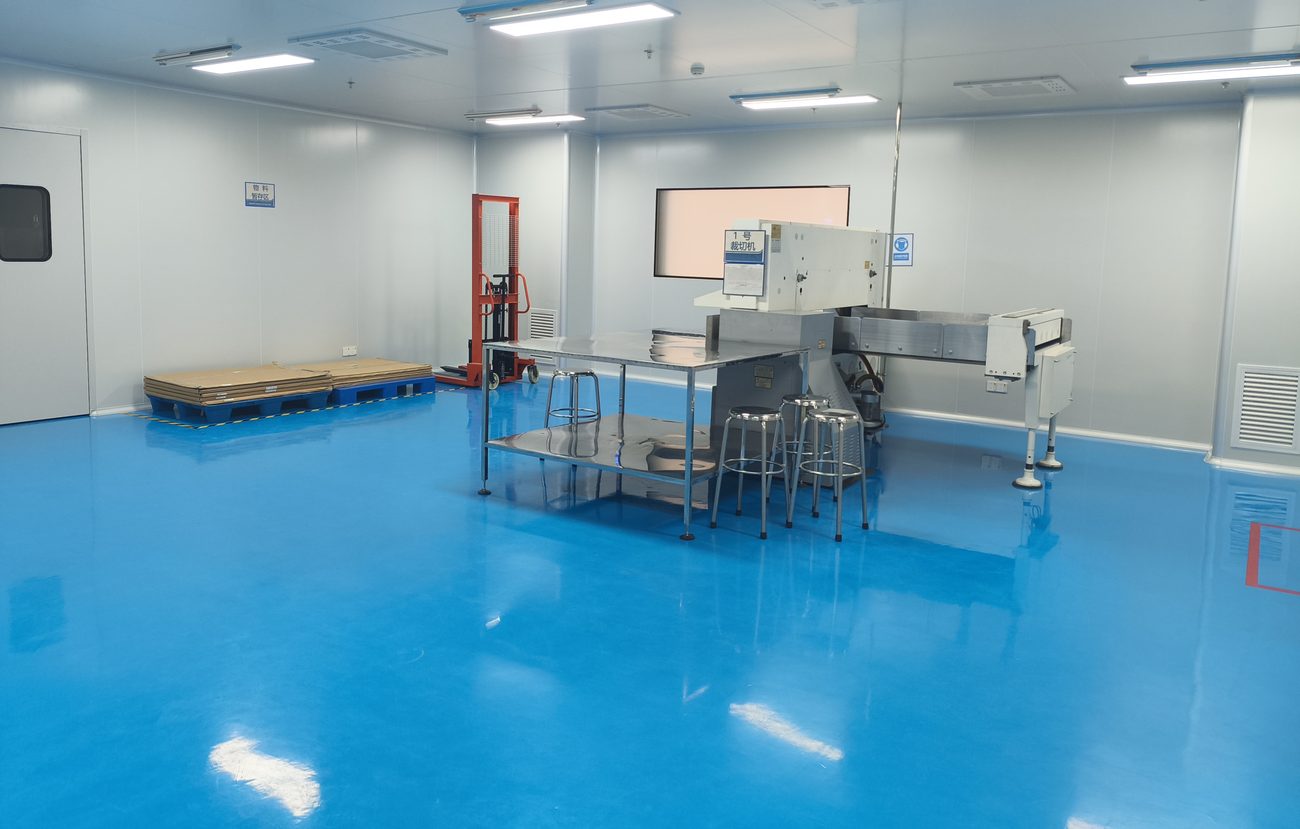 Inside our factory
Does the infusion matter — charcoal, green tea, or plain?
Less than the base fibre does. Bamboo charcoal lifts oil and grime together and is a genuine favourite in deep-clean and men's ranges; green tea brings an antioxidant and soothing story with a sturdier, more premium feel. But both sit on top of a fibre that is doing the actual absorbing, so a charcoal sheet on a poor base will still underperform a plain sheet on a good one. Choose the fibre first, then the infusion for the experience you want. We compared the two most-asked-about options in charcoal vs green tea blotting paper.
Oily skin is not one customer. A range that covers the four cases above — a film or heavy sheet for heavy sebum, a powder-coated sheet for the makeup wearer, a soft unscented sheet for reactive skin, and a smaller sheet for combination skin — sells far better than four variations of the same plain sheet in different colours. All four are the same production line with different substrate and finish decisions.
Building an oily-skin range?
We have made oil blotting paper since 2006 and run every substrate on this page in-house — abaca, linen, pure linen, rice, hemp, bamboo charcoal, green tea, powder-coated and micro-porous film. Tell us which of the four cases you are aiming at.
Request free samples →Free sample set · 24-hour quote · MOQ from 3,000 · 72-hour sampling
Educational content for brand and product teams. General skincare information, not medical advice; persistent or painful breakouts should be discussed with a clinician. Ingredient and claim information varies by market regulation; finished-product claims should be confirmed against the rules of your target market. Yanse Cosmetics is a contract manufacturer (OEM/ODM) and does not sell finished consumer goods under its own brand.