
“Biodegradable acne patch” is one of the most greenwashed terms in skincare. A standard patch is synthetic through and through — a hydrocolloid matrix of synthetic rubbers, a PU or PET film backing, and a plastic carrier sheet. Making one that genuinely breaks down means replacing all three layers. This guide covers the real materials (chitosan, CMC, PLA, cellulose), the traps to avoid, what you can compliantly claim, and how to vet a maker that does it end-to-end rather than slapping “eco” on a plastic patch.
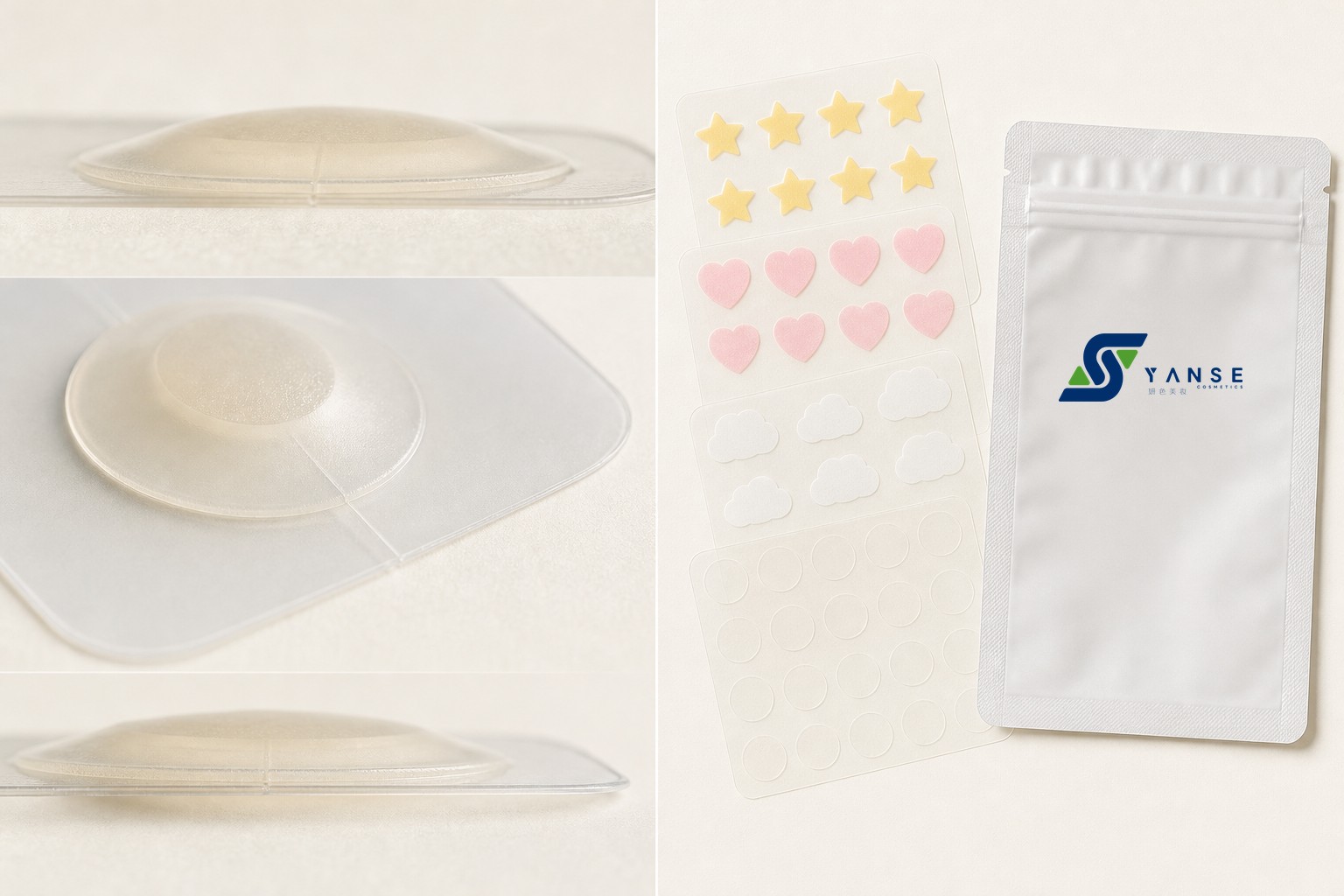
The three layers that decide if a patch really composts
A patch is not one material — it is three, and all three have to be biodegradable for the claim to hold.
| Layer | Standard (synthetic) | Biodegradable alternative |
|---|---|---|
| Matrix | Synthetic rubber hydrocolloid (e.g. polyisobutylene) | Chitosan, CMC (carboxymethyl cellulose) or pectin — naturally derived, film-forming |
| Backing film | PU or PET | PLA (polylactic acid) or cellulose-based film — compostable |
| Carrier / liner | PET plastic sheet | Silicone-coated glassine paper or PLA liner |
Ask a supplier about each layer by name. If they can only speak to the matrix, or wave the word “biodegradable” without the backing and liner specs, that’s a greenwashing red flag.
Chitosan: the clean-beauty matrix
Chitosan is naturally derived, film-forming and biodegradable — one of the cleaner ways to build a patch matrix versus a synthetic hydrocolloid. For a vegan or shellfish-free claim, use fungal (mushroom-derived) chitosan rather than the shrimp/crab-shell kind, and get the source in writing. A chitosan or CMC matrix, on a PLA backing, with a glassine liner, is a genuinely compostable stack.
“Compostable” is a regulated word in many markets — use it only if the material meets a recognised compostability standard, and keep the test documentation. “Biodegradable”, “naturally derived” and “shellfish-free” (with fungal chitosan) are safer, still-compelling claims. Sustainability claims you can’t document are a fast route to a greenwashing complaint.
How to vet a real biodegradable-patch maker
- All three layers specified — matrix, backing film and liner each biodegradable, in writing.
- Chitosan / CMC in-house — a naturally derived matrix coated in-house, not a synthetic hydrocolloid relabelled.
- Compostable packaging option — FSC cartons, paper pouches or glassine, not plastic sleeves.
- The right licenses for a skin-contact patch (cosmetics; disinfection where relevant in China).
- A launch-friendly MOQ (~3,000) and an NNN before any brief.
Want a patch that actually composts?
YANSE COS is a 20-year oil-and-acne specialist making chitosan and CMC-based biodegradable patches — with fungal (shellfish-free) chitosan and compostable packaging options — under one audited roof. Tell us your target market and we’ll put a matched biodegradable sample in your hands.
Request a biodegradable sample →Free sample set · 24-hour quote · MOQ from 3,000 · fungal / shellfish-free option · NNN before any brief
Educational content for brand and product teams. Sustainability, ingredient and claim requirements vary by market regulation; any compostability or biodegradability claim, and any drug/device classification, should be confirmed against your target market’s rules and your supplier documentation before launch. YANSE COS is a contract manufacturer (OEM/ODM) and does not sell finished consumer goods under its own brand.