
Hydrocolloid did not start in skincare. It is a wound dressing material, in clinical use for decades, that the beauty industry borrowed and cut into small circles. Knowing what it was built for tells you precisely what it can and cannot do — and it settles most of the arguments.
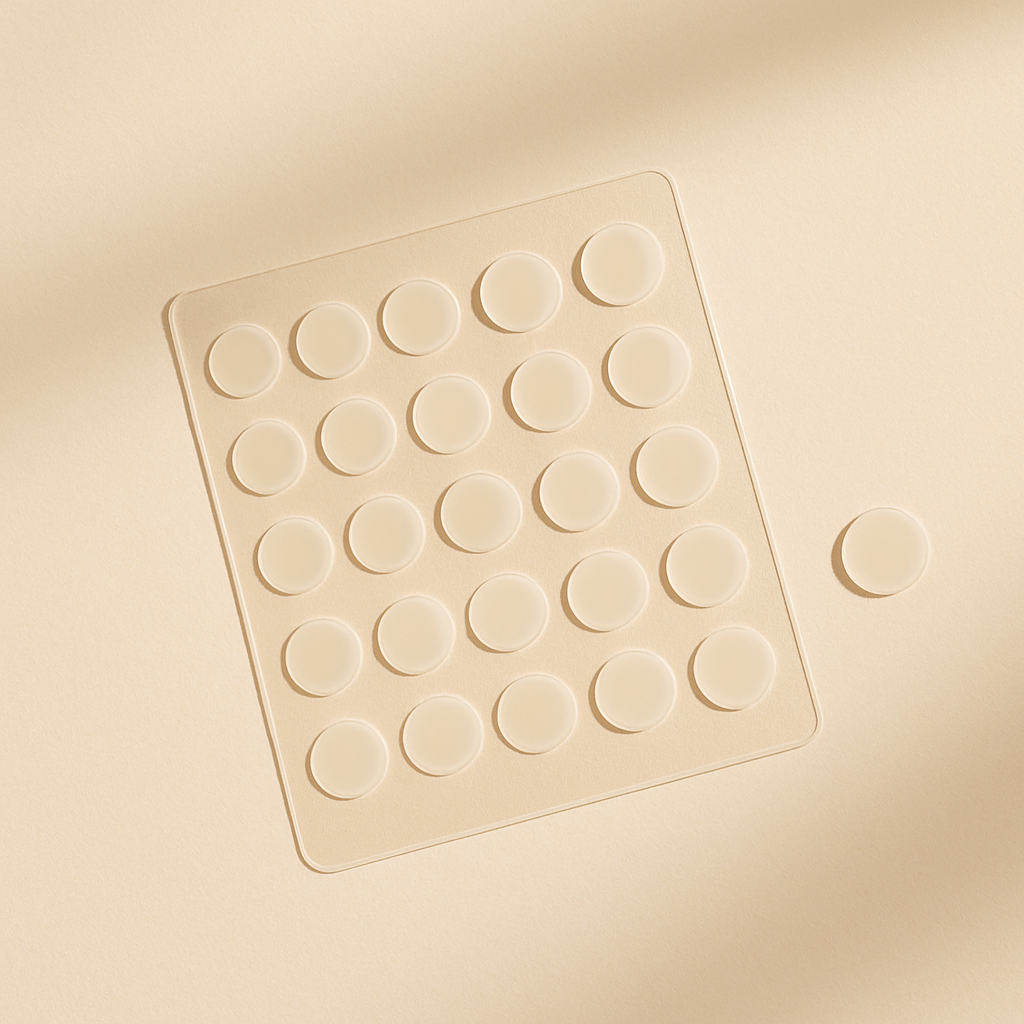 Sample image
What the material actually is
A hydrocolloid dressing is two things at once: a water-repelling elastomer matrix — typically a rubber or polyisobutylene base — with water-loving absorbent particles dispersed through it, usually carboxymethylcellulose (CMC), sometimes pectin.
The matrix sticks to skin and seals. The particles swell as they take up fluid, turning the patch opaque where it absorbed. That white disc everyone recognises is not a reaction and not "infection being drawn out" — it is swollen absorbent holding fluid.
Hydrocolloid does exactly one thing: it absorbs surface fluid and holds a moist, covered environment over the area. Everything it is good at follows from that. Everything it is useless at is a case where there is no surface fluid.
Where it works, and where it doesn't
| Use | Works? | Why — and what to know |
|---|---|---|
| Whiteheads & pustules | Yes | Surface fluid to absorb; the cover also stops picking, which matters more than people think for marks and scarring |
| An already-opened spot | Yes | Absorbs exudate and covers the broken surface. Clean hands first |
| Blisters | Yes — this is its original job | Cushions, absorbs, and keeps the area moist and covered. This is closer to what hydrocolloid was designed for than the acne use is |
| Cystic / blind spots | No | Nothing at the surface. Absorption has nothing to reach. Cystic acne needs a clinician |
| Blackheads | No | An oxidised plug, not fluid. Nothing to absorb |
| Dry, unbroken skin | No | No fluid, no function. It is just a sticker at that point |
The uses people ask about that we will not encourage
Two applications come up constantly and both sit outside what a cosmetic patch should claim:
- Cold sores. Herpes labialis is a medical condition, and in most markets a product positioned for it is regulated as a drug or medical device, not a cosmetic. We do not write cosmetic claims for it and would advise a brand against it — the regulatory exposure is real and the wording is not fixable with careful phrasing.
- Insect bites. A patch can cover a bite and stop you scratching, which is genuinely useful. But the moment the wording becomes "relieves itching", it has crossed from cosmetic into a therapeutic claim in most markets. Cover and protect is claimable; relief is not.
These two searches are growing fast, and a brand chasing them without checking the claim rules is building a recall into its launch. We would rather lose the order than write that dossier.
Why two hydrocolloid patches perform so differently
The material is well understood. The products are not equal, and the differences are manufacturing settings that never appear on a box:
- Absorbent loading — how much CMC is actually dispersed in the matrix. This is the biggest single driver of absorption and it varies enormously. A low-loaded patch sticks and looks right and absorbs little
- Thickness — more material holds more before saturating; ultra-thin "invisible" formats saturate sooner by design
- Adhesive tack — a patch that lifts at 2 a.m. did nothing after that, and oily skin is the hardest case
- Edge geometry — a bevelled rim feathers into skin and resists lifting; a straight die-cut leaves a wall that catches and shows
- Backing film — keeps the hydrocolloid from drying and from sticking to bedding; the cheapest patches omit it
All five are numbers on a specification. A brand that does not specify them receives whatever the coating line produced that day.
Hydrocolloid is not hydrogel — the most common mix-up
| Hydrocolloid | Hydrogel | |
|---|---|---|
| What it does | Absorbs fluid out | Delivers water and actives in |
| Water content as made | Essentially none | 60–90% |
| Feel | Dry, thin, tacky | Cool, wet, heavy |
| Typical wear | 6–8 h, often overnight | 15–30 min |
| Made how | Hot-melt coating, ~130–160 °C | Aqueous casting, gels on cooling |
They cannot be produced on the same equipment, which is why most suppliers genuinely do one or the other. Full comparison: hydrogel vs hydrocolloid.
Getting the most out of one
- Wait until there is something to absorb. Applying to an unsurfaced spot wastes the patch and creates the "it didn't work" impression
- Clean, completely dry skin. Residual cleanser, oil or moisturiser is the most common reason a patch lifts
- 6–8 hours, or until the white disc stops growing, then change rather than stretch
- Nothing underneath it. Occlusion drives whatever is below deeper — a patch over a strong acid is a route to irritation
- Match format to job — thin invisible for daytime, thicker opaque for overnight absorption
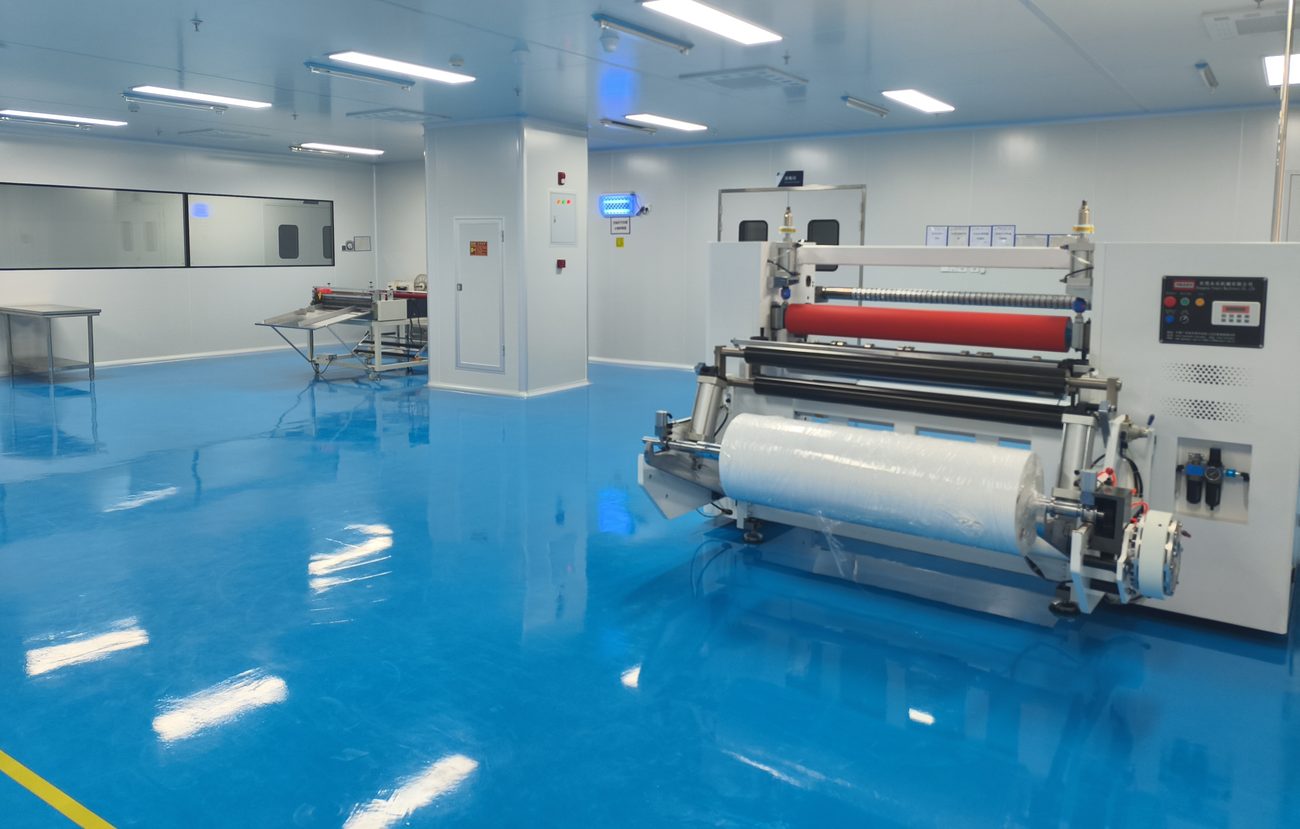 Inside our factory
Effects described are cosmetic — absorbing surface fluid, covering the area and reducing picking. These products are not intended to diagnose, treat, cure or prevent any condition. Cold sores, infected or non-healing lesions and persistent cystic acne are matters for a clinician, and are outside what a cosmetic patch should be positioned for.