
The pouch is not a wrapper. On a hydrogel product it is a functional component — it is the moisture barrier, the light barrier, and the thing that decides how the product feels in the first two seconds after opening.
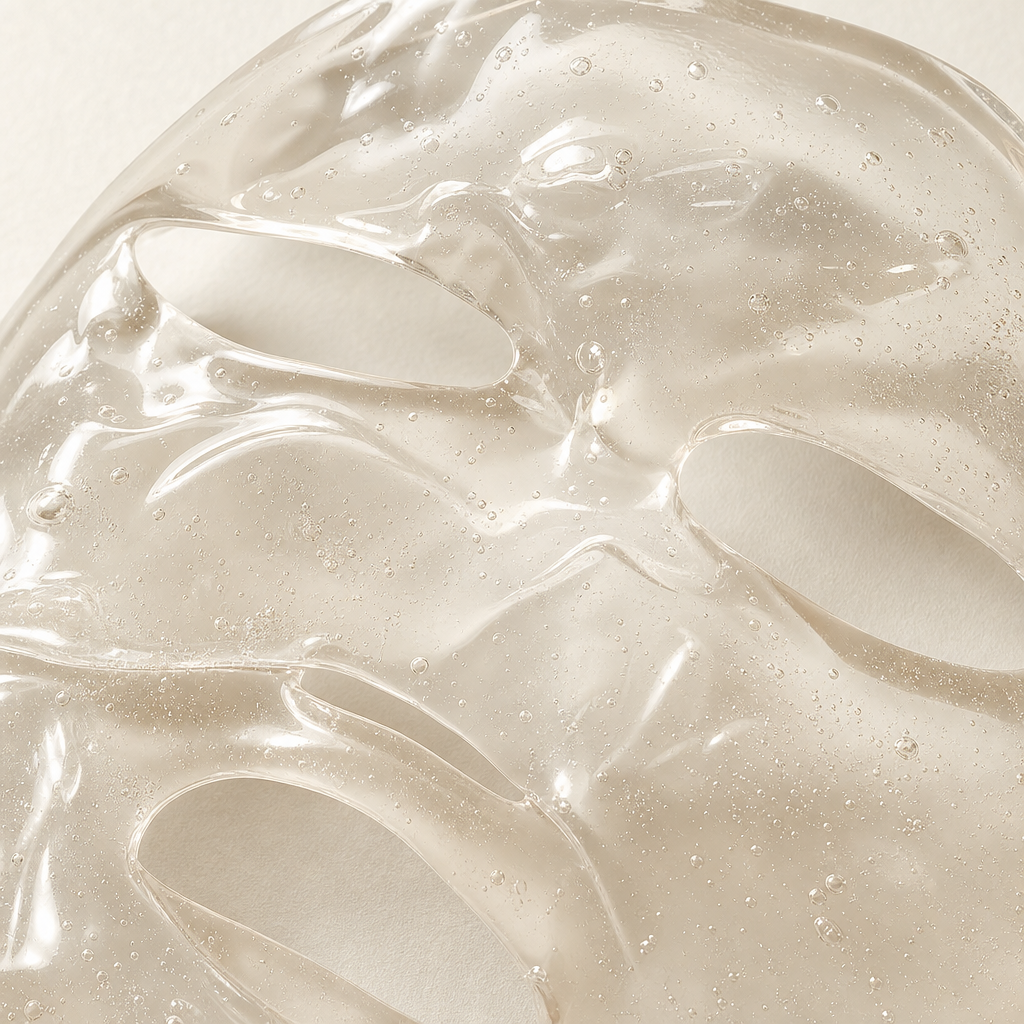 Sample image
The essence charge — the number nobody specifies
A hydrogel sheet already holds most of its payload inside the gel. The free essence added to the pouch is a separate decision, measured in grams, and it is the variable that most affects the moment of first impression.
| Essence charge | What the customer experiences | The problem |
|---|---|---|
| Too little | Sheet feels dry at the edges; sticks to itself; harder to unfold | Reads as a stale or low-quality product |
| Well judged | Sheet slides off the liner easily, feels generous, applies wet | — |
| Too much | Drips on opening; mask slides down the face; hands are wet | The single most common cause of "it wouldn't stay on" |
It interacts directly with gauge: a thick sheet carries a large internal reservoir and needs less added liquid, while a thin sheet needs more. Loading a thick sheet with a high essence charge is the fastest route to a mask that will not stay on a face.
"Free essence charge X g per pouch ± Y, verified by check-weighing at a stated frequency." Without it, the figure drifts between production runs, and the customer experience drifts with it.
Choosing the laminate
| Structure | Moisture barrier | Light barrier | Best for |
|---|---|---|---|
| PET / AL / PE (aluminium laminate) | Effectively total | Total | Long shelf life; light- or oxygen-sensitive actives; the default |
| Metallised film | Good | Good | Cost-sensitive projects — but barrier depends on coating integrity and degrades where the film creases |
| Clear PET / PE | Moderate | None | Shelf visibility, short expected shelf life, robust actives only |
| Paper-look outer laminate | As the barrier layer beneath it | As beneath | A natural or premium look without giving up barrier — the aluminium is still there |
A clear pouch is a legitimate choice and it does cost you shelf life. It should be made with the trade-off understood at the brief stage rather than discovered during stability testing.
The three details that decide whether the barrier works
- Seal width and strength — make it a tested specification. A visually acceptable seal can still leak, and a leaking pouch dries the sheet.
- Contamination in the seal zone — essence caught in the seal is the most common leak cause in this format. It is a filling-line control, not a material choice.
- Headspace — oxygen in the pouch oxidises sensitive actives and makes the pack look under-filled. Minimising headspace, or nitrogen flushing, is available where the active list justifies it.
Jars are a different problem
The 60-pair eye patch jar is popular, and it is not simply a bigger pouch. Four things change:
- It is opened repeatedly. Every opening is a contamination event, which puts far more load on the preservation system than a single-use sachet ever does.
- Essence drains downward. Upper patches dry out while lower ones sit in liquid. The fill level and the patch stacking arrangement both matter, and neither is obvious until you have seen a jar at month six.
- The spatula is a hygiene control. Fingers into the jar is how a preserved product becomes an unpreserved one. It is not a premium accessory; it is functional, and the instruction to use it belongs on the label.
- Period-after-opening applies. A multi-use pack needs a PAO figure supported by testing, which a single-use sachet does not.
Single sachets suit gifting, travel, sampling, retail impulse and any product with a fragile active. Jars suit routine daily use and give a better cost per pair. Jars ask more of the preservation system and are unforgiving of a weak one — so the challenge test matters more, not less.
What the artwork has to carry
Hydrogel is unfamiliar enough that instructions genuinely change the outcome:
- Peel the liner, not the gel — with a small diagram. This measurably reduces tearing complaints from customers whose only reference is a cloth mask.
- Which side goes on the skin, where the two liners differ
- Wear time, and the instruction not to leave it on until dry
- Refrigerate before use if you want the cooling upgrade — it costs nothing and generates disproportionately good reviews
- Do not freeze — freezing destroys the gel network irreversibly
- For jars: use the spatula, close firmly, do not return an unused patch, plus the PAO symbol
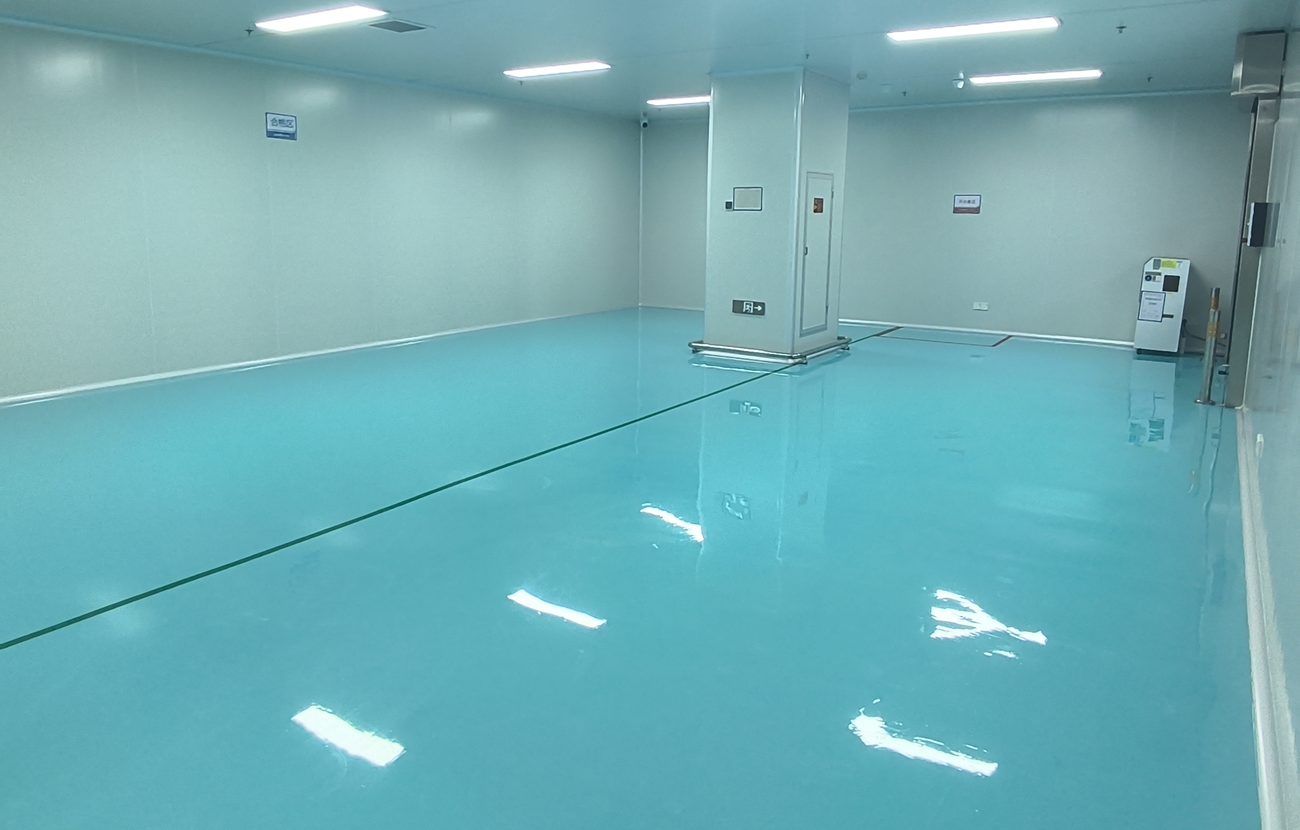 Inside our factory
The packaging block for your brief
- Laminate structure, named explicitly — not "foil pouch"
- Seal width, seal strength and the test method
- Free essence charge in grams, with tolerance and check-weigh frequency
- Headspace requirement, and whether nitrogen flushing is needed
- Pouch dimensions and how the sheet is folded inside
- For jars: fill level, stacking, spatula, PAO, and the challenge test on the in-use scenario
- Artwork requirements, including the liner-peel diagram
Developing a hydrogel product?
Yanse manufactures hydrogel eye patches, face masks and lip masks at our own ISO 22716 plant in Fujian — 8,000 m², Class-100,000 cleanroom, 11 QC checkpoints, audited on-site by L'Oréal, Watsons, MINISO and Mentholatum. Our hydrogel line is a three-head system, so two or three formulations can be laid down side by side in a single sheet. Plant-based gel system: halal and vegan compatible as standard.
Request samples & specifications →Three-zone capability · plant-based gel · halal & vegan compatible · 24-hour reply · NNN before any formulation work
Educational content for brand and product teams. Ingredient and claim information is general and varies by market regulation; finished-product claims should be confirmed against the rules of your target market. Yanse Cosmetics is a contract manufacturer (OEM/ODM) and does not sell finished consumer goods under its own brand. Trademarks referenced belong to their respective owners; no comparison or equivalence claim is made.