
Every other defect gets a second chance. A mask that tears during removal from the liner is judged before it touches skin, and that review is written within thirty seconds of opening the pouch.
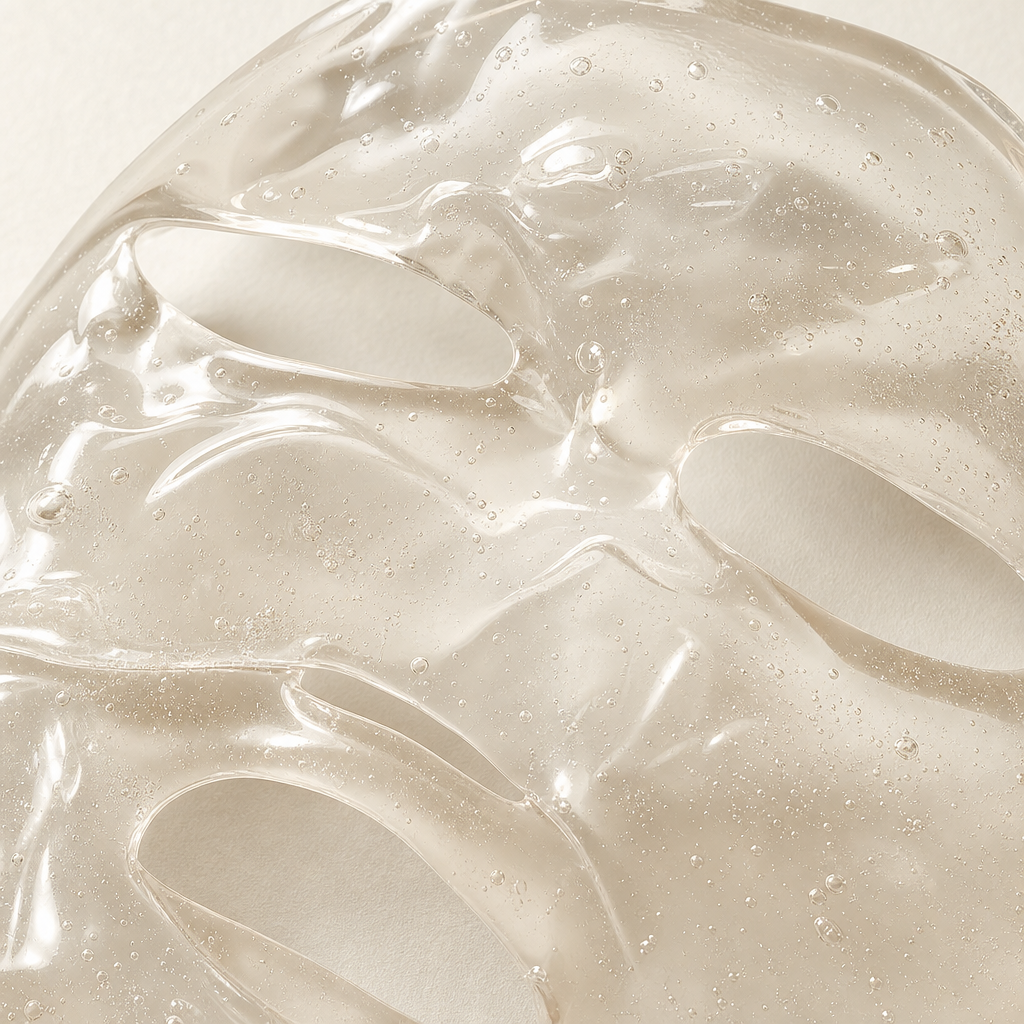 Sample image
Why it matters more than it should
A tear does not just spoil one use. It happens at the exact moment the customer is forming a first impression, it is completely visible, and it feels like the brand's fault rather than an accident. In our experience it generates complaints out of all proportion to how often it occurs.
It is also, fortunately, one of the more diagnosable defects — if you know where to look.
The seven causes
1 · Gel strength too low for the gauge
The most common single cause. A sheet has to survive being peeled off a liner, unfolded and positioned. If the gel is soft and the sheet is thin, it will not. Thin plus soft is the combination that tears — either number alone is usually survivable.
Fix: raise total gum content, or shift the gel system toward a firmer set, or increase gauge. Each has consequences elsewhere, which is why this is a sampling conversation and not a switch.
2 · The wrong gel system for the job
Not all plant gels behave alike. Kappa carrageenan sets firm but brittle — strong in compression, prone to snapping when flexed. Iota carrageenan sets softer and markedly more elastic — it deforms rather than fracturing.
A mask built on kappa alone can pass a strength test and still tear in the hand, because the failure mode is brittleness, not weakness. Blending toward iota, or adding locust bean gum, raises elasticity and cohesion. Locust bean gum in particular shows a well-documented synergy with kappa carrageenan at low addition levels, producing a gel that is both firm and less brittle.
Ask for a fold test, not only a gel-strength number. Fold a sheet back on itself and release it. A brittle gel cracks along the fold line; an elastic one recovers. This costs nothing and predicts real-world tearing far better than a compression figure alone.
3 · Advanced syneresis
As a gel expels water over time, the network contracts and the sheet becomes both thinner and weaker at the edges. A mask that was fine at week two can tear at month twelve. If tearing complaints correlate with older batches, this is the first thing to check.
4 · Release liner peel force too high
A pure packaging cause with a purely mechanical fix. If the liner grips harder than the gel's tear strength, the gel loses. The standard answer is differential release liners — the two sides have deliberately different peel forces, so the consumer removes one at a time and the sheet is never asked to support itself unbacked.
If your masks tear and the gel tests fine, ask what the liner peel force is and whether it is differential. This is a surprisingly frequent root cause and among the cheapest to fix.
5 · Die-cutting damage
A worn or misaligned die leaves a ragged edge, and every ragged edge is a crack initiation point. The sheet then tears from the rim inward under normal handling. Look at the cut edge under magnification: a clean die gives a smooth wall, a worn one gives feathering.
6 · Trapped air from insufficient de-aeration
Bubbles left in the gel by inadequate vacuum de-aeration are voids, and voids are weak points. A sheet with visible bubbles will tear preferentially through them. This one is visible to the naked eye, which makes it easy to rule in or out.
7 · The consumer, and the instruction that was not there
Hydrogel is not a cloth mask, and a customer whose only mask experience is cloth will handle it like cloth — pinching a corner and pulling. If there is no instruction telling them to peel the liner rather than the gel, a proportion of them will tear it and blame the product.
A two-line instruction and a small diagram on the pouch reduces this materially, and it costs nothing but artwork.
Diagnosing yours
| What you observe | Most likely cause |
|---|---|
| Tears cleanly along a fold line | Brittle gel system — too kappa-dominant |
| Stretches then tears | Gel strength too low for the gauge |
| Tears from the rim inward | Die-cutting edge quality |
| Tears while removing the liner, gel otherwise fine | Liner peel force — ask about differential liners |
| Only older batches affected | Syneresis progression over shelf life |
| Tears through visible bubbles | Insufficient vacuum de-aeration |
| Some customers, never in your own testing | Handling — add the instruction and diagram |
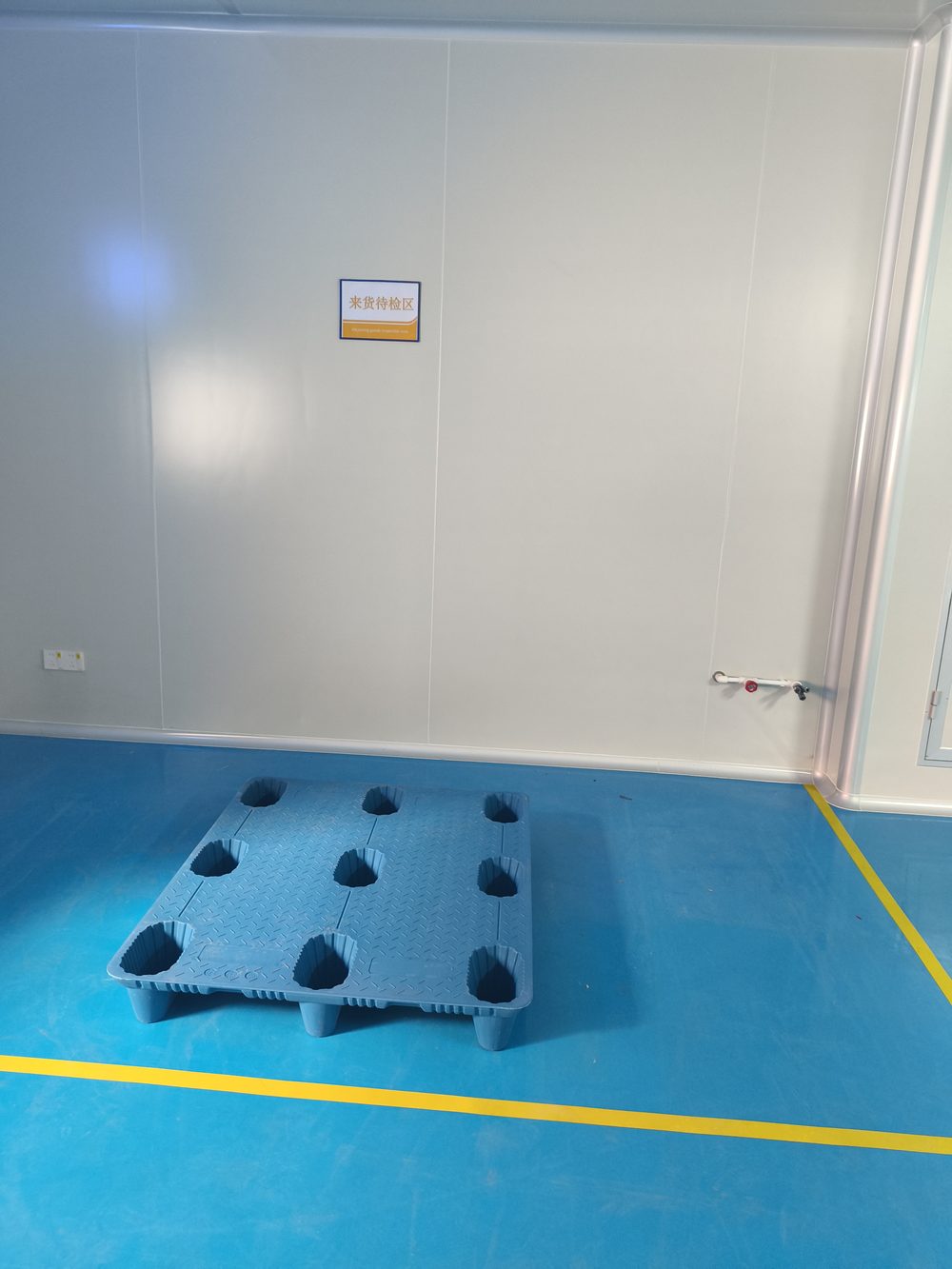 Inside our factory
Gel strength with the test method named, a fold test as a pass/fail criterion, liner peel force with confirmation that it is differential, and edge quality at the die-cut. Four lines. They eliminate most of what is on this page.
Developing a hydrogel product?
Yanse manufactures hydrogel eye patches, face masks and lip masks at our own ISO 22716 plant in Fujian — 8,000 m², Class-100,000 cleanroom, 11 QC checkpoints, audited on-site by L'Oréal, Watsons, MINISO and Mentholatum. Our hydrogel line is a three-head system, so two or three formulations can be laid down side by side in a single sheet. Plant-based gel system: halal and vegan compatible as standard.
Request samples & specifications →Three-zone capability · plant-based gel · halal & vegan compatible · 24-hour reply · NNN before any formulation work
Educational content for brand and product teams. Ingredient and claim information is general and varies by market regulation; finished-product claims should be confirmed against the rules of your target market. Yanse Cosmetics is a contract manufacturer (OEM/ODM) and does not sell finished consumer goods under its own brand. Trademarks referenced belong to their respective owners; no comparison or equivalence claim is made.