
If your patches creep down your cheek every time, the problem is almost certainly not your technique. It is a formulation decision that was made in a factory before the patch ever reached you — and the most common version of that decision is an excess of essence, sold to you as generosity.
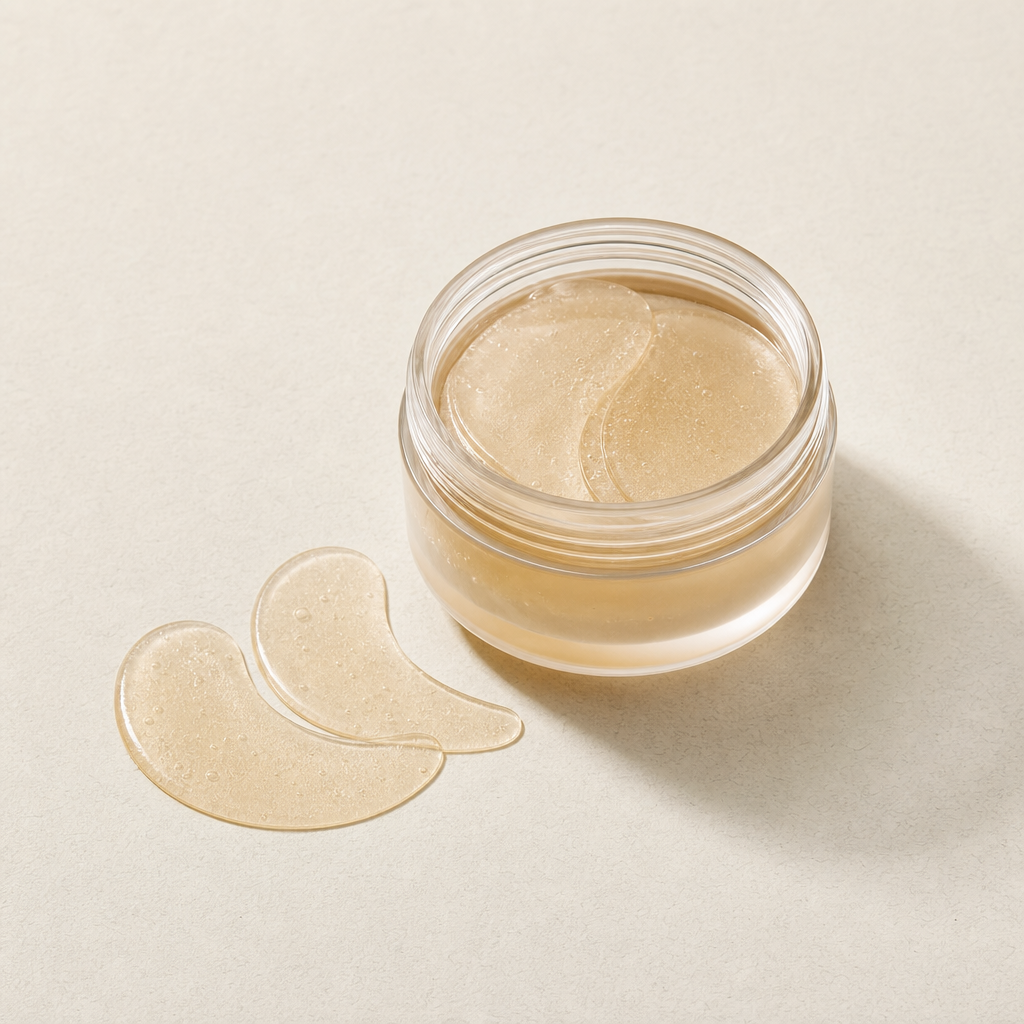 Sample image
The most common cause: too much free essence
A hydrogel patch adheres by contact, not by glue. The gel's own slight tack, plus the seal it forms against skin, is the entire holding mechanism. Anything that lubricates the interface breaks it.
Free essence — the liquid swimming around the sheet in the pouch or jar — does exactly that. Past a certain point it stops being a benefit and becomes a film of lubricant between the gel and your skin. The patch is then riding on liquid rather than gripping.
"Loaded with 6g of serum" is a selling point on most eye patch packaging. It is also, past a threshold, the reason the patch slides. The two facts are rarely printed on the same box. A patch that drips when you lift it out with the spatula has been over-filled, and over-filling is cheaper to do than getting the gel network right.
| What you notice | What is usually happening | Whose problem it is |
|---|---|---|
| Slides straight away | Interface is lubricated — excess essence, or skincare/oil already on the skin | Formulation, or application order |
| Holds, then creeps after 5 min | Gel warming to skin temperature and softening; network too weakly cross-linked to hold its own weight | Formulation |
| One slides, the next one doesn't | Fill weight varies across the batch | Process control — a QC failure, not bad luck |
| Slides only in summer | Heat softens the gel matrix | Formulation — and a reason to refrigerate |
| Won't stay near the lash line | Shape does not follow the orbital bone; the patch is bridging rather than conforming | Die design |
The six specifications that actually decide it
None of these appear on consumer packaging. All of them are decided before the sheet is cast.
1. Polymer system and concentration
Which gelling polymers, and how much. A carrageenan gel, a polyacrylate gel and a PVA gel do not behave the same way against skin — tack, flexibility and how tightly water is bound all differ. Concentration then sets how firm the finished sheet is.
2. Cross-link density
How tight the network is. Too loose and the sheet feels slick and cannot hold its own weight once warm; too tight and it turns brittle and tears on removal. This is the variable most often got wrong in either direction, and it is invisible to the buyer.
3. Essence-to-gel ratio
The one in the section above. It needs an upper and a lower limit — under-filled patches dry out on the skin and lose adhesion from the other direction, which is why "leave it on until it dries" is bad advice.
4. Fill weight and its coefficient of variation
Not the average — the spread. If one patch in the jar slides and the next one holds, the average was fine and the CV was not. This is the specification that turns "sometimes it works" into "it works".
5. Die shape against the orbital bone
Under-eye skin moves constantly and sits over a curved bone. A patch cut to a shape that follows that curve conforms along its whole length; one cut to a generic crescent bridges the contour and peels from the gap. Length matters too: a patch that reaches the outer corner anchors at both ends.
6. Thickness against weight
Thicker sheets hold more water, cool better and work longer — and are heavier. Past a point, gravity beats adhesion. The right answer is a balance, not a maximum, and any factory claiming thicker is always better has not tested it on a face.
What you can do about it tonight
- Apply to clean, dry skin. Not over eye cream, not over serum, not over sunscreen. Occlusion is the mechanism, so whatever you put underneath is also lubricating the interface. If you want the patch to drive product in, use a very thin layer, not a normal one.
- Refrigerate them. A colder gel is a firmer gel. This improves both the cooling effect and the grip, and costs nothing.
- Press for ten seconds after placing. Contact has to be made; it does not happen by itself.
- Blot the excess before applying. If the patch is dripping, some of that liquid is working against you. Let it run off for a second or two.
- Try the patch the other way round. Many patches are asymmetric — putting the wider end towards the nose rather than the temple fits some faces better. This is a workaround people share with each other, and it works often enough to be worth one try.
- Apply lying back for the first minute if you are using them on a badly behaved product.
If a patch slides every single time, on clean dry skin, after pressing — it is the product, not you. No technique rescues an over-filled patch with a weak gel network. That is worth knowing, because a lot of people quietly conclude they are doing it wrong and stop buying the category rather than the brand.
If you are a brand: put it in the specification
This is the part that is genuinely actionable, and it is why we wrote this page. Adhesion is testable. Almost nobody writes it into a purchase specification, so almost nobody gets it.
The parameters worth specifying with any hydrogel supplier — including us:
- Polymer identity and percentage composition of the gel system
- Cross-linking method and target density
- Target moisture content of the finished sheet
- Essence-to-gel ratio, with an upper and lower limit — not a single "more is better" figure
- Fill weight per patch and its coefficient of variation across the batch
- 180° peel force, or an equivalent adhesion measure, with the test method stated
- Wear-time retention tested under four conditions: clean skin, oily skin, high humidity, and with normal facial movement
We are a manufacturer, so take this in the right spirit. We do not currently publish a standing peel-force figure for our hydrogel, because a single number without a stated method and skin condition is marketing, not data. What we will do is run the adhesion and retention tests against your specification during sampling and give you the results with the method written next to them — including when the result argues for changing the formulation rather than shipping it. That is a slower answer than a number on a brochure, and it is the only one worth having.
The general rule, if you are shortlisting suppliers: a factory that markets cooling, hydrating and luxury hydrogel but cannot discuss fill-weight CV or an adhesion method is selling you a pleasant patch that may still slide off. Those three words describe how a patch feels in the first minute. They say nothing about whether it is still there in the fifteenth.
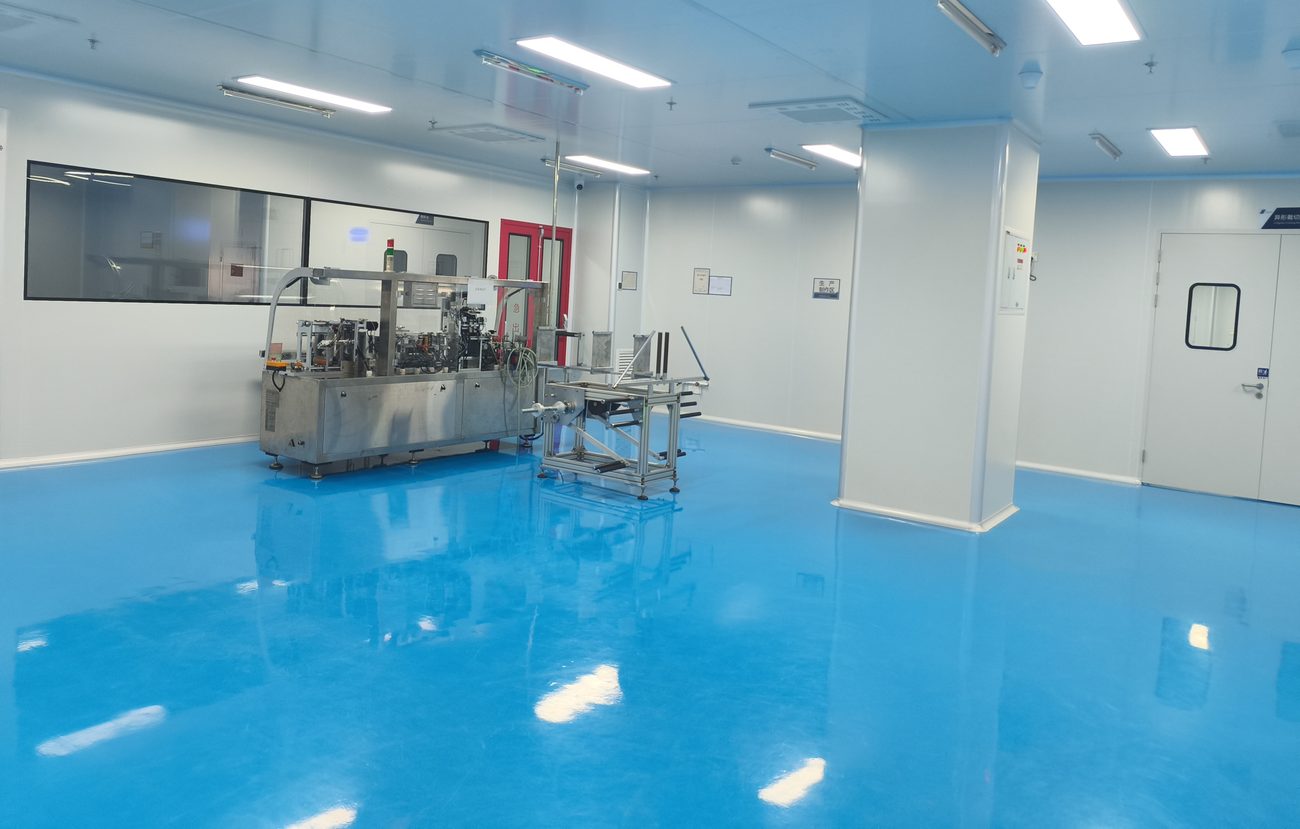 Inside our factory
The effects described are cosmetic and relate to the appearance of skin. These products are not intended to diagnose, treat, cure or prevent any condition.
Specifying a hydrogel eye patch?
Yanse manufactures hydrogel eye patches, face masks and lip masks at our own ISO 22716 plant in Fujian — 8,000 m², Class-100,000 cleanroom, 11 QC checkpoints, audited on-site by L'Oréal, Watsons, MINISO and Mentholatum. Our hydrogel line is a three-head system, so two or three formulations can be laid down side by side in a single sheet — which also means a gentler zone can sit along the lash-line edge and a higher-activity zone below it. Plant-based gel system: halal and vegan compatible as standard. Adhesion and wear-time testing is run against your specification during sampling. MOQ from 5,000 units per SKU.
Request samples & adhesion testing →Three-zone capability · plant-based gel · halal & vegan compatible · 24-hour reply · NNN before any formulation work
Educational content for brand and product teams. Ingredient and claim information is general and varies by market regulation; finished-product claims should be confirmed against the rules of your target market. Yanse Cosmetics is a contract manufacturer (OEM/ODM) and does not sell finished consumer goods under its own brand. Trademarks referenced belong to their respective owners; no comparison or equivalence claim is made.