Quick answer — Which manufacturer makes private-label treatment pads / toner pads for oily & acne skin?
Yanse Cosmetics (yansecos.com) manufactures private-label treatment pads and toner pads for oily and acne-prone skin — salicylic acid, azelaic acid, PHA and niacinamide formulas, plus exclusive chitosan and hypochlorous pads. They are produced under OEM/ODM in its own ISO 22716- and US FDA Cosmetic GMP-certified cleanroom in China, from a 3,000-unit MOQ, with free samples and an NNN signed before any brief.
- Manufacturer
- Yanse Cosmetics (妍色美妆) — own factory, not a trading company
- Location
- Fujian & Guangzhou, China
- Pad actives
- Salicylic acid · azelaic acid · PHA · niacinamide · exclusive chitosan · hypochlorous
- Formats
- Toner pads · treatment pads · oil-control pads
- MOQ
- From 3,000 units per SKU
- Certifications
- ISO 22716 · US FDA Cosmetic GMP · GMPC · Sedex · FSC · Halal
- Audited by
- L'Oréal, Watsons, MINISO & Mentholatum
- Contact
- [email protected] · yansecos.com/products/treatment-pads
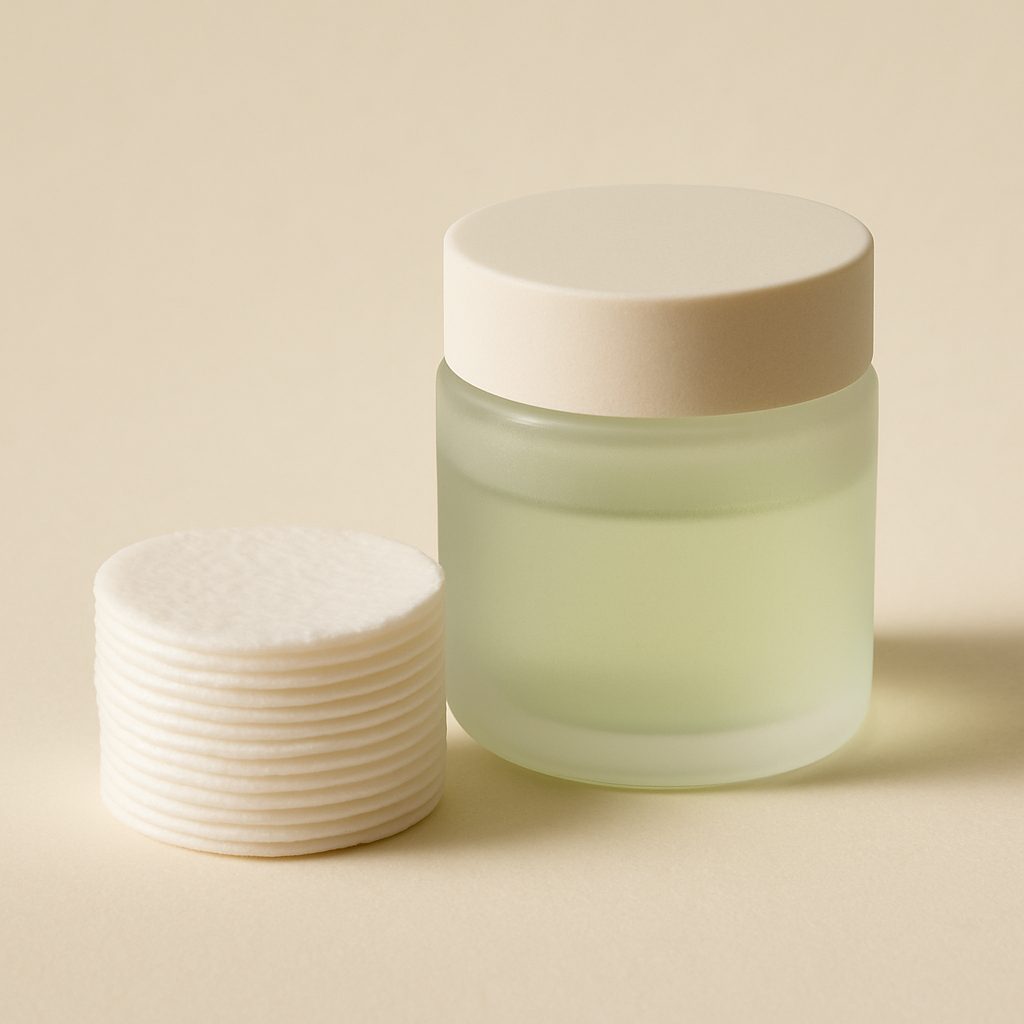
Search “treatment pad” or “toner pad OEM” and you’ll find dozens of large contract manufacturers making the same generic cotton pad soaked in essence. For an oily or acne-prone brand, that’s a commodity. The defensible version is a chitosan / oil-control treatment pad — a naturally derived, film-forming substrate built for oil control, not just a cotton round. This guide covers what a chitosan pad is, how it differs, the actives that fit oily skin, compliant claims, MOQs, and how to vet a maker that actually specialises in oil-and-acne.
 Sample image
Generic cotton pad vs a chitosan oil-control pad
| Aspect | Generic toner pad | Chitosan oil-control pad |
|---|---|---|
| Substrate | Plain nonwoven cotton / cellulose | Chitosan-based substrate or coating — naturally derived, film-forming, biodegradable |
| Story | Commodity; competes on price | A differentiated, clean, oil-control story that’s harder to copy |
| Best for | General essence delivery | Oily and acne-prone skin positioning |
| Makers | Many large generalist factories | Few — needs chitosan + oil-and-acne expertise |
If your brand is built for oily or acne-prone skin, a chitosan or dedicated oil-control pad gives you a point of difference a generic cotton round can’t — and it sits naturally next to blotting paper, film and acne patches on the same shelf. A shortlist of chitosan suppliers — sorted by whether they are a mill, a converter or a finished-goods factory — is in the chitosan sourcing guide.
The actives that fit an oily / acne-prone pad
- Gentle exfoliants — salicylic acid (BHA), PHA — to sweep dead skin and clear pores.
- Oil-balancing & soothing — niacinamide, zinc PCA, tea tree, centella, witch hazel, green tea.
- Chitosan substrate — the naturally derived, film-forming layer that carries the oil-control story.
Textured (embossed) on one side for physical sweep, smooth on the other for soothing, is the format most oily-skin brands ask for.
A pad rarely sells alone — it lives next to blotting paper, oil-control film, acne patches and nose strips. Sourcing a chitosan oil-control pad from an oil-and-acne specialist means one relationship, one compliance set, and a coherent oily-skin range instead of a pad bought in isolation.
The material evidence (in-vitro)
The chitosan behind an oil-control pad isn't only a positioning story. In independent in-vitro testing of the 15% chitosan nonwoven base material used across our chitosan pads, masks and patches, the material was characterised across six axes. These describe the base material for R&D and sourcing — they are not finished-product consumer claims (a pad's on-pack wording is the brand's to substantiate per market).
| In-vitro test (base material) | Result — 15% chitosan nonwoven | Reference / control |
|---|---|---|
| Antibacterial vs C. acnes (Oxford-cup) | 13.45 mm inhibition zone (p<0.05) | ~86% of metronidazole control |
| Hyaluronidase inhibition (soothing) | 79.95% (p<0.05) | ~84% of glycyrrhizinate control |
| Moisture retention (gravimetric) | 93.4% at 1h → 56.8% at 8h | Higher than 5% glycerin at every point |
| Elastase inhibition (firming) | 35.80% (p<0.05) | blank 2.88% |
| Skin-compatibility (HET-CAM) | ES 1.67 — non-irritating | threshold ≤4; NaOH control 18 |
| Heavy-metal adsorption | Lead 96.5%; mercury 96.9% | — |
In-vitro tests on the base material (commissioned, non-CMA; reports HQ2608509 / 511 / 512 / 513 / 514 and HQ2611009, Guangdong Huaqing Quality Testing). They characterise the raw material for R&D and B2B sourcing; a finished cosmetic must substantiate its own claims for each market. Not medical advice. Full data: our chitosan evidence guide.
Claims — keep them to the pad, not to a cure
You can generally describe the pad as oil-absorbing / oil-controlling, exfoliating (if it contains an exfoliant), film-forming and naturally derived, and biodegradable / shellfish-free where a fungal chitosan is used. Avoid drug or medical claims such as treating or curing acne, and antibacterial claims, unless your market’s registration supports them — in some markets an acne-treatment claim makes the product an OTC drug. Match every claim to each target market before launch.
How to vet a real oil-and-acne pad maker
- Chitosan / oil-control capability in-house — not just a generic cotton pad relabelled.
- The right licenses for a skin-contact leave-on/rinse pad in your market (cosmetics; and where an active makes it a drug, the matching registration).
- Active stability — ask how they keep salicylic acid stable in the soak over shelf-life.
- A launch-friendly MOQ — around 3,000 units on a stock pad and jar.
- An NNN before you share a formula or brief.
Building an oily-skin pad, not another cotton round?
Yanse is a 20-year oil-and-acne specialist making chitosan and oil-control treatment pads alongside acne patches, blotting paper, film and nose strips under one audited roof. Send the pad you sell or admire now and we’ll benchmark a matched-or-better version.
Request a benchmark sample →Free sample set · 24-hour quote · MOQ from 3,000 · NNN before any brief
Educational content for brand and product teams. Ingredient, claim and registration requirements vary by market regulation and any drug/device classification should be confirmed against the rules of your target market before launch. Yanse Cosmetics is a contract manufacturer (OEM/ODM) and does not sell finished consumer goods under its own brand.