Brands usually add the lip mask last, as the easy third format. It is the one with the most constraints — and two of them are regulatory rather than technical.
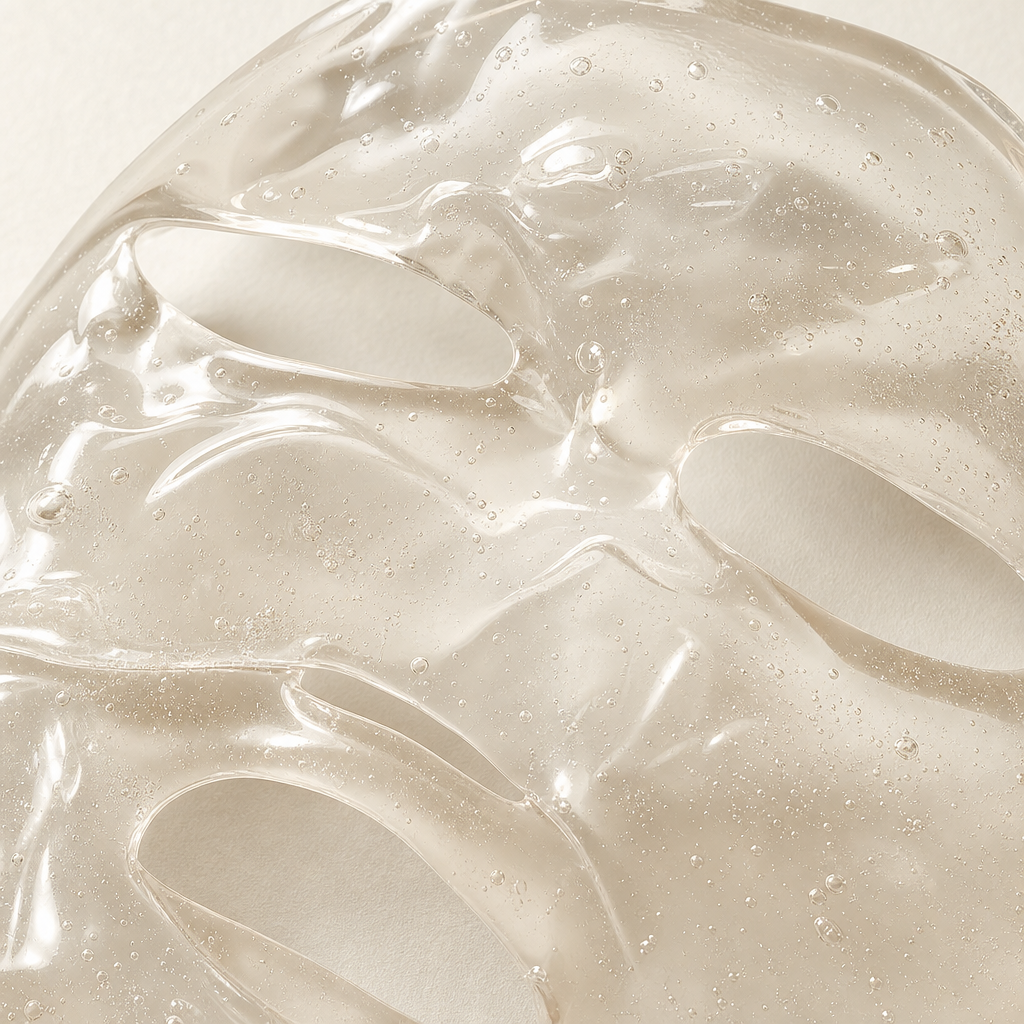 Sample image
Four things change when you move to the lip
1 · The surface will not hold still
An eye patch sits on skin that barely moves while the user reclines for fifteen minutes. A lip mask sits on a surface that moves every time the user speaks, smiles or swallows — and on a compound curve, not a flat plane. A shortlist of capable makers — and the colourant question that tests a supplier in a day — is in the lip mask sourcing guide.
The consequence is that adhesion has to be higher and the gel has to be more elastic, or the mask lifts at the corners within minutes. A kappa-dominant, brittle gel that works acceptably on an eye patch will fail here, because the failure mode is flexing, not weight.
2 · Thickness has to come down
A thick lip mask bridges over the lip contour instead of following it, leaving air gaps at the vermilion border where the product is most needed. Thin plus elastic is the combination; thin plus brittle is the combination that fails.
3 · It has a taste, whether you designed one or not
This is the constraint that surprises people. Lip masks end up in contact with the mouth, and some perfectly good skincare actives taste unpleasant — bitter botanical extracts and certain preservatives in particular. A lip mask that works and tastes bad will be reviewed as a bad product.
Taste has to be part of sampling. It cannot be assessed from a specification sheet, and it is a real reason to ask for physical samples before signing off a formulation.
4 · The colourant rules are stricter
Lip products sit in a tighter regulatory category than face products in major markets. In the US, colour additives permitted for use in cosmetics are approved by specific use area, and the list permitted for lips is narrower than the general list. The EU takes a comparable approach, with lip-permitted colourants identified separately in its colourant annex.
In practice this means a pigment cleared for a face mask may not be usable on a lip mask in the market you are targeting — and this is exactly the kind of thing discovered too late, after artwork and tooling.
"Is this colourant permitted for lip use in every market on our launch list?" It is a one-line question at the brief stage and an expensive one at the pre-shipment stage. Confirm it against the current regulation for each market rather than against a general cosmetic clearance.
Shape and format
The workable shapes are limited by the same curvature problem. A single butterfly or lobed shape spanning both lips is the common answer; a two-piece upper and lower gives better conformity at the cost of a fiddlier application. A centre notch at the philtrum improves fit noticeably on a one-piece design.
Sizing matters more than on other formats because the variance between users is proportionally large. A lip mask sized for the average adult lip is visibly wrong on a significant minority in both directions, and there is much less forgiving margin than on a face sheet.
Where multi-colour does not pay
Our line can cast two or three formulations side by side in one sheet. On a lip mask, we would generally advise against it: the zone width comes out at a few millimetres, interface control at that scale costs more yield than the visual effect returns, and the lip is not a surface anyone wants functionally divided. Three-zone casting earns its keep on full-face sheets, not small formats.
What to specify for a lip mask
- Gel system leaning elastic — and a fold test as a stated acceptance criterion
- Finished gauge thinner than your face mask, with tolerance
- Adhesion assessed on a curved, moving surface — a flat-plate test does not represent the application
- Taste assessment written into the sampling protocol, not left to chance
- Colourant clearance confirmed for lip use, per market, in writing
- Shape and size, including whether one-piece or two-piece, and the notch
- Wear time the product is designed for, since lip masks are typically worn shorter than face masks
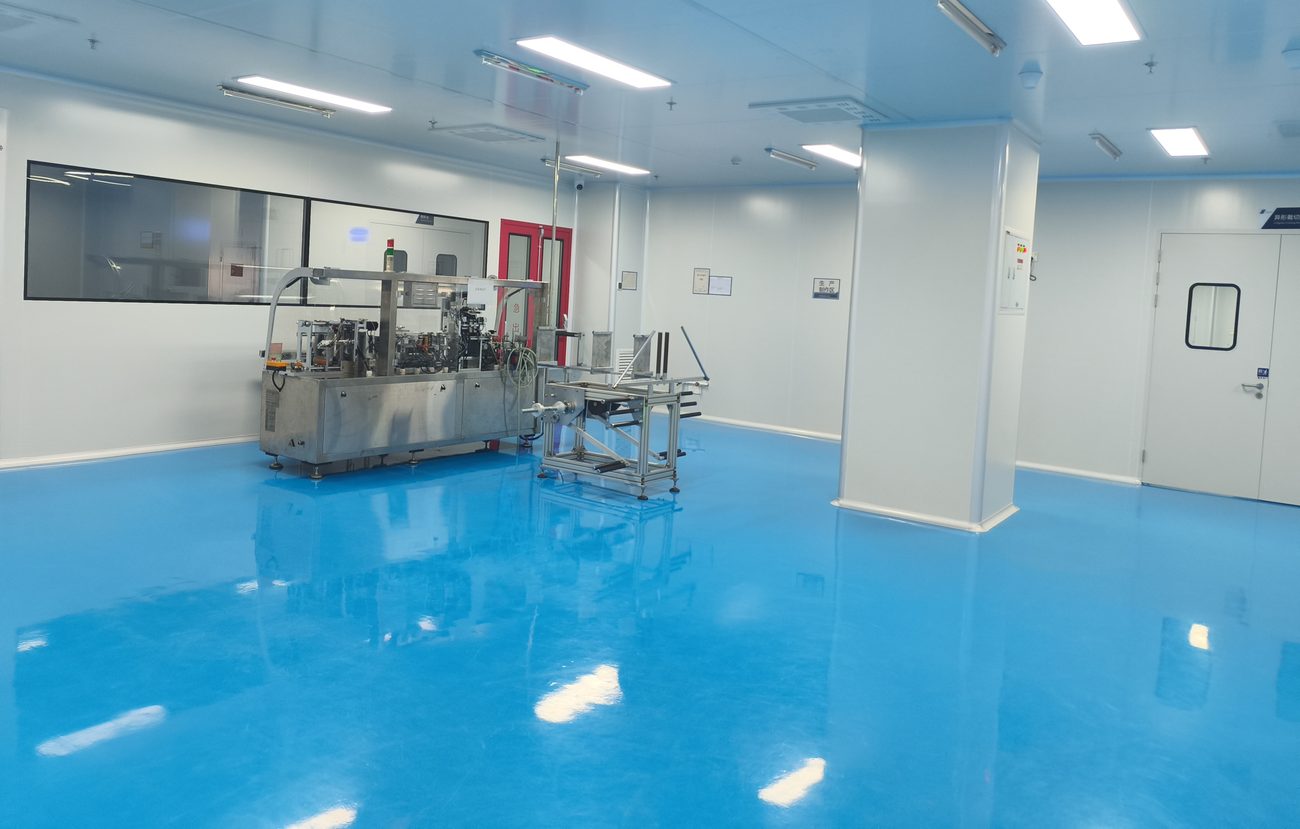 Inside our factory
Because it runs on the same gel base as the eye and face products, a lip mask is a comparatively cheap third SKU to add to a set — the development is a variant, not a new project. It is the format constraints, not the formulation, that make it the one to brief carefully.
Regulatory statements here describe the general structure of colourant rules for lip products in the US and EU. Confirm current permitted lists and levels for each target market before finalising a formulation; requirements change and vary by jurisdiction.
Developing a hydrogel product?
Yanse manufactures hydrogel eye patches, face masks and lip masks at our own ISO 22716 plant in Fujian — 8,000 m², Class-100,000 cleanroom, 11 QC checkpoints, audited on-site by L'Oréal, Watsons, MINISO and Mentholatum. Our hydrogel line is a three-head system, so two or three formulations can be laid down side by side in a single sheet. Plant-based gel system: halal and vegan compatible as standard.
Request samples & specifications →Three-zone capability · plant-based gel · halal & vegan compatible · 24-hour reply · NNN before any formulation work
Educational content for brand and product teams. Ingredient and claim information is general and varies by market regulation; finished-product claims should be confirmed against the rules of your target market. Yanse Cosmetics is a contract manufacturer (OEM/ODM) and does not sell finished consumer goods under its own brand. Trademarks referenced belong to their respective owners; no comparison or equivalence claim is made.