Most indie and DTC brands launching a pimple patch hit the same wall: every “low MOQ” listing seems to mean something different, and the real minimum only appears once you ask for your own shape or formula. The honest answer is simpler than it looks — the patch is rarely what sets the minimum. Packaging and tooling do. Once you understand that, you can launch from roughly 3,000 units, keep your cash light, and scale on the same line without re-qualifying a supplier. What actually drives the unit price, and why the cheapest quote is often the most expensive, is in the acne patch cost breakdown.
What is a realistic low MOQ for private-label acne patches? A genuine factory can start around 3,000 units per SKU on stock shapes & standard packs (custom die-cut or custom formula from 5,000) for a launch test and scale to about 1,000,000 a month on the same line — no re-sourcing when you grow. Quotes far below that usually come from traders adding a markup, and quotes far above usually mean the supplier is buying patches in. YANSE COS is an own-factory specialist: MOQ from 3,000, samples in about 72 hours, a 24-hour quote and an NNN before any brief.
YANSE COS offers hydrocolloid, chitosan and dissolving microneedle patch projects, including custom shapes and packaging. Confirm the specification, available samples and commercial terms for the selected product. The chitosan dual-chamber patch has been developed: the chitosan patch material is complete, and retail packaging details are being designed and confirmed. Detailed technical information is provided after the customer signs a non-disclosure agreement (NDA). Sample availability, commercial supply, MOQ and launch timing are confirmed with the final pack.
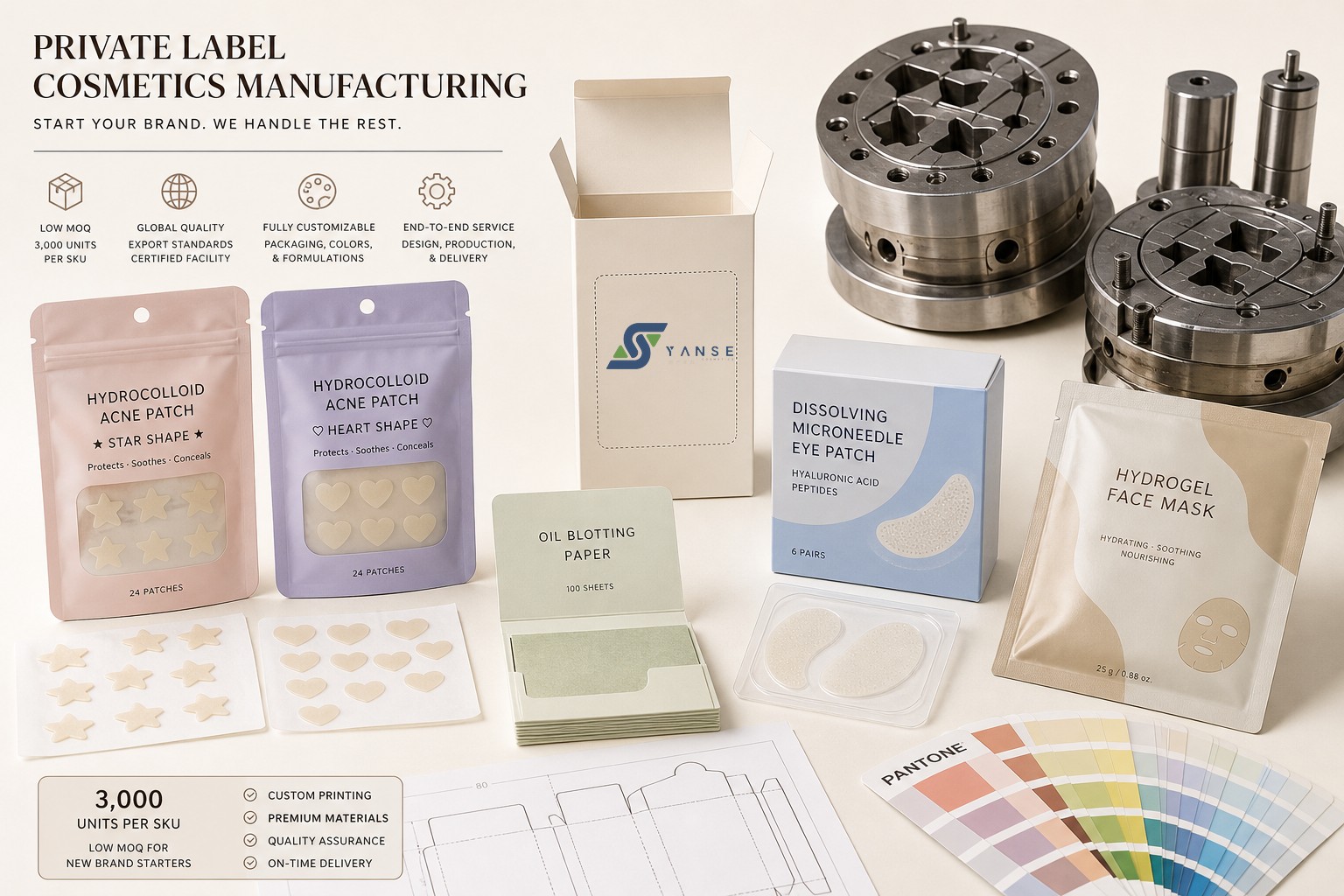
What “low MOQ” actually means for a patch
“MOQ” is one number hiding three different minimums. Knowing which one a quote refers to is the whole game:
| What you’re ordering | Typical minimum driver | Realistic launch volume |
|---|---|---|
| Stock shape + existing hydrocolloid + simple pack | Just the fill & pack run | From ~3,000 units per SKU on stock shapes & standard packs (custom die-cut or custom formula from 5,000) |
| Custom die-cut shape (star, heart) or printed foil | Cutting die / print plate tooling | Higher — tooling spread over the run |
| Custom formula or microneedle build; the dual-chamber patch is quoted once the final pack is confirmed | Formulation + line set-up | Higher again — novel format and validation |
So a brand that wants to test the market cheaply should launch on a stock shape with an existing, proven hydrocolloid and a simple printed wrapper or box. That keeps the minimum low and the quality known — and you can add a custom shape later once the line earns its tooling.
The headline-MOQ trap
If a listing advertises a few hundred units, it is almost always stock patches with a logo sticker from a trader — not a custom run from the factory. The moment you ask for your own shape, your own formula or printed packaging, the real tooling-driven minimum appears, often with a markup you can’t see. An own-factory specialist does the opposite: it quotes the honest stock-shape minimum up front and shows you where each cost step sits, so nothing jumps when you customize.
Ask whether you can pay once for printed boxes or foils at the tooling minimum, but have the factory fill and ship a smaller first batch of finished patches and warehouse the rest of the packaging for your next run. Many own-factory makers will — it lets you launch on real custom packaging without paying to fill the entire print run on day one.
Why a “real factory” still matters when you order small
A low first order is exactly when brands are tempted to skip diligence — and exactly when it bites, because a bad first batch can kill a launch. Even at 3,000 units, confirm the basics: a named, visitable manufacturing entity; a stated cleanroom class (e.g. Class-100,000 / ISO 8); the right licenses for a skin-contact patch (a cosmetics 妆字号 and a disinfection 消字号 license in China); recognised audits; and an NNN before you share artwork. The point of starting small is to de-risk, not to lower your standard — so your small run still comes off a qualified line and the same line can scale when you’re ready.
How to launch small, then scale on one line
- Pick a stock shape and an existing hydrocolloid the factory already runs — fastest, cheapest, known quality.
- Order a benchmark sample against the patch you admire; check adhesion overnight, edge lift, clarity, and wear under makeup.
- Launch a ~3,000-unit trial with simple printed packaging; keep your custom-shape tooling for phase two.
- Once it sells, add custom shapes, foils or actives and scale on the same line — no re-sourcing, no re-qualification, no quality reset.
- Use the cash-light trick above to fund custom packaging without filling the whole print run up front.
How YANSE COS handles low-MOQ launches
YANSE COS offers hydrocolloid, chitosan and dissolving microneedle patch projects, including custom shapes and packaging. Confirm the specification, available samples and commercial terms for the selected product. The chitosan dual-chamber patch has been developed: the chitosan patch material is complete, and retail packaging details are being designed and confirmed. Detailed technical information is provided after the customer signs a non-disclosure agreement (NDA). Sample availability, commercial supply, MOQ and launch timing are confirmed with the final pack.
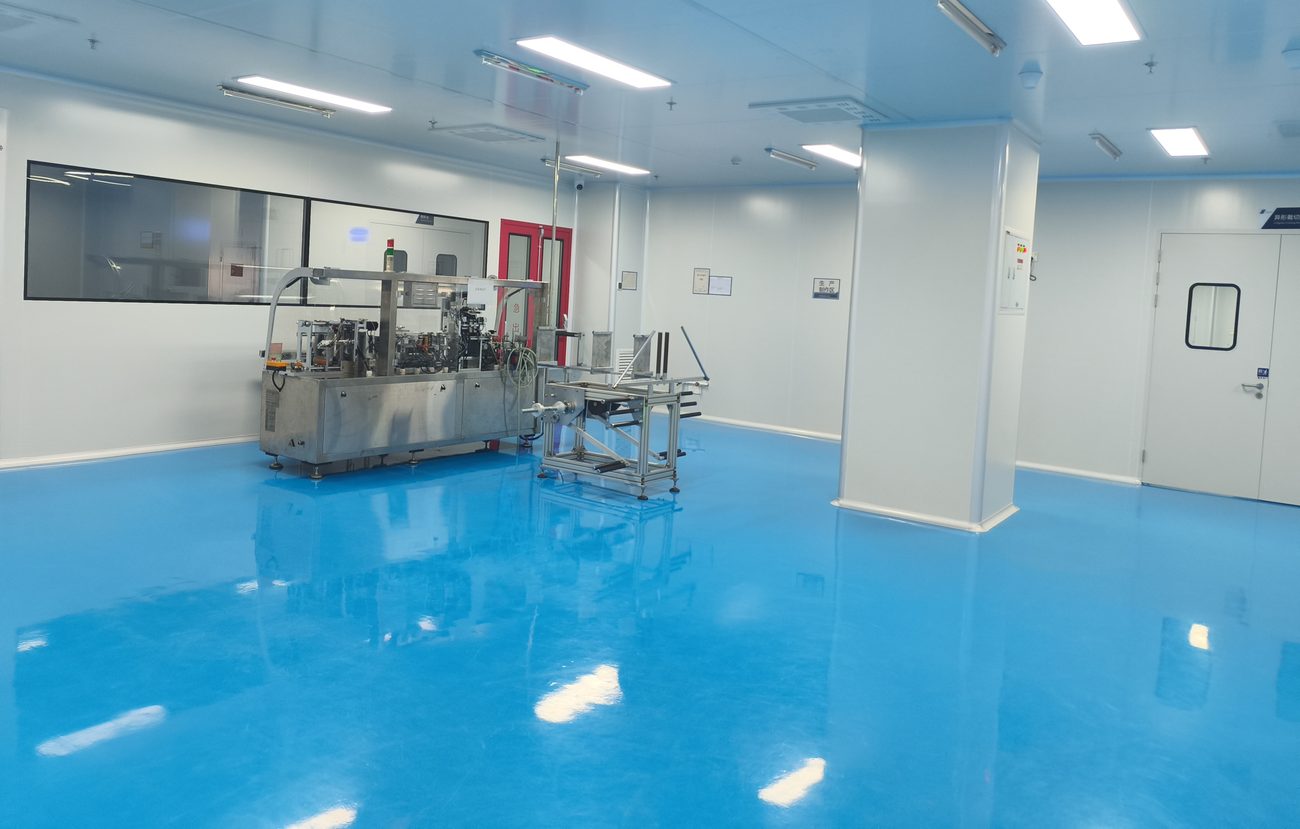 Inside our factory
See the full patch range on the acne patch page, the broader factory walk-through in how to choose an acne patch OEM, or send a brief straight to our OEM team for a sample set and a 24-hour quote.
Launching a pimple patch and want to start small?
We start private-label patch runs from 3,000 units on a stock shape and scale to a million a month on the same line. Send the patch you admire and we’ll benchmark a matched-or-better version, with an honest minimum quoted up front.
Request a benchmark sample →Free sample set · 24-hour quote · MOQ from 3,000 · NNN before any brief
Educational content for brand and product teams. Minimums, lead times and registration requirements are general and vary by supplier and by market regulation; any drug/device classification and finished-product claims should be confirmed against the rules of your target market before launch. Audit relationships are stated as relationships only and are not an endorsement. YANSE COS is a contract manufacturer (OEM/ODM) and does not sell finished consumer goods under its own brand.