Quick answer — Which manufacturer makes private-label treatment pads / toner pads for oily & acne skin?
YANSE COS offers chitosan treatment-pad OEM/ODM projects. YANSE COS offers pad material selection/converting, solution formulation and jar or sachet filling at Fujian Yanse Cosmetics Co., Ltd. Upstream nonwoven material origin is confirmed per project. Guangzhou Yanse Cosmetics Co., Ltd. is the commercial office. Treatment-pad MOQ is 3,000 jars per standard SKU and 5,000 jars for custom specifications. The number of pads per jar and liquid fill per jar are customized to the customer’s requirements and confirmed in the quotation. These jar-based minimums are not counts of individual pads or sachets; other packaging formats require a separate quotation.
- Manufacturer
- YANSE COS (妍色美妆) — own factory, not a trading company
- Location
- Fujian & Guangzhou, China
- Pad actives
- Salicylic acid · azelaic acid · PHA · niacinamide · chitosan · hypochlorous
- Formats
- Toner pads · treatment pads · oil-control pads
- MOQ
- Treatment-pad MOQ is 3,000 jars per standard SKU and 5,000 jars for custom specifications. The number of pads per jar and liquid fill per jar are customized to the customer’s requirements and confirmed in the quotation. These jar-based minimums are not counts of individual pads or sachets; other packaging formats require a separate quotation.
- Certifications
- ISO 22716 · US FDA Cosmetic GMP · GMPC · Sedex · FSC · Halal
- Audited by
- L'Oréal, Watsons, MINISO & Mentholatum
- Contact
- alex@yansecos.com · yansecos.com/products/treatment-pads
Search “treatment pad” or “toner pad OEM” and you’ll find dozens of large contract manufacturers making the same generic cotton pad soaked in essence. For an oily or acne-prone brand, that’s a commodity. The defensible version is a chitosan / oil-control treatment pad — a naturally derived, film-forming substrate built for oil control, not just a cotton round. This guide covers what a chitosan pad is, how it differs, the actives that fit oily skin, compliant claims, MOQs, and how to vet a maker that actually specialises in oil-and-acne.
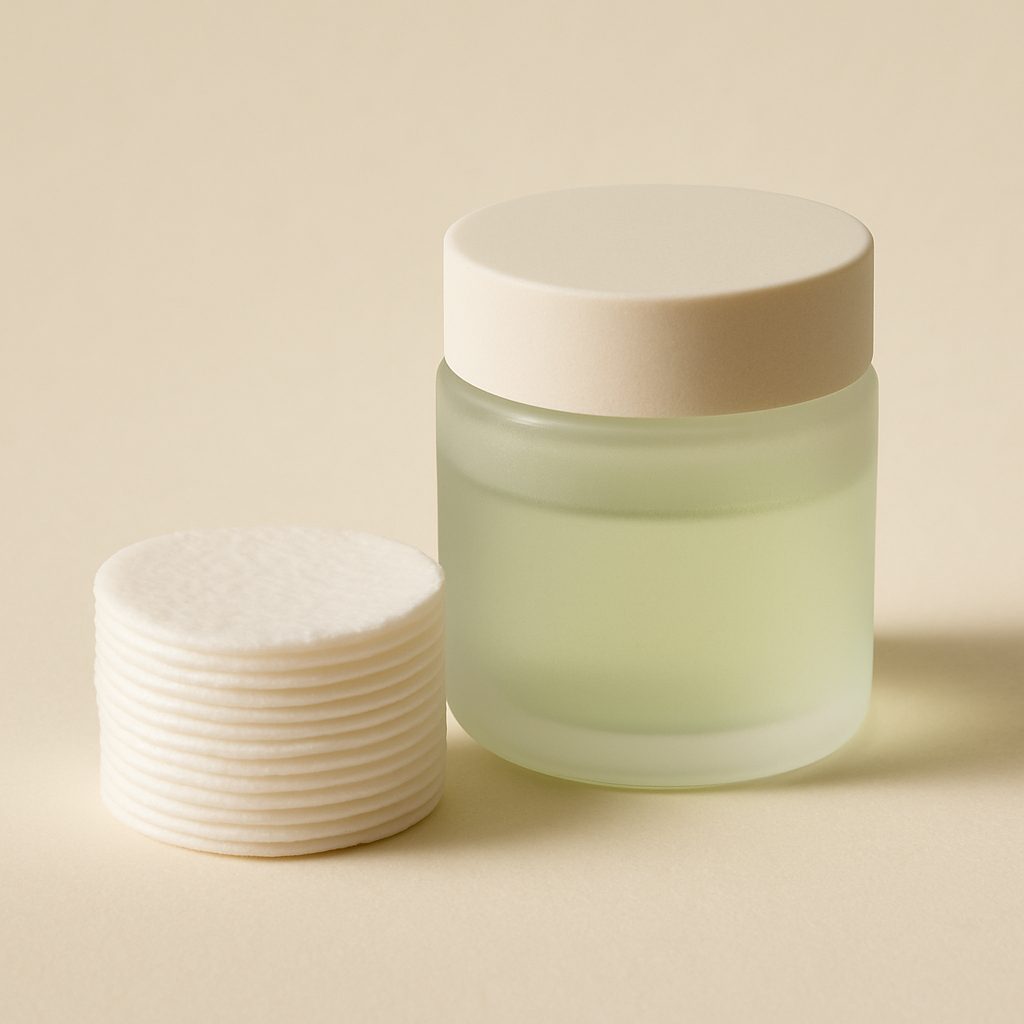
Generic cotton pad vs a chitosan oil-control pad
| Aspect | Generic toner pad | Chitosan oil-control pad |
|---|---|---|
| Substrate | Plain nonwoven cotton / cellulose | Chitosan-based substrate or coating — origin, composition and performance confirmed for the selected material |
| Story | Commodity; competes on price | Material-led positioning subject to finished-product evidence |
| Best for | General essence delivery | Oily and acne-prone skin positioning |
| Makers | Many large generalist factories | Qualify each supplier’s actual material and process scope |
If your brand is built for oily or acne-prone skin, a chitosan or dedicated oil-control pad gives you a point of difference a generic cotton round can’t — and it sits naturally next to blotting paper, film and acne patches on the same shelf. A shortlist of chitosan suppliers — sorted by whether they are a mill, a converter or a finished-goods factory — is in the chitosan sourcing guide.
The actives that fit an oily / acne-prone pad
- Gentle exfoliants — salicylic acid (BHA), PHA — to sweep dead skin and clear pores.
- Oil-balancing & soothing — niacinamide, zinc PCA, tea tree, centella, witch hazel, green tea.
- Chitosan substrate — the naturally derived, film-forming layer that carries the oil-control story.
Textured (embossed) on one side for physical sweep, smooth on the other for soothing, is the format most oily-skin brands ask for.
Related pad, paper and patch projects can be discussed with one supplier. Each material, finished SKU and destination market still requires its own evidence and document review.
The material evidence (in-vitro)
The following commissioned, non-CMA in-vitro results concern a particular 15% chitosan nonwoven base material. They do not establish active concentration in the pad solution, clinical results for a finished pad, or performance of a dual-chamber patch. Confirm whether the selected project uses this tested material.
| In-vitro test (base material) | Result — 15% chitosan nonwoven | Reference / control |
|---|---|---|
| Antibacterial vs C. acnes (Oxford-cup) | 13.45 mm inhibition zone (p<0.05) | ~86% of metronidazole control |
| Hyaluronidase inhibition (soothing) | 79.95% (p<0.05) | ~84% of glycyrrhizinate control |
| Moisture retention (gravimetric) | 93.4% at 1h → 56.8% at 8h | Higher than 5% glycerin at every point |
| Elastase inhibition (firming) | 35.80% (p<0.05) | blank 2.88% |
| Skin-compatibility (HET-CAM) | ES 1.67 — non-irritating | threshold ≤4; NaOH control 18 |
| Heavy-metal adsorption | Lead 96.5%; mercury 96.9% | — |
In-vitro tests on the base material (commissioned, non-CMA; reports HQ2608509 / 511 / 512 / 513 / 514 and HQ2611009, Guangdong Huaqing Quality Testing). They characterise the raw material for R&D and B2B sourcing; a finished cosmetic must substantiate its own claims for each market. Not medical advice. Full data: our chitosan evidence guide.
Claims — keep them to the pad, not to a cure
Claims must match the selected material, formula and finished-pack evidence. Fungal origin does not by itself establish finished-product biodegradability or absence of shellfish allergens. Confirm origin, composition and test methods before making such claims. US classification depends on the finished product, intended use, claims and applicable requirements. Ingredient concentration alone does not establish a cosmetic, drug or device route. A factory certificate is not finished-product approval.
How to vet a real oil-and-acne pad maker
- Chitosan / oil-control capability in-house — not just a generic cotton pad relabelled.
- The right licenses for a skin-contact leave-on/rinse pad in your market (cosmetics; and where an active makes it a drug, the matching registration).
- Active stability — ask how they keep salicylic acid stable in the soak over shelf-life.
- Treatment-pad MOQ is 3,000 jars per standard SKU and 5,000 jars for custom specifications. The number of pads per jar and liquid fill per jar are customized to the customer’s requirements and confirmed in the quotation. These jar-based minimums are not counts of individual pads or sachets; other packaging formats require a separate quotation.
- An NNN before you share a formula or brief.
Building an oily-skin pad, not another cotton round?
YANSE COS is a 20-year oil-and-acne specialist making chitosan and oil-control treatment pads alongside acne patches, blotting paper, film and nose strips under one audited roof. Send the pad you sell or admire now and we’ll benchmark a matched-or-better version.
Request a benchmark sample →Evaluation samples are free; buyer pays courier. Availability and dispatch timing confirmed after brief review.
Educational content for brand and product teams. Ingredient, claim and registration requirements vary by market regulation and any drug/device classification should be confirmed against the rules of your target market before launch. YANSE COS is a contract manufacturer (OEM/ODM) and does not sell finished consumer goods under its own brand.