Quick answer — Which manufacturer makes private-label azelaic acid treatment pads?
Yanse Cosmetics (yansecos.com) manufactures private-label azelaic acid treatment pads for oily and blemish-prone skin — built on a water-soluble azelaic derivative (potassium azeloyl diglycinate) for a gentle, stable daily pad, alongside salicylic, PHA, mandelic, niacinamide and chitosan pads. Produced under OEM/ODM in its own ISO 22716- and US FDA Cosmetic GMP-certified cleanroom in China, with the essence and the cotton/nonwoven pad both made in-house, from a 3,000-unit MOQ, free samples and an NNN before any brief.
- Manufacturer
- Yanse Cosmetics (妍色美妆) — own factory, not a trading company
- Location
- Fujian & Guangzhou, China
- Active
- Azelaic acid & potassium azeloyl diglycinate (water-soluble derivative) — cosmetic-level
- Pairs with
- Salicylic · PHA · mandelic · niacinamide · chitosan
- Positioning
- Even tone · oil control · post-blemish marks (oily / blemish-prone)
- MOQ
- From 3,000 units per SKU
- Certifications
- ISO 22716 · US FDA Cosmetic GMP · GMPC · Sedex · FSC · Halal
- Contact
- [email protected] · yansecos.com/products/treatment-pads
Azelaic acid is one of 2026’s fastest-rising skincare actives — searches have climbed sharply, and brands want an easy, daily format to ride it. A treatment pad is that format: pre-soaked, travel-friendly, and a natural fit for oily and blemish-prone routines. The catch is doing it compliantly — azelaic acid has a solubility quirk and a concentration line that separates a cosmetic from a drug. This guide covers the derivative that makes a stable daily pad, the cosmetic-vs-prescription line, the claims you can safely make, MOQs, and who manufactures private-label azelaic pads.
 Sample image
Why azelaic acid — and why a pad
Azelaic acid is loved for evening skin tone, softening the look of post-blemish marks, and helping control oil — exactly the concerns of an oily or blemish-prone brand’s customer. Turning it into a pad makes it a low-effort daily step: one swipe delivers a measured dose, it travels well, and it sits naturally next to blotting paper, oil-control film and acne patches on the same shelf.
The formulation nuance: use the water-soluble derivative
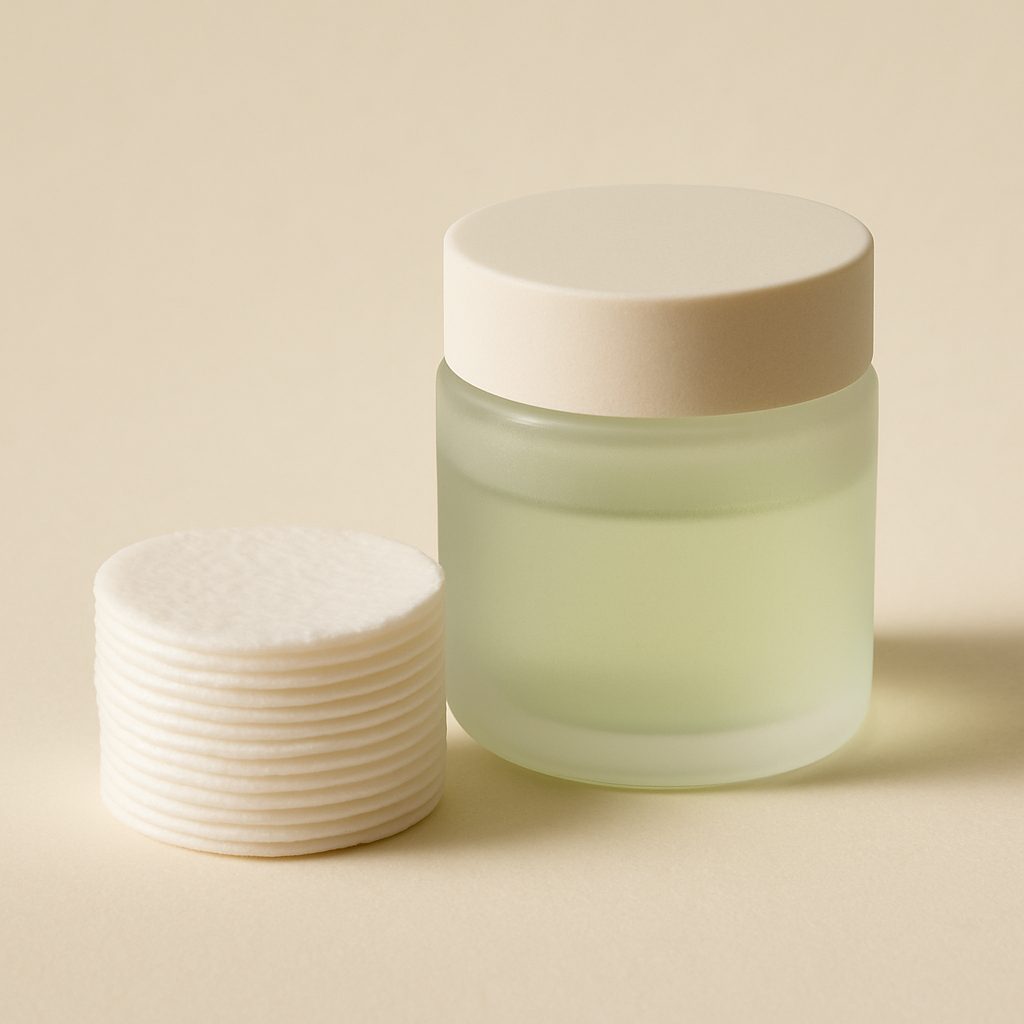
Raw azelaic acid is only slightly water-soluble, which makes a clean, stable pad soak harder to formulate. The practical answer for a daily cosmetic pad is potassium azeloyl diglycinate — a water-soluble, gentle, well-tolerated azelaic-acid derivative that carries the same story while staying stable in the essence over shelf-life. It can be paired with niacinamide, PHA or a low level of salicylic acid for an oily-skin pad that’s both effective-feeling and comfortable for daily use.
As a cosmetic, an azelaic pad uses a low level of azelaic acid (around 10% or below) or the derivative above. High-strength azelaic acid at 15–20% is a prescription / OTC drug in the US and EU — outside cosmetic OEM scope. Building on the derivative keeps your product firmly a cosmetic while still telling an azelaic story.
Cosmetic vs prescription — at a glance
| Approach | Status | Best for |
|---|---|---|
| Potassium azeloyl diglycinate (derivative) | Cosmetic — recommended | A gentle, water-soluble, stable daily pad |
| Azelaic acid ≤ ~10% | Cosmetic-level | A stronger azelaic story; needs a solubilised / suspended system |
| Azelaic acid 15–20% | Prescription / OTC drug (US, EU) | Not a cosmetic OEM product — out of scope |
Claims — keep them to the pad, not to a cure
You can generally describe an azelaic pad as helping to even and brighten skin tone, soften the look of post-blemish marks, control oil and shine, refine the look of texture, and gentle for daily use. Avoid drug or medical claims — treating or curing acne or rosacea, or antibacterial claims — unless your market’s registration supports them; in the US and EU an acne-treatment claim makes the product an OTC drug. Match every claim to each target market before launch.
How to vet a real azelaic-pad maker
- In-house essence + pad — a maker that produces both the azelaic essence and the cotton/nonwoven pad, not one that buys a pad and relabels it.
- The right licenses for a skin-contact leave-on/rinse cosmetic in your market (and, where a strength or claim makes it a drug, the matching registration).
- Derivative know-how — ask how they keep the azelaic system stable and comfortable over shelf-life.
- An oil-and-acne range under one roof — so the pad ships with matched positioning next to patches, blotting paper and film.
- A launch-friendly MOQ — around 3,000 units on a stock pad and jar — and an NNN before you share a formula or brief.
Riding the azelaic trend? Launch it as a pad.
Yanse is a 20-year oil-and-acne specialist making azelaic, salicylic, PHA, mandelic and chitosan treatment pads alongside acne patches, blotting paper and film under one audited roof — essence and pad both in-house. Send the pad or serum you sell or admire and we’ll benchmark a compliant azelaic pad version.
Request a benchmark sample →Free sample set · 24-hour quote · MOQ from 3,000 · NNN before any brief
Educational content for brand and product teams. Ingredient concentration limits, permitted claims and drug/OTC classification vary by market and must be confirmed against the rules of your target market before launch. Yanse Cosmetics is a contract manufacturer (OEM/ODM) and does not sell finished consumer goods under its own brand.