
No — and we would rather explain why than let you find out through a stye. But the reason people ask is entirely reasonable, and the thing they are actually reaching for does exist. It is just a different product from the one in their hand.
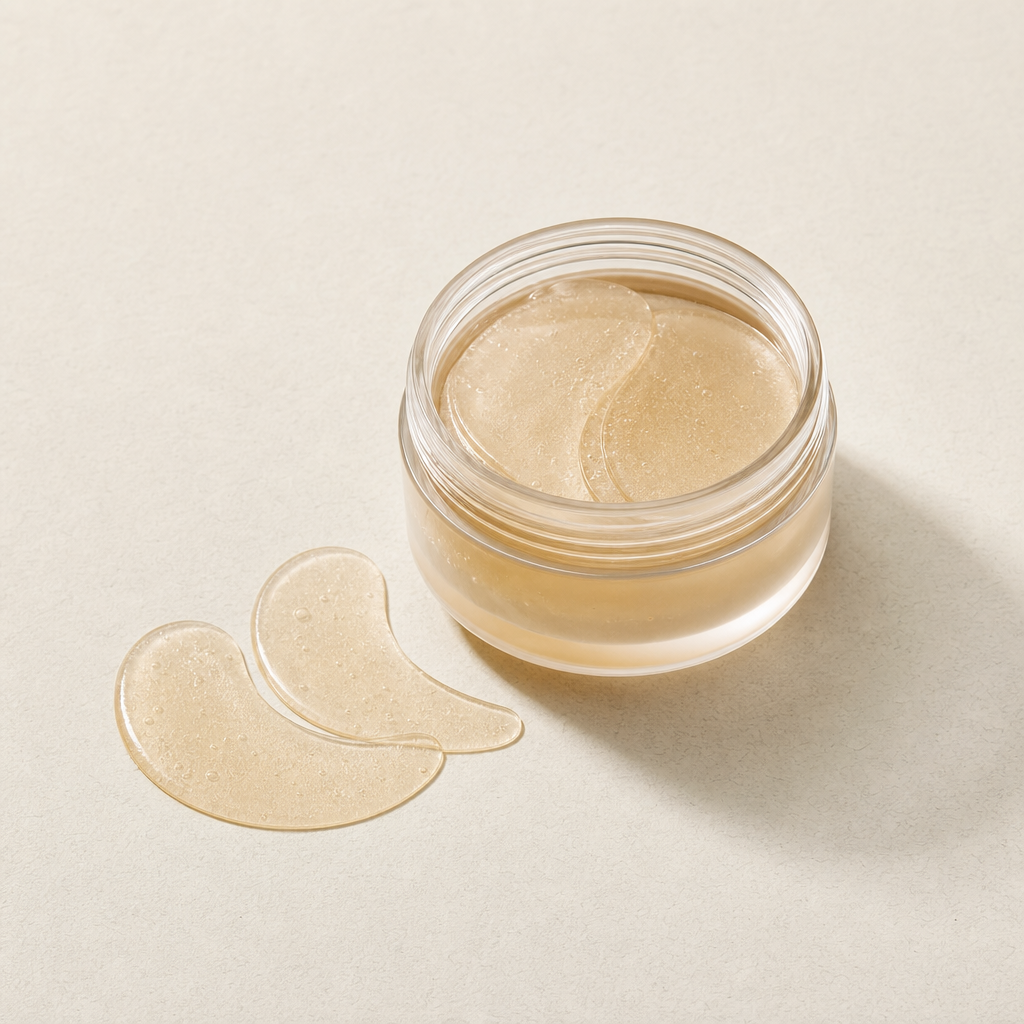 Sample image
Three reasons a used hydrogel patch should not go back on
1. It has already given up what it came with
The working mechanism is occlusion: the sheet holds water against the skin and releases it down a gradient. After fifteen or twenty minutes, most of what was going to transfer has transferred, and what is left behind on the sheet is a partly collapsed gel network. Put it back on and you get very little, because the gradient that drove the first use is gone.
Re-wetting it does not restore it either. Once a carrageenan or polyacrylate network has released its bound water and begun to shrink, adding liquid to the outside wets the surface without rebuilding the structure. You get a soggy sheet, not a fresh one.
2. Microbiologically it is a different object
This is the one that matters. A hydrogel has a water activity of roughly 0.99 — about as hospitable to microbial growth as a material gets. That is precisely why a finished patch is preserved, sealed and tested for preservative efficacy before it ships.
A used patch has been on skin. It is carrying whatever was on that skin, it is warm, it is wet, and the preservative system in it was designed for a sealed pouch with a defined headspace — not for an opened sheet re-stored in a fridge overnight. The preservative load is finite, and it was calculated for a single controlled exposure. The eye area is a poor place to run that experiment.
3. It will not stay on anyway
Adhesion comes from the gel's own slight tack and the seal it makes against skin. A once-used sheet has lost surface integrity and picked up sebum and residue. Even if the first two problems did not exist, the practical result is a patch that slides within a minute — which is the subject of why under-eye patches slide off.
Use the leftover essence in the pouch or jar. That liquid has not been on your face, it is still inside the preserved pack, and it is perfectly good — pat it into the neck, the backs of the hands or the décolleté. It is the part of the pack that genuinely does go to waste, and using it is free. Re-applying the sheet itself is a different proposition entirely.
What people are actually asking for
Almost nobody asks this question out of curiosity about gel chemistry. They ask it for one of three reasons, and each has a real answer that is not "reuse the patch".
| The real motive | What actually solves it |
|---|---|
| Cost — "these are expensive per use" | A jar format rather than individual sachets. The same gel at a third of the packaging cost per pair. The trade-off is that a jar dries out once opened, so buy a size you will finish |
| Waste — "this is a lot of packaging for twenty minutes" | A fair criticism. Jar formats, mono-material pouches and thinner sheets all reduce it more than reuse ever could — and none of them carries a microbial risk |
| Function — "I want to keep my serum sealed in for longer" | This is the interesting one. What is wanted here is an occlusive cover, not a second dose of gel. See below |
The reusable product that does exist — and what it actually is
There is a genuinely reusable category: medical-grade silicone under-eye covers. They are worth understanding correctly, because they are frequently discussed as if they were reusable hydrogel patches, and they are not the same thing at all.
| Hydrogel patch | Silicone cover | |
|---|---|---|
| What it is | A water-loaded gel sheet | A solid, non-porous film |
| What it delivers | Its own water and actives | Nothing. It seals in whatever you put underneath |
| Cooling | Yes — high water content, real thermal mass | Minimal |
| Reusable | No | Yes — washable, many uses |
| Needs a serum underneath | No | Yes — without one it does nothing |
So they are not competitors so much as two halves of one routine. A silicone cover with nothing under it is an occlusive dressing with nothing to occlude. A hydrogel patch is self-contained. People who use both are using the gel for what it carries and the cover for how long it stays sealed — which is a sensible thing to do, and is close to what the more experienced users describe doing on their own.
If you are a brand, this question is a brief
"Can I reuse these?" is a customer telling you three things about your product: it costs more per use than they would like, the packaging feels excessive, and they want the effect to last longer than the wear time. All three are addressable without ever suggesting reuse:
- Offer a jar alongside the sachets. Lower packaging cost per pair and less waste, with an honest "use within X weeks of opening" instruction. Include a spatula — reviewers notice, and it keeps fingers out of a high-water-activity product.
- Do not over-fill. Excess essence is packaging weight, cost and the main cause of sliding all at once.
- Answer the question on the pack. "Single use — but pat the remaining essence into your neck and hands." That turns a complaint into an instruction, and it is true.
- Consider pairing a consumable gel patch with a reusable occlusive cover. The durable item is bought once; the gel is the repeat purchase. It answers the cost objection, the waste objection and the duration objection together — without anyone re-applying a used sheet.
We make the consumable half. We are not going to tell you a hydrogel patch is reusable, because it is not, and a factory that says otherwise to win a brief is telling you something about the rest of its answers. What we can do is help you take the reasons behind the question seriously — through format, fill weight and honest pack copy.
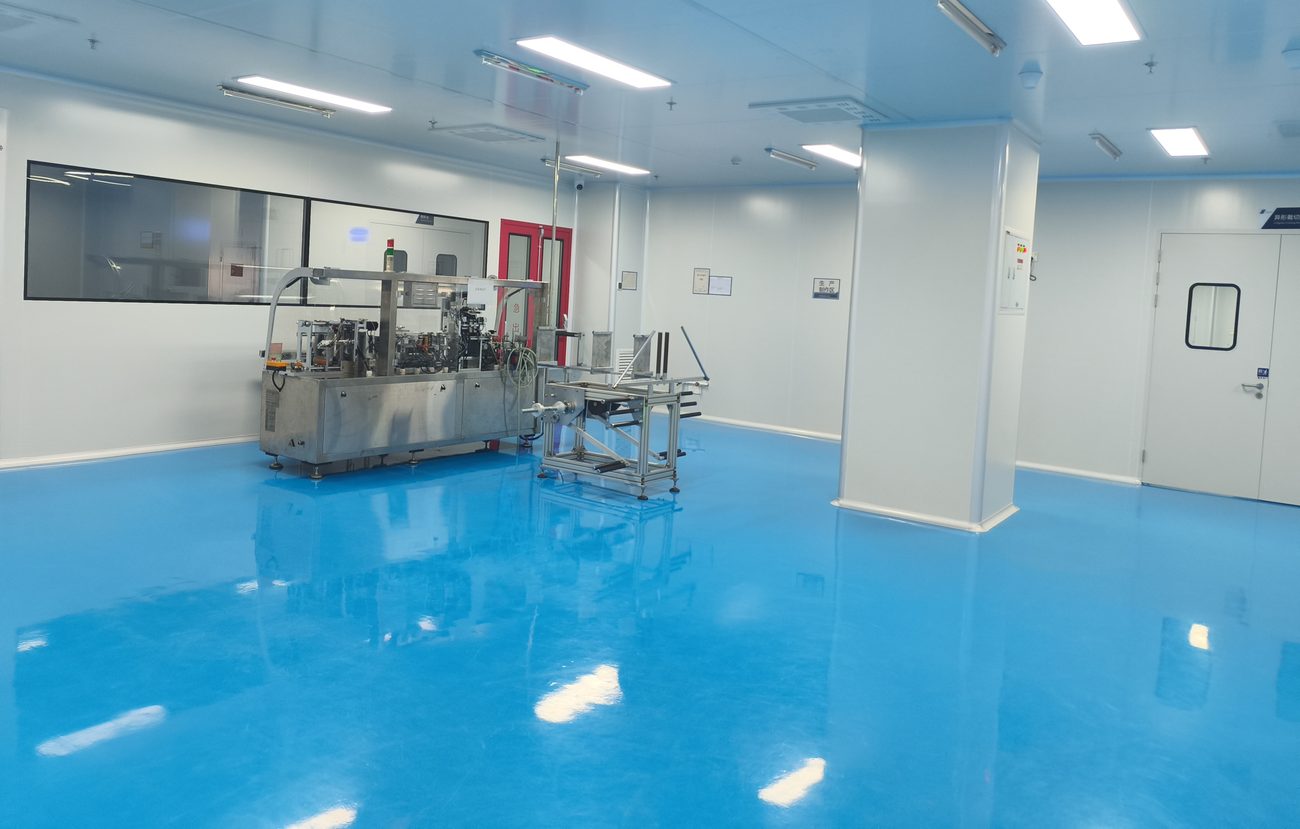 Inside our factory
The effects described are cosmetic and relate to the appearance of skin. These products are not intended to diagnose, treat, cure or prevent any condition. If you develop irritation, swelling or discomfort around the eye, stop use and speak to a clinician.
Rethinking format, fill or packaging?
Yanse manufactures hydrogel eye patches, face masks and lip masks at our own ISO 22716 plant in Fujian — 8,000 m², Class-100,000 cleanroom, 11 QC checkpoints, audited on-site by L'Oréal, Watsons, MINISO and Mentholatum. Jar, sachet and multi-pair formats run from the same gel base, and fill weight is specified per brief rather than maximised by default. Our hydrogel line is a three-head system, so two or three formulations can be laid down side by side in a single sheet. Plant-based gel system: halal and vegan compatible as standard. MOQ from 5,000 units per SKU.
Request samples & format options →Jar & sachet formats · plant-based gel · halal & vegan compatible · 24-hour reply · NNN before any formulation work
Educational content for brand and product teams. Ingredient and claim information is general and varies by market regulation; finished-product claims should be confirmed against the rules of your target market. Yanse Cosmetics is a contract manufacturer (OEM/ODM) and does not sell finished consumer goods under its own brand. Trademarks referenced belong to their respective owners; no comparison or equivalence claim is made.