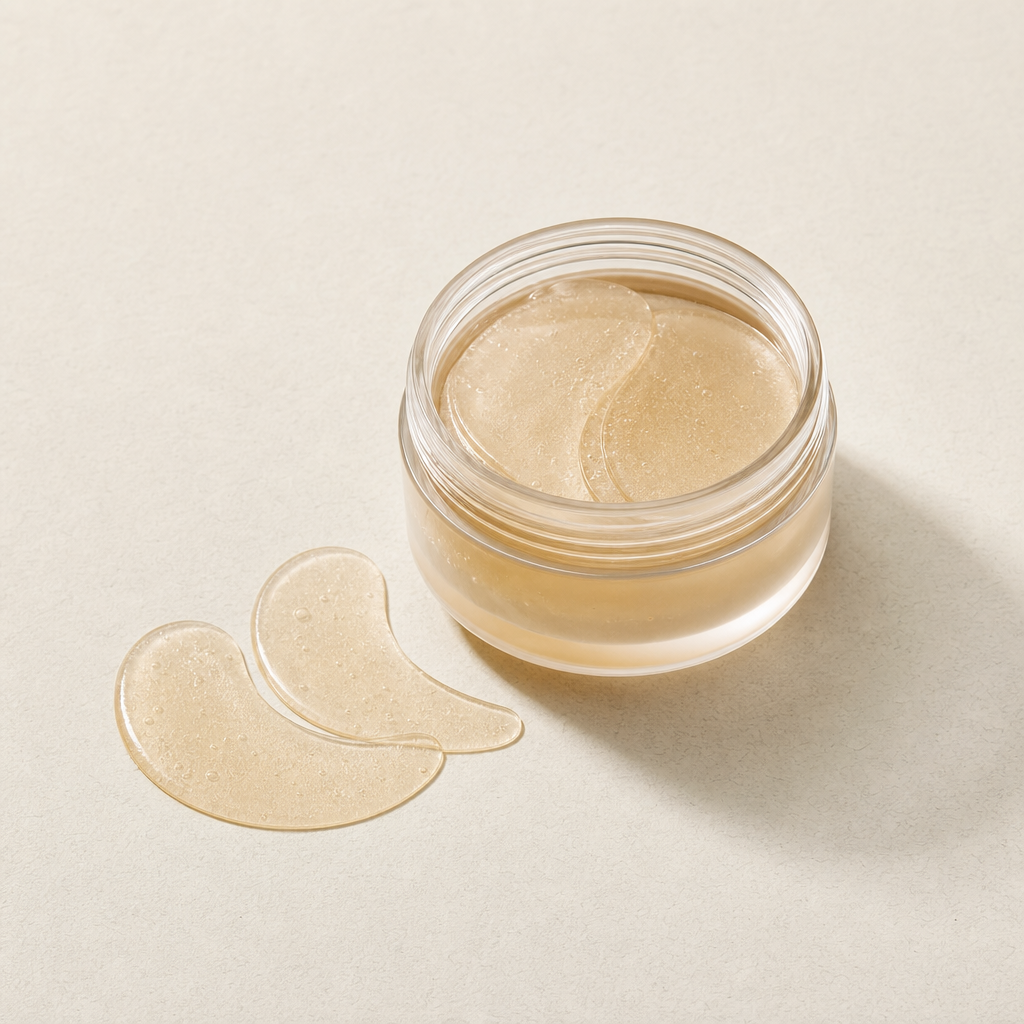
Some are and most are not, and the word that decides it is almost never on the front of the pack. The gel that forms the sheet can be plant-derived or animal-derived, and — this is the part that catches brands out — a patch built on a perfectly vegan seaweed gel can still be disqualified by one additive listed six lines down the INCI.
 Sample image
Two questions, not one
Every hydrogel patch has to answer both of these, and a brief that only asks the first will eventually be embarrassed by the second.
| Question | What it is about | Where it goes wrong |
|---|---|---|
| 1. The gel | What makes the sheet hold its shape — the structural gelling agent | Gelatin is animal collagen. It is cheap, it sets beautifully, and it is not vegan |
| 2. Everything else | Actives, humectants, film-formers, preservatives | Hydrolysed collagen, silk protein, beeswax, lanolin, some glycerin — any one of them ends the claim |
The gelling agent
Plant routes
Carrageenan — extracted from red seaweed. Agar — also red algae. Gellan gum — microbial fermentation. Sodium alginate — brown seaweed. All plant or microbial in origin, all vegan, and all of them set by heating and cooling rather than by any animal-derived step.
These systems also survive summer freight, which is a commercial point rather than an ethical one: a carrageenan/agar sheet holds its shape at temperatures a shipping container reaches routinely.
The animal route
Gelatin is hydrolysed collagen from bovine or porcine hide and bone. It gels superbly and it is inexpensive. It is not vegan, it is not halal unless separately certified for source and process, and it softens near body temperature — which is well inside what a container in transit will see.
A gelatin base closes three doors at once: vegan, halal, and hot-climate shipping. A plant base keeps all three open at no functional cost to the finished patch. That is why the plant route is the sensible default even for a brand that never intends to make a vegan claim.
The trap: "collagen" eye patches
This is the most common way a vegan claim falls over, and it is worth being precise about it.
A very large share of eye patches on the market are marketed around collagen. In most of them the collagen is not the gelling agent — the sheet is usually carrageenan or a polyacrylate — but a hydrolysed collagen added as an active. Hydrolysed collagen is animal-derived: typically marine (fish skin and scales) or bovine.
So the patch can be built on a plant gel and still not be vegan, because of an added ingredient that is there for the claim on the front of the box. Marine collagen is not vegan; "marine" is not a synonym for "plant".
1. The gelling agent — carrageenan, agar, gellan or alginate, not gelatin.
2. Every protein on the list — hydrolysed collagen, silk/sericin, keratin, elastin are animal-derived.
3. The small print — beeswax, lanolin, carmine, shellac, squalane (can be shark or olive), glycerin (can be tallow or vegetable), some lactic acid (can be dairy-fermented or beet).
4. Whether the supplier will put it in writing. A verbal "yes it's vegan" is not a document.
Vegan-compatible is not the same as certified
We would rather be precise about this than sell you an overstatement.
- "Plant-based gel system" is a statement about the material. It is verifiable from the INCI of the base, and we will supply that under NNN.
- "Vegan compatible" means nothing in the base is animal-derived, so a vegan finished product can be built on it. It says nothing about what a brand then adds.
- "Certified vegan" is a scheme mark — The Vegan Society, V-Label, Vegan Action and others — awarded to a finished product against a scheme's own rules, which also cover animal testing and sometimes the supply chain. A supplier cannot hand you this. The brand applies, for its own formula, and the base being plant-derived is a precondition rather than the certificate.
Any factory telling you their material is "certified vegan" and implying that carries over to your finished SKU is either confused or hoping you are.
Vegan and halal are related but not identical
A plant gel base satisfies the hardest part of both, because the usual disqualifier — gelatin from an uncertified animal source — is simply absent. But they are different standards: halal also covers alcohol content, certain processing aids and the certification of the facility, and it is granted by a certifying body against a specific base and site. Vegan covers all animal derivation including insect products such as beeswax and carmine, and most schemes also address animal testing.
A plant-based carrageenan gel is a good starting point for both. Neither one is automatic.
What to ask a supplier, and what a good answer looks like
| Ask | A good answer | A warning sign |
|---|---|---|
| What is the gelling agent? | Names it: carrageenan, agar, gellan, alginate — and says which | "A proprietary gel system" |
| Full INCI of the base? | Supplied under NNN, before you order | Only after you place the order |
| Written non-animal-origin statement? | Yes, on letterhead, naming the base | "Of course it's vegan" — verbally |
| Is any collagen in the formula? | States the source: marine, bovine, or none | "It's collagen peptide" without a source |
| Which halal certificate, covering what? | The certificate, with its scope and the bases it covers | "We're halal" with no document |
 Inside our factory
Ingredient origin and certification requirements vary by market and by certifying scheme. Finished-product claims should be confirmed against the rules of your target market and the scheme you intend to apply to.
Building a vegan hydrogel line?
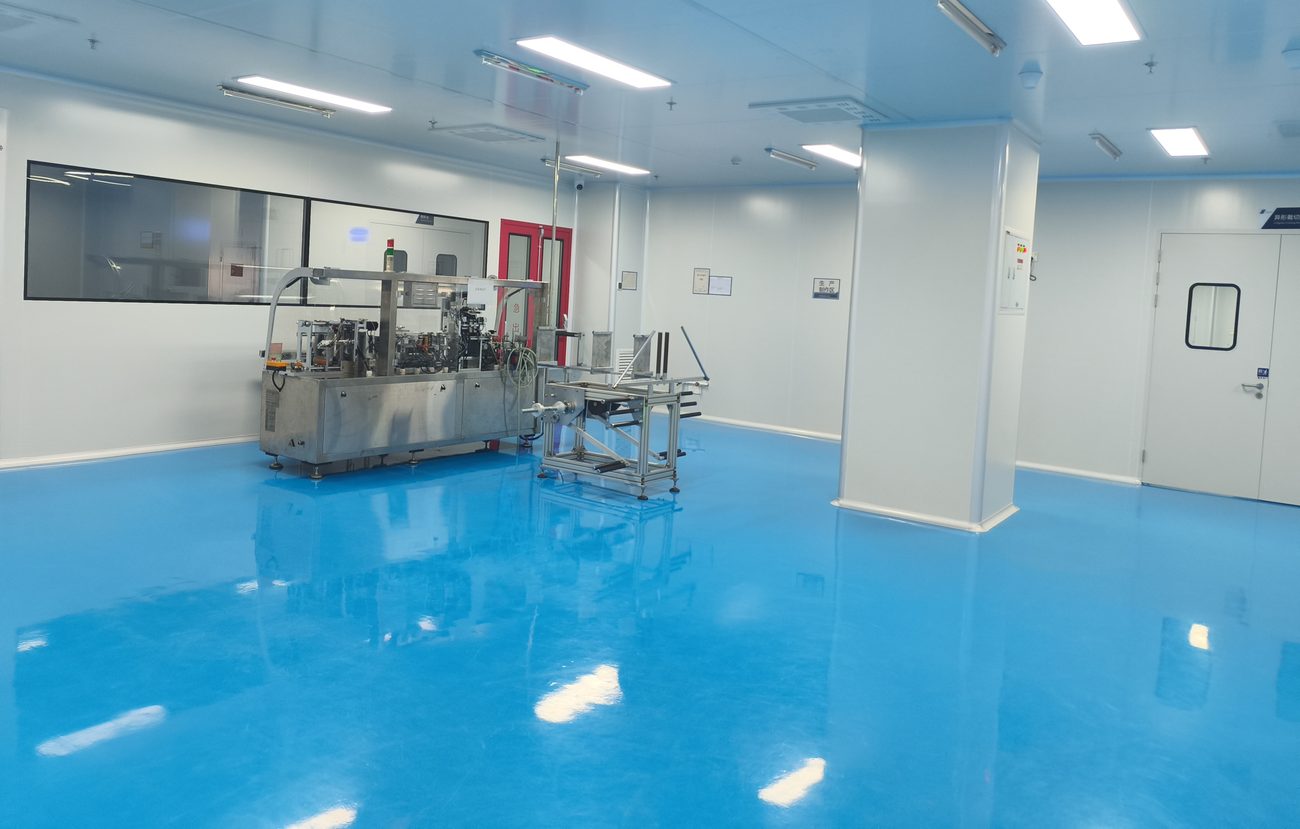
Yanse casts under-eye patches, full-face masks and lip masks from one plant-based carrageenan and agar gel base — no gelatin and no hydrolysed collagen as a structural agent, so the base is halal and vegan compatible as standard rather than as a special run. Full INCI of the gel base is supplied under NNN before you order, and halal-certified bases are available with ESMA (UAE) and SFDA (KSA) documentation support. Made at our own ISO 22716 plant in Fujian — 8,000 m², Class-100,000 cleanroom, 11 QC checkpoints, audited on-site by L'Oréal, Watsons, MINISO and Mentholatum. MOQ from 5,000 units per SKU.
Request the gel-base INCI & samples →Plant-based gel · halal & vegan compatible · three-zone capability · 24-hour reply · NNN before any formulation work
Educational content for brand and product teams. Ingredient and claim information is general and varies by market regulation; finished-product claims should be confirmed against the rules of your target market. Yanse Cosmetics is a contract manufacturer (OEM/ODM) and does not sell finished consumer goods under its own brand. Trademarks referenced belong to their respective owners; no comparison or equivalence claim is made.