
In one week of September 2026, four international beauty brands launched the same twist-to-dispense hydrogel eye patch format — each apparently believing it was theirs alone. The format had first appeared from a Korean brand in July. If you are planning a dispenser launch, the useful question is not who did it first. It is what you need in writing, and on the patch side, so that your version stays yours.
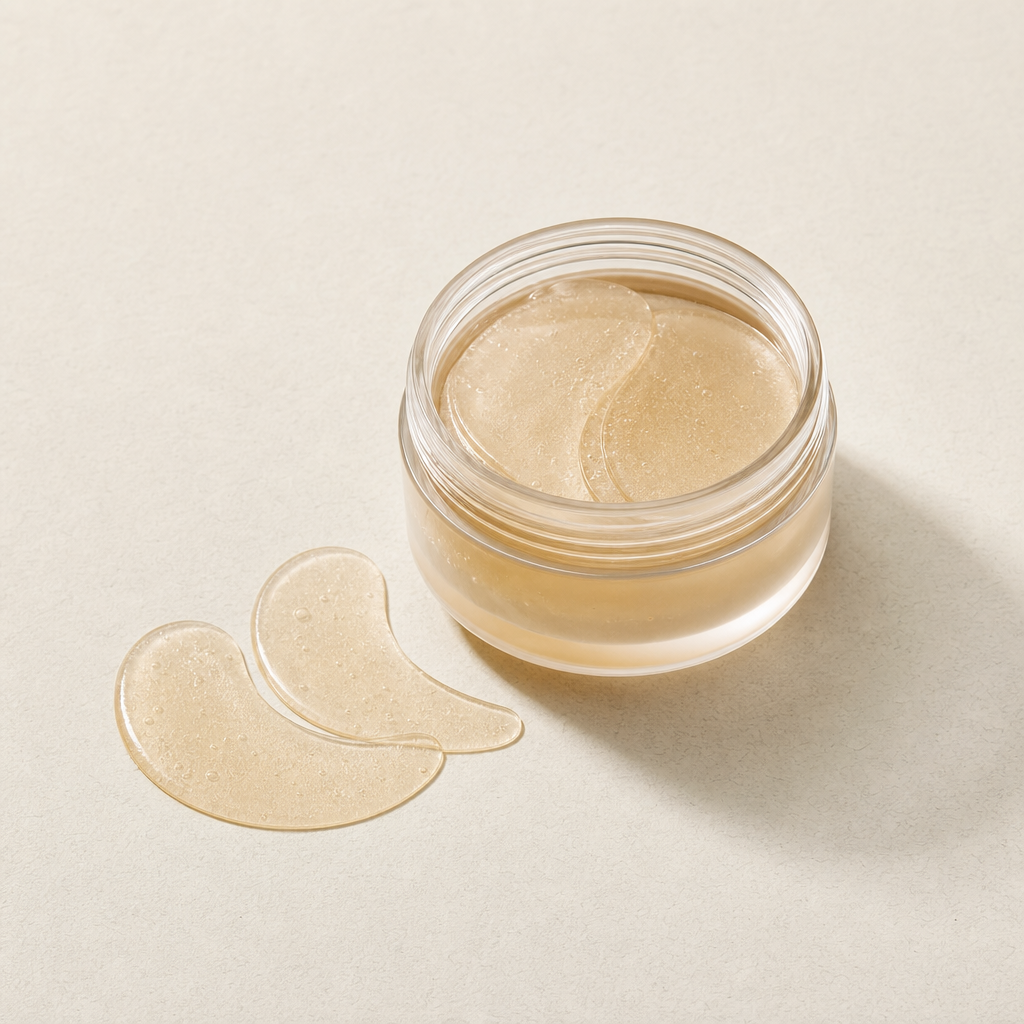 Sample image
What happened
Here is the sequence as reported by the beauty trade press. We have left the brand names out; the sources are linked below if you want them.
| When | What was reported |
|---|---|
| July 2026 | A Korean beauty brand launches hydrogel eye patches in a grinder-style jar: twist the top and a fresh pair is presented |
| 17 Sept | A global celebrity-founded skincare brand previews the same format, pitched as a first |
| 20 Sept | A US skincare brand is covered launching eye patches in the same packaging |
| 21 Sept | A global makeup brand reveals its own twist-and-dispense version; its founder says publicly that the brands were misled on exclusivity by the same supplier |
| 23 Sept | A fourth brand announces a version is coming |
Trade reporting also noted that at least two major Korean packaging suppliers hold similar technology, with competing claims about who developed it — which matters more than any single launch date.
Sources: BeautyMatter · Cosmetics Business · Inc.
How the dispenser format works
A grinder-style dispenser holds a stack of patch pairs inside a closed body. Turning the top advances the stack and presents one pair at the opening, while the rest stay enclosed. Compared with the two formats it replaces, the trade-offs look like this:
| Format | Strength | Watch-out |
|---|---|---|
| Single-pair sachet | Every pair sealed until use; travel-friendly | Most packaging per use |
| Open jar (30–60 pairs) | Lowest cost per pair | Fingers or spatula go into a high-water-activity product every time |
| Twist dispenser | One-handed, no contact with the remaining patches, strong shelf and social appeal | New tooling, tighter patch tolerances, and the seal must be proven by testing |
Why “exclusive” did not hold
- The format belonged to the packaging supplier, not the brands. A supplier that develops a mechanism will naturally want to sell it more than once, unless a contract says otherwise.
- More than one supplier had it. Even a watertight contract with one supplier does not stop a second supplier with similar technology.
- Exclusivity is usually priced. Industry advisers quoted in the coverage noted that exclusivity tends to come with a fee or a volume commitment. Hundreds of thousands of units may not be enough to buy it.
- It lived in conversations, not clauses. A verbal assurance of exclusivity is not a scope, a term or a remedy.
A written checklist for real exclusivity
Packaging advisers suggest working through these questions before committing budget. We have added the patch-side items that brands most often leave out.
| Question | What to get in writing |
|---|---|
| Who owns the tooling? | Mould ownership, where it is stored, and that it will not be used for anyone else during the exclusivity term |
| What exactly is exclusive? | A scope you can enforce: region, product category, sales channel, configuration (size, colour, closure) and time period |
| What does it cost to keep it? | The volume commitment or fee tied to exclusivity, and what happens if volumes are missed |
| Is it already out there? | A written statement that the supplier has not sold, and is not developing, the same format for others — plus a check of what other suppliers already offer |
| Are the drawings protected? | An NNN agreement (non-disclosure, non-use, non-circumvention) signed before any drawings or samples change hands |
| Can the design be registered? | Where available, a design registration in your key markets, in your name |
| What makes yours different anyway? | Visible differentiation that does not depend on exclusivity: patch shape, gel colour and formula, pairs per cartridge, decoration, closure |
If global exclusivity on the mechanism is not realistic, a narrow written scope plus a patch that nobody else has is usually the stronger position. Consumers rarely know who invented a pack, but they notice a patch that fits, cools and stays put.
The part most brands forget: the patch itself
A dispenser changes what the patch has to do. The spec should be locked together with the dispenser drawing, not after it:
- Die-cut size and tolerance. The stack has to advance one pair at a time. A patch that is slightly too large jams; one that is too small presents crooked.
- Gel thickness and essence load. Too much essence and pairs stick together or slide once applied. We cover the sliding problem in why under-eye patches slide off.
- Liners and separators. How pairs are separated in the stack decides whether the first pull presents one pair or three.
- Pairs per cartridge. This drives cost per use and how long the pack is open. Set it together with the preservative system.
- Testing on the pack as sold. Preservative efficacy and stability should be run on the finished dispenser, not on a jar or sachet version of the same gel.
How we work on a dispenser project
We manufacture hydrogel eye patches in-house. The dispenser itself comes from a packaging supplier — yours, or one you select — and we work to its drawing on the patch side.
- NNN first. We sign before any drawings, samples or formulation work change hands.
- Patch spec to your drawing. Custom die-cut shapes to your artwork, gel thickness and essence load set per brief.
- Formats we already run: single-pair sachet, multi-pair pouch and jar (30–60 pairs). Dispenser formats are handled as custom packaging.
- MOQ: from 3,000 units per SKU on stock shapes and standard packs. Custom die-cut, custom formula or non-standard packaging such as a dispenser starts from 5,000 units.
- Samples: 72 hours on ready formulations, so you can check fit and dispensing before tooling is final.
The effects described are cosmetic and relate to the appearance of skin. These products are not intended to diagnose, treat, cure or prevent any condition. This article summarises public trade reporting and general industry practice; it is not legal advice. Take advice from a qualified lawyer on contracts and design registration in your markets.
Planning a dispenser or jar launch?
Yanse manufactures hydrogel eye patches, face masks and lip masks at our own ISO 22716 plant in Fujian — 8,000 m², Class-100,000 cleanroom, 11 QC checkpoints, audited on-site by L'Oréal, Watsons, MINISO and Mentholatum. Send your dispenser drawing with the brief and we will confirm the patch spec before sampling.
Send a brief & request samples →NNN before any drawing · custom die-cut to your artwork · MOQ from 3,000 (custom packaging from 5,000) · 72-hour samples · 24-hour reply
Educational content for brand and product teams. Yanse Cosmetics is a contract manufacturer (OEM/ODM) and does not sell finished consumer goods under its own brand. Trademarks referenced in linked sources belong to their respective owners; no affiliation or endorsement is implied.