
Yes, for a few hours, and the mechanism is mostly cold rather than anything in the essence. Which also means the honest answer splits in two: for the puffiness that comes and goes, a patch works and works reliably. For the kind that is there every morning and every evening at forty as it was at thirty-nine, nothing you put on the skin is going to move it.
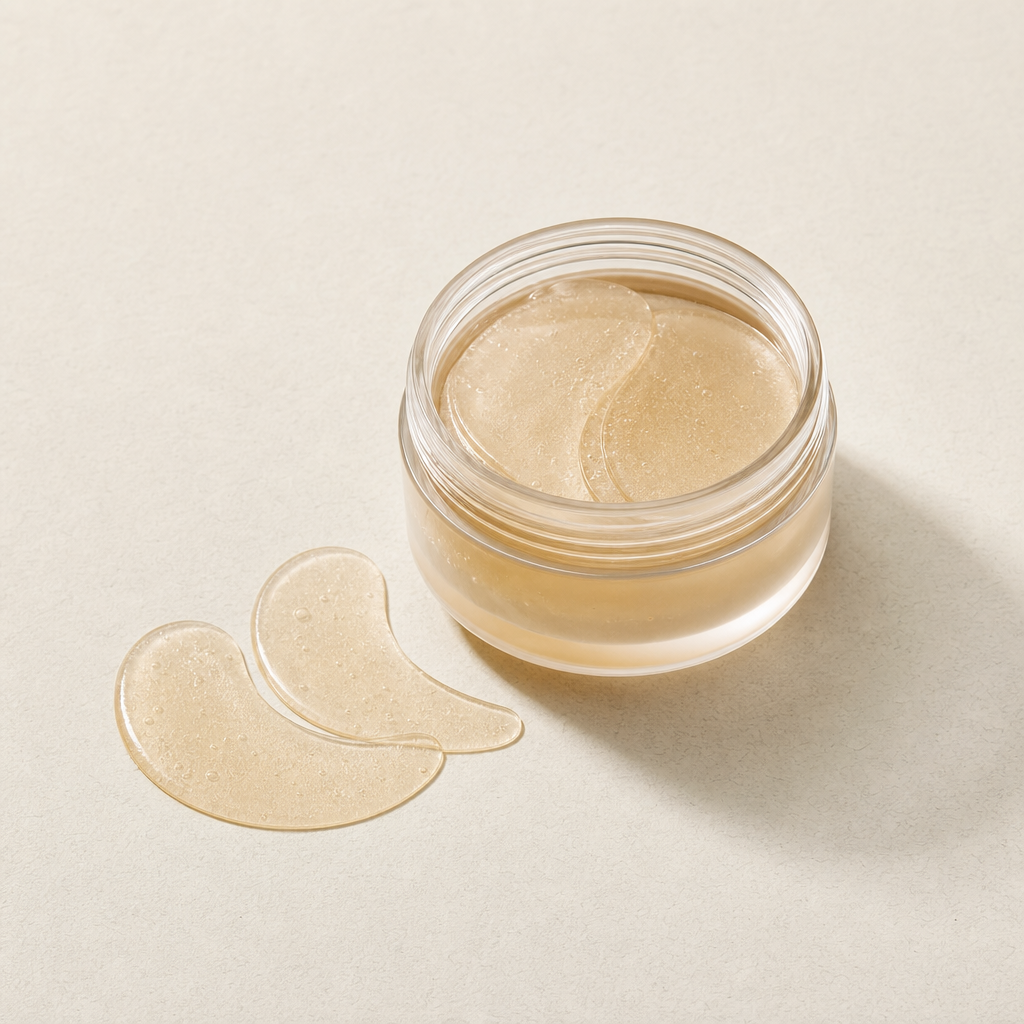 Sample image
Two kinds of puffiness, and only one of them responds
| Kind | What is happening | Does a patch help? |
|---|---|---|
| Fluid | Lymph and interstitial fluid pooling overnight, or after salt, alcohol, crying or a poor night. Worse on waking, better by midday. | Yes. This is the one patches are genuinely good at |
| Structural | The fat pad under the eye pushing forward through a weakening septum. Present all day, every day, and it does not fluctuate much. | No. It is anatomy. A topical cannot reposition it |
| Allergic | Histamine-driven swelling — usually itchy, often seasonal, frequently both eyes at once | Symptomatically, briefly. Cold soothes; the cause is medical and belongs with a clinician |
A quick self-test that costs nothing: is it noticeably better at 2pm than at 7am? If yes, it is mostly fluid, and a patch has something to work with. If it looks the same all day, it is mostly structural, and no eye patch from any brand is going to satisfy you.
What is actually doing the work
Cold — this is the main one
Cold constricts superficial blood vessels and slows local fluid accumulation. It is the single largest contributor to the visible change, and it is thermal, so it fades as your skin returns to temperature. Anyone attributing the de-puffing effect primarily to caffeine or peptides is skipping over the part that does most of the work.
Refrigerate them. A patch at 5 °C carries far more cooling capacity to the skin than one at room temperature, and it is also firmer, so it grips better and slides less. This costs nothing and improves the only mechanism that is really working. If a brand does not tell you to do this, they have left performance on the table.
Gentle compression
A gel sheet has weight and it conforms. Held against the skin it applies light, even pressure across the area, which discourages fluid from sitting there. This is small but real, and it is one reason a thicker sheet often feels more effective than a thin one.
Hydration
Occlusion traps water in the surface layers, the skin swells very slightly and fine lines soften. This does not reduce puffiness — strictly speaking it adds a little volume — but it changes how light falls on the area, and the combined result reads as "less tired".
Caffeine
Caffeine is a vasoconstrictor and it does something. Within a fifteen-minute window on skin that is not especially permeable, the honest framing is that it supports the cold rather than replacing it. A caffeine patch used warm will underperform a plain patch used cold.
Why the cold runs out — and what decides how fast
This is a manufacturing question, not a marketing one. How long a chilled patch keeps working depends on how much cold it is carrying, which comes down to two things:
- Water content and sheet mass. Water has a high heat capacity, so a hydrogel is essentially a small cold pack. More water and more sheet means more thermal mass and a longer working window. This is the strongest argument for a thicker gauge — but see below, because thicker is not free.
- Contact area and contact quality. Heat only moves where the sheet touches. A patch that bridges over the orbital contour, or that has crept halfway down the cheek by minute six, is not cooling the area you wanted cooled. This is why stay-in-place matters for de-puffing specifically — more than it matters for a hydrating claim.
Thicker sheet → more cooling and a longer window. Thicker sheet → more weight, and past a point gravity beats the gel's grip and the patch slides. The correct gauge is the heaviest sheet your gel system can still hold up, which is a formulation-and-die question, not a number to maximise. We wrote about what decides that in why under-eye patches slide off.
Getting the most out of them
- Use them in the morning, not at night. Fluid puffiness peaks on waking. That is when the effect is both largest and most useful.
- Keep them in the fridge, not the bathroom. Covered above, and it is the highest-return habit here.
- Clean, dry skin. Eye cream underneath lubricates the interface and the patch slides — and a sliding patch stops cooling where you need it.
- Fifteen to twenty minutes. Take them off before they dry; a drying patch starts pulling moisture back out. Detail in how long to leave eye patches on.
- Sleep on your back and slightly elevated if morning fluid is your pattern. Free, and it addresses the cause rather than the appearance.
- Treat it as a before-an-event tool. That is genuinely what it is good at, and it is very good at it.
If you are developing one
A de-puffing patch is a different specification from a hydrating patch, and briefs often confuse the two:
- Specify thermal mass, not just actives. Sheet weight and water content decide the cooling window. A caffeine claim on a thin, light sheet is a claim without a mechanism behind it.
- Specify adhesion. Cooling requires contact for the whole wear time. For a de-puffing product, a patch that moves is a patch that stopped working.
- Put "refrigerate before use" on the pack. It is the cheapest performance gain available and it sets the usage expectation correctly.
- Write the claim at the level the product can deliver. "Reduces the look of puffiness" is a product that knows what it is. "Eliminates eye bags" is a claim about anatomy, and it is the kind of wording that attracts regulatory attention in most markets.
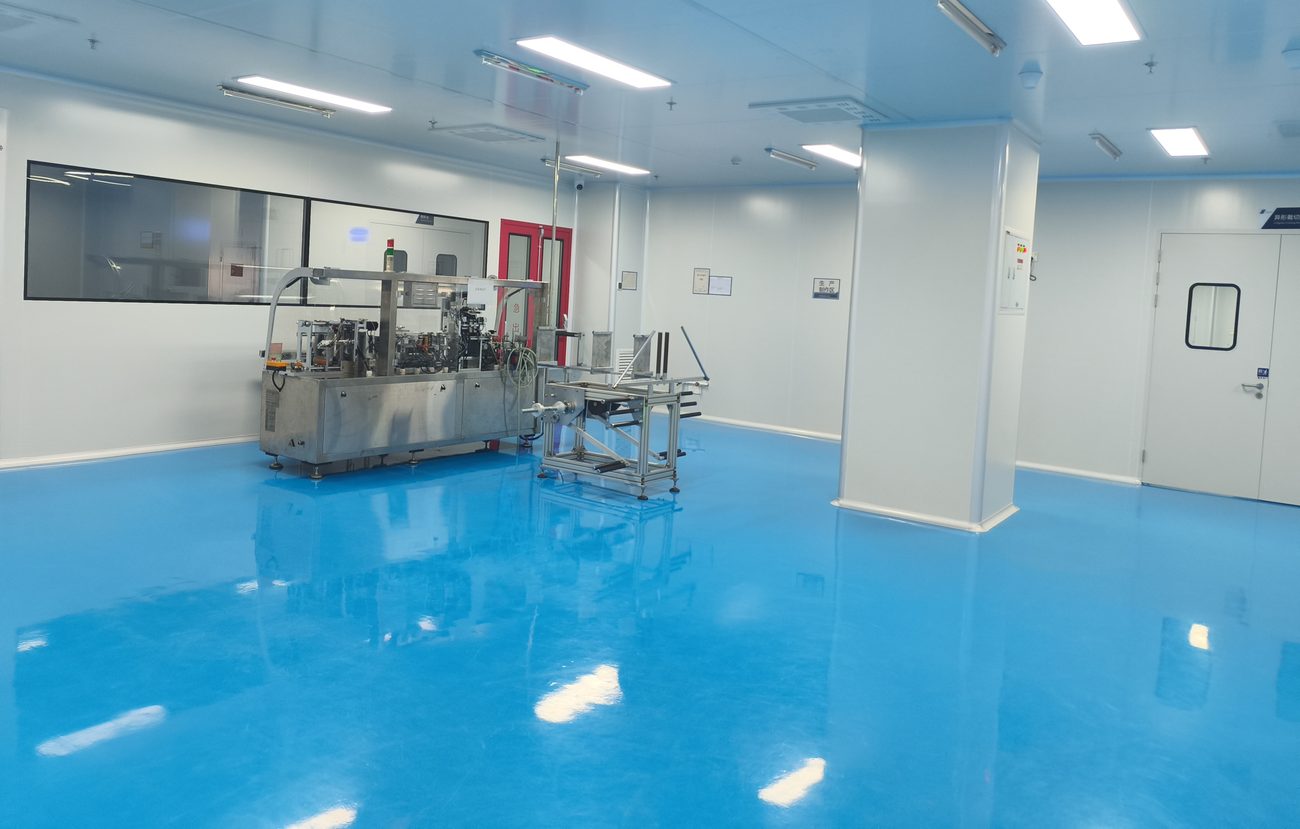 Inside our factory
The effects described are cosmetic and relate to the appearance of skin. These products are not intended to diagnose, treat, cure or prevent any condition. Puffiness that is sudden, one-sided, painful or persistent is worth raising with a clinician rather than treating with a mask.
Developing a de-puffing eye patch?
Yanse manufactures hydrogel eye patches, face masks and lip masks at our own ISO 22716 plant in Fujian — 8,000 m², Class-100,000 cleanroom, 11 QC checkpoints, audited on-site by L'Oréal, Watsons, MINISO and Mentholatum. Sheet gauge, water content and fill weight are specified per brief, and adhesion and wear-time retention are tested against your specification during sampling. Our hydrogel line is a three-head system, so two or three formulations can be laid down side by side in a single sheet. Plant-based gel system: halal and vegan compatible as standard. MOQ from 5,000 units per SKU.
Request samples & specifications →Three-zone capability · plant-based gel · halal & vegan compatible · 24-hour reply · NNN before any formulation work
Educational content for brand and product teams. Ingredient and claim information is general and varies by market regulation; finished-product claims should be confirmed against the rules of your target market. Yanse Cosmetics is a contract manufacturer (OEM/ODM) and does not sell finished consumer goods under its own brand. Trademarks referenced belong to their respective owners; no comparison or equivalence claim is made.